

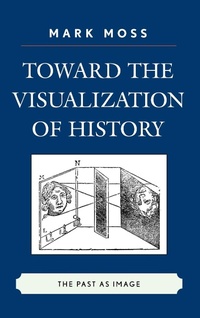
Toward the Visualization of History
The Past as Image
Published on 19. June 2008
Book
Hardback
272 pages
978-0-7391-2437-6 (ISBN)
Description
Over the past 50 years, the influence of visuals has impacted society with greater frequency. No subject is immune from the power of visual culture, and this fact becomes especially pronounced with regards to history and historical discourse. Where once the study of the past was books and printed articles, the environment has changed and students now enter the lecture hall with a sense of history that has been gleaned from television, film, photography, and other new media. They come to understand history based on what they have seen and heard, not what they have read.
What are the implications of this process, this visualization of history? Mark Moss discusses the impact of visuals on the study of history with an examination of visual culture and the future of print. Recognizing the visual bias of the younger generations and using this as a starting point for teaching history is a critical component for reaching students. By providing an analysis of photography, film, television, and computer culture, Moss uses the Holocaust as an historical case study to illustrate the ways in which visual culture can be used to bring about an awareness of history, as well as the potential for visual culture becoming a driving force for social and cultural change.
What are the implications of this process, this visualization of history? Mark Moss discusses the impact of visuals on the study of history with an examination of visual culture and the future of print. Recognizing the visual bias of the younger generations and using this as a starting point for teaching history is a critical component for reaching students. By providing an analysis of photography, film, television, and computer culture, Moss uses the Holocaust as an historical case study to illustrate the ways in which visual culture can be used to bring about an awareness of history, as well as the potential for visual culture becoming a driving force for social and cultural change.
Reviews / Votes
Each chapter derives its best insights from a broad range of scholarship. This book will appeal to readers coming to its subject matter for the first time. Recommended. -- D. L. LeMahieu, Lake Forest College * Choice Reviews * Historians have generally been slow to recognize how visual images have shaped public understandings of historical issues. Those who have noted this reality have generally dismissed it as an indicator of cultural decline. Mark Moss's book cogently and systematically explains why historians need to recognize the ways that students and the general public learn history through film, television, and other visual images in the contemporary world. While sensitive to the ways that visual media have distorted historical understanding, Moss's book makes an extraordinary contribution to the historical literature by illuminating how the visual revolution provides new opportunities for historians to reach broader audiences with their work. All academic historians need to read and think about this book's message. -- Wilson Warren, Western Michigan UniversityMore details
Language
English
Place of publication
United States
Publishing group
Bloomsbury Publishing Plc
Target group
College/higher education
Product notice
Laminated cover
Dimensions
Height: 236 mm
Width: 154 mm
Thickness: 25 mm
Weight
603 gr
ISBN-13
978-0-7391-2437-6 (9780739124376)
Copyright in bibliographic data and cover images is held by Nielsen Book Services Limited or by the publishers or by their respective licensors: all rights reserved.
Schweitzer Classification
Other editions
Additional editions
E-Book
06/2008
1st Edition
Lexington Books
from
€67.99
Available for download
Person
Mark Moss is chair of general arts and science in the Faculty of Business at Seneca College in Toronto, Ontario.
Content
Chapter 1 Table of Contents
Chapter 2 Preface
Chapter 3 Introduction
Chapter 4 1 Visual Culture and Historical Consciousness
Chapter 5 2 Media, Memory, and History
Chapter 6 3 The Future and Past of Print Culture
Chapter 7 4 Photographing History
Chapter 8 5 Visions of the Past: Film and History
Chapter 9 6 Televising History
Chapter 10 7 The Process of Holocaust Commemoration in the Media Age
Chapter 11 8 Computer Technology and History
Chapter 12 Conclusions
Chapter 13 Bibliography
Chapter 14 Index
Chapter 2 Preface
Chapter 3 Introduction
Chapter 4 1 Visual Culture and Historical Consciousness
Chapter 5 2 Media, Memory, and History
Chapter 6 3 The Future and Past of Print Culture
Chapter 7 4 Photographing History
Chapter 8 5 Visions of the Past: Film and History
Chapter 9 6 Televising History
Chapter 10 7 The Process of Holocaust Commemoration in the Media Age
Chapter 11 8 Computer Technology and History
Chapter 12 Conclusions
Chapter 13 Bibliography
Chapter 14 Index