

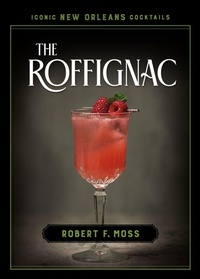
The Roffignac
Published on 11. September 2024
Book
Hardback
152 pages
978-0-8071-8262-8 (ISBN)
Description
Almost lost to history, the Roffignac has long been one of New Orleans's most mysterious cocktails. While drinks such as the Sazerac and the Ramos gin fizz enjoyed a resurgence in popularity during the craft cocktail movement of the early twenty-first century, resurrecting the Roffignac has proved a more difficult task.
Named for nineteenth-century New Orleans mayor Joseph Roffignac, the whiskey-based drink became one of the city's most celebrated libations by the 1890s. After Prohibition, however, its place in Crescent City drinking culture never quite recovered. It remained the house cocktail at Maylie's Restaurant until its owners shuttered the establishment in 1983. By then, the Roffignac had fallen into relative obscurity.
The renewed interest in craft spirits in the 2010s saw bartenders and spirits enthusiasts across the country creating their own versions of the Roffignac. Many tried to trace its roots back through the years and uncover early recipes for the drink, and some perpetuated fanciful accounts related to its name, origins, and original ingredients.
Robert F. Moss separates truth from fiction and offers the definitive story of this classic pre-Prohibition creation. The Roffignac explains for the first time how this once-famous elixir fell out of favor before being rediscovered by mixologists and connoisseurs. It also surveys dining and drinking in nineteenth-century New Orleans and explores how twentieth- and twenty-first-century conceptions of the city have shaped our views of the drink and its history. As Moss shares this remarkable and rather twisted tale, he highlights the central role that narrative, myth, and legend have played in American cocktail culture, and how unreliable those stories can sometimes be.
Named for nineteenth-century New Orleans mayor Joseph Roffignac, the whiskey-based drink became one of the city's most celebrated libations by the 1890s. After Prohibition, however, its place in Crescent City drinking culture never quite recovered. It remained the house cocktail at Maylie's Restaurant until its owners shuttered the establishment in 1983. By then, the Roffignac had fallen into relative obscurity.
The renewed interest in craft spirits in the 2010s saw bartenders and spirits enthusiasts across the country creating their own versions of the Roffignac. Many tried to trace its roots back through the years and uncover early recipes for the drink, and some perpetuated fanciful accounts related to its name, origins, and original ingredients.
Robert F. Moss separates truth from fiction and offers the definitive story of this classic pre-Prohibition creation. The Roffignac explains for the first time how this once-famous elixir fell out of favor before being rediscovered by mixologists and connoisseurs. It also surveys dining and drinking in nineteenth-century New Orleans and explores how twentieth- and twenty-first-century conceptions of the city have shaped our views of the drink and its history. As Moss shares this remarkable and rather twisted tale, he highlights the central role that narrative, myth, and legend have played in American cocktail culture, and how unreliable those stories can sometimes be.
More details
Series
Language
English
Place of publication
Baton Rouge
United States
Product notice
sewn/stitched
Cloth over boards
Illustrations
10 halftones
Dimensions
Height: 183 mm
Width: 129 mm
Thickness: 17 mm
Weight
242 gr
ISBN-13
978-0-8071-8262-8 (9780807182628)
Copyright in bibliographic data and cover images is held by Nielsen Book Services Limited or by the publishers or by their respective licensors: all rights reserved.
Schweitzer Classification
Person
Robert F. Moss writes about food, drink, and travel. Based in Charleston, South Carolina, he is the contributing barbecue editor for Southern Living and restaurant critic for the Charleston Post & Courier. He is the author of The Lost Southern Chefs: A History of Commercial Dining in the Nineteenth-Century South and Barbecue: The History of an American Institution, among other books.