

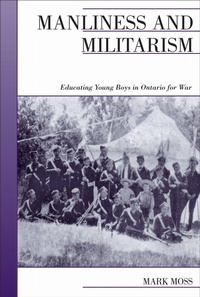
Manliness and Militarism
Educating Young Boys in Ontario for War
Published on 1. April 2001
Book
Paperback/Softback
227 pages
978-0-19-541594-0 (ISBN)
Description
Euphoria swept Canada, and especially Ontario, with the outbreak of World War I. Young men rushed to volunteer for the Canadian Expeditionary Force, and close to 50 per cent of the half-million Canadian volunteers came from the province of Ontario. Why were people excited by the prospect of war? What popular attitudes about war had become ingrained in the society? And how had such values become so deeply rooted in a generation of young men that they would be eager to join this 'great adventure'?
Historian Mark Moss seeks to answer these questions in Manliness and Militarism: Educating Young Boys in Ontario for War. By examining the cult of manliness as it developed in Victorian and Edwardian Ontario, Moss reveals a number of factors that made young men eager to prove their mettle on the battlefields of Europe. Popular juvenile literature - the books of Henty, Haggard, and Kipling, for example, and numerous magazines for boys, such as the Boy's Own Paper and Chums - glorified the military conquests of the British Empire, the bravery of military men, especially Englishmen, and the values of courage and unquestioning patriotism. Those same values were taught in the schools, on the playing fields, in cadet military drill, in the wilderness and Boy Scout movements, and even through the toys and games of young children.
The lessons were taught, and learned, well. As Moss concludes: 'Even after the horrors became known, the conflict ended, and the survivors came home, manliness and militarism remained central elements of English-speaking Ontario's culture. For those too young to have served, the idea of the Great War became steeped in adventure, and many dreamed of another chance to serve. For some, the dream would become a reality.'
Historian Mark Moss seeks to answer these questions in Manliness and Militarism: Educating Young Boys in Ontario for War. By examining the cult of manliness as it developed in Victorian and Edwardian Ontario, Moss reveals a number of factors that made young men eager to prove their mettle on the battlefields of Europe. Popular juvenile literature - the books of Henty, Haggard, and Kipling, for example, and numerous magazines for boys, such as the Boy's Own Paper and Chums - glorified the military conquests of the British Empire, the bravery of military men, especially Englishmen, and the values of courage and unquestioning patriotism. Those same values were taught in the schools, on the playing fields, in cadet military drill, in the wilderness and Boy Scout movements, and even through the toys and games of young children.
The lessons were taught, and learned, well. As Moss concludes: 'Even after the horrors became known, the conflict ended, and the survivors came home, manliness and militarism remained central elements of English-speaking Ontario's culture. For those too young to have served, the idea of the Great War became steeped in adventure, and many dreamed of another chance to serve. For some, the dream would become a reality.'
Reviews / Votes
Moss offers a compelling and well-written account of the intellectual and cultural climate in which young boys in Ontario were raised prior to the First World War. Canadian Military HistoryMore details
Series
Language
English
Place of publication
Canada
Target group
College/higher education
Product notice
Paperback (trade)
Dimensions
Height: 211 mm
Width: 155 mm
Thickness: 13 mm
Weight
254 gr
ISBN-13
978-0-19-541594-0 (9780195415940)
Copyright in bibliographic data and cover images is held by Nielsen Book Services Limited or by the publishers or by their respective licensors: all rights reserved.
Schweitzer Classification
Person
Mark Moss teaches history and humanities in the faculty of general arts and sciences at Seneca College, Toronto.