

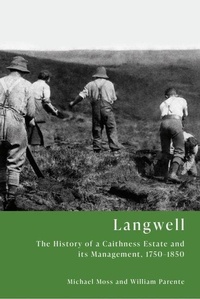
Langwell
The History of a Caithness Estate and its Management, 1750-1850
Published on 30. September 2025
Book
Hardback
328 pages
978-1-3995-4906-6 (ISBN)
Description
This book traces the history of a 30,000-acre Highland estate and its people from after the Jacobite Rebellion in 1745 until the estate was sold to the 5th Duke of Portland in 1857. Using original research and archival sources including first-hand reports, court records, letters and contemporary newspapers, it sheds light on the lives of the crofters, their landlords, the sheep economy, the droving trade and the fishing industry. Langwell provides deep insight into the immense cultural and social changes taking place in the Scottish Highlands during the period.
Reviews / Votes
Langwell is an absorbing story of a Caithness estate,1750-1850. Its review of the key changes of the period undoubtedly adds to the wider debate, but what is particularly well-depicted is the complex network of debt surrounding the estate's ownership and the book's success at giving identity to those who managed it. -- Robert A. Dodgshon, Aberystwyth University This remarkable book will be a landmark text for the history not only of Caithness or the Highlands, but for rural communities across Scotland and globally. It utilises a huge range of primary materials to build a meticulous picture of a society undergoing a series of revolutions in their way of life, and tells that story with excitement and creativity from multiple perspectives. An absolutely essential read. -- Annie Tindley, Newcastle University Based on extensive archival research, Langwell explores a period of profound change and traces its impact on local communities. Wide-ranging and thoroughly grounded in the broader context, it encompasses impecunious lairds, grasping lawyers, links to slavery, clearance, famine, and social conflict. The book throws new light on a distinctive part of the Highlands. -- Malcolm Bangor-Jones, author of 'From Clanship to Crofting' and 'The Coming of the Great Sheep'More details
Language
English
Place of publication
Edinburgh
United Kingdom
Illustrations
73 black and white illustrations and 24 colour images on plates
Dimensions
Height: 163 mm
Width: 242 mm
Thickness: 35 mm
Weight
770 gr
ISBN-13
978-1-3995-4906-6 (9781399549066)
Copyright in bibliographic data and cover images is held by Nielsen Book Services Limited or by the publishers or by their respective licensors: all rights reserved.
Schweitzer Classification
Persons
Michael Moss was emeritus professor of archival science at the University of Northumbria, he was previously research professor in archival studies at the University of Glasgow. He served as archivist of the University from 1974 to 2003. He was educated at the University of Oxford and trained in the Bodleian Library and was Miegunyah Distinguished Visiting Fellow at the University of Melbourne in 2015. He wrote numerous books including The 'Magnificent Castle' of Culzean and the Kennedy Family, 2002, The Making of Scotch Whisky, 2000; The Building of Europe's Largest Mutual Life Company - Standard Life, 1825-2000, 2000. Michael Moss died in 2021. William Parente graduated from Oxford with a First in English and went on to do research in Shakespeare's comedies, later working in theatre and writing the Scotsman's film column from 1980-92. With Yves Bonavero he set up Bonaparte Films in 1990 to finance small British features including Waking Ned and William Boyd's The Trench. His ancestor the 5th Duke of Portland (the 'mole') acquired Langwell in 1854. He lives in Nottinghamshire and Caithness.
Content
Lists of Illustrations and picture credits
List of Maps
List of Figures and Tables
Acknowledgements
Foreword
Notes on Names and Terminology
Introduction: title tbc
1. A Commission of Fire and Sword:
Breadalbane takes Caithness
2. Parks and Furrestorie:
A Proposall for Langwall
3. For Every Scot in Favour There is 99 Against:
The Act of Union
4. The Hospitable Mansion:
The Sutherlands of Langwell
5. Long Acres:
The Droving Trade
6. 'The Horrour of It Must Wear Off':
The Profits of Slavery
7. The 'Saturday Slap':
Walter Gray Struggles On
8. A Serious Desire to do Good:
Sir John Sinclair of Ulbster
9. An Caorach Mhor:
The Coming of the Sheep
10. As Many As Possible of the Present Inhabitants Ought to be Retained:
Sir John's Sheep Scheme
11. A Whole Neighbourhood is Set Afloat:
Early Emigration
12. Whole Baronies Into Sheepfarms:
The Coming of the Flockmasters
13. The Chief of the Arts:
Agricultural Innovation in Caithness
14. The Fire! The Fire!
The Kildonan Riots
15. Never Out of the Law:
James Horne Buys Langwell
16. Land For Votes:
The Political Hornes
17. Mischief This Night:
Sheep Stealing in the North
18. The Silver Darlings:
The Fishing Boom
19. Improving on Improvement:
James Horne at Langwell
20. The Great Donald:
Donald Horne Succeeds to Langwell
21. Uncertain and Exaggerated Benefits:
Hunger and Emigration in the Nineteenth Century
22. The Coming of the Steamers:
Sea Connections
23. 'From the Pen to the Plough':
Horne Expands into Clyth
24. The Deserted Villages:
From the Land to the Sea
25. All the Grouse are Killed:
The Coming of the Sportsmen
26. Destitution Road:
Famine
27. The Empty Estates:
The Fall of the House of Stirkoke
28. Running Before the Wind:
Caithness Havens
29. Mad, Blind and Impious:
The Eviction Scandal
30. Fit For A Maharajah:
Langwell for Sale
Family Trees: The Sutherland, Gray and Horne Families
Appendix: The Defenders named in Summonses of Removal, 1763 to 1857
Bibliography
Footnotes
Index
List of Maps
List of Figures and Tables
Acknowledgements
Foreword
Notes on Names and Terminology
Introduction: title tbc
1. A Commission of Fire and Sword:
Breadalbane takes Caithness
2. Parks and Furrestorie:
A Proposall for Langwall
3. For Every Scot in Favour There is 99 Against:
The Act of Union
4. The Hospitable Mansion:
The Sutherlands of Langwell
5. Long Acres:
The Droving Trade
6. 'The Horrour of It Must Wear Off':
The Profits of Slavery
7. The 'Saturday Slap':
Walter Gray Struggles On
8. A Serious Desire to do Good:
Sir John Sinclair of Ulbster
9. An Caorach Mhor:
The Coming of the Sheep
10. As Many As Possible of the Present Inhabitants Ought to be Retained:
Sir John's Sheep Scheme
11. A Whole Neighbourhood is Set Afloat:
Early Emigration
12. Whole Baronies Into Sheepfarms:
The Coming of the Flockmasters
13. The Chief of the Arts:
Agricultural Innovation in Caithness
14. The Fire! The Fire!
The Kildonan Riots
15. Never Out of the Law:
James Horne Buys Langwell
16. Land For Votes:
The Political Hornes
17. Mischief This Night:
Sheep Stealing in the North
18. The Silver Darlings:
The Fishing Boom
19. Improving on Improvement:
James Horne at Langwell
20. The Great Donald:
Donald Horne Succeeds to Langwell
21. Uncertain and Exaggerated Benefits:
Hunger and Emigration in the Nineteenth Century
22. The Coming of the Steamers:
Sea Connections
23. 'From the Pen to the Plough':
Horne Expands into Clyth
24. The Deserted Villages:
From the Land to the Sea
25. All the Grouse are Killed:
The Coming of the Sportsmen
26. Destitution Road:
Famine
27. The Empty Estates:
The Fall of the House of Stirkoke
28. Running Before the Wind:
Caithness Havens
29. Mad, Blind and Impious:
The Eviction Scandal
30. Fit For A Maharajah:
Langwell for Sale
Family Trees: The Sutherland, Gray and Horne Families
Appendix: The Defenders named in Summonses of Removal, 1763 to 1857
Bibliography
Footnotes
Index