

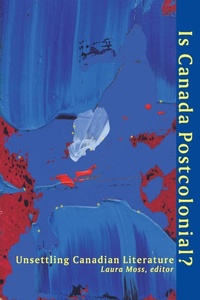
Is Canada Postcolonial?
Unsettling Canadian Literature
Published on 30. May 2003
Book
Paperback/Softback
328 pages
978-0-88920-416-4 (ISBN)
Description
How can postcolonialism be applied to Canadian literature? In all that has been written about postcolonialism, surprisingly little has specifically addressed the position of Canada, Canadian literature, or Canadian culture.
Postcolonialism is a theory that has gained credence throughout the world; it is be productive to ask if and how we, as Canadians, participate in postcolonial debates. It is also vital to examine the ways in which Canada and Canadian culture fit into global discussions as our culture reflects how we interact with our neighbours, allies, and adversaries.
This collection wrestles with the problems of situating Canadian literature in the ongoing debates about culture, identity, and globalization, and of applying the slippery term of postcolonialism to Canadian literature. The topics range in focus from discussions of specific literary works to general theoretical contemplations. The twenty-three articles in this collection grapple with the recurrent issues of postcolonialism - including hybridity, collaboration, marginality, power, resistance, and historical revisionism - from the vantage point of those working within Canada as writers and critics. While some seek to confirm the legitimacy of including Canadian literature in the discussions of postcolonialism, others challenge this very notion.
Postcolonialism is a theory that has gained credence throughout the world; it is be productive to ask if and how we, as Canadians, participate in postcolonial debates. It is also vital to examine the ways in which Canada and Canadian culture fit into global discussions as our culture reflects how we interact with our neighbours, allies, and adversaries.
This collection wrestles with the problems of situating Canadian literature in the ongoing debates about culture, identity, and globalization, and of applying the slippery term of postcolonialism to Canadian literature. The topics range in focus from discussions of specific literary works to general theoretical contemplations. The twenty-three articles in this collection grapple with the recurrent issues of postcolonialism - including hybridity, collaboration, marginality, power, resistance, and historical revisionism - from the vantage point of those working within Canada as writers and critics. While some seek to confirm the legitimacy of including Canadian literature in the discussions of postcolonialism, others challenge this very notion.
Reviews / Votes
"This volume puts its finger on the pulse of the debate surrounding postcolonialism in Canada." -- Sandra Hobbs, Wayne State University -- American Review of Canadian Studies, 200409 "Laura Moss has planted a provocative, timely question and gleaned twenty-two well-ripened critical responses. That the answers aren't `yes' or `no' but `it depends' and `let's keep debating it' makes this gathering both quintessentially Canadian and paradigmatically postcolonial. Here is where we can begin reorienting CanLit criticism for this unsettling new century." -- John Clement Ball, editor -- Studies in Canadian Literature/etudes en litterature canadienne ``Laura Moss's question, posed to twenty-two Canadian literature specialists, has elicited a fascinating range of responses....The sense of a conversation among the contributors is sustained by frequent cross-referencing among the essays....This is a timely, enjoyable and eminently readable book, which achieves range and diversity without sacrificing coherence.'' -- Faye Hammill, British Journal of Canadian Studies -- 200511 "An important, thought-provoking collection, ably edited by Laura Moss." -- Penny van Toorn -- Canadian Literature, 188, Spring 2006, 200610 "Is Canada Postcolonial? is a highly readable collection of critical responses to a provocative and timely question. The diverse answers, provided by some of Canada's most eminent scholars, truly unsettle Canadian studies by examining the uses and abuses of currently popular postcolonial critical frameworks in the study of Canada and Canadian literatures." -- Arun P. Mukherjee, associate professor of English, York University "In this deliberately 'unsettling' collection, Laura Moss asks if Canada is postcolonial. If you've never asked the question yourself, these essays make it clear why it's time you did. Not that the question has an easy answer -- far from it. For this book does not leap to easy absolutes; it wrestles instead with process and the possibilities of engagement. The apparently simple question in the title leads to a score of fascinating and more complex questions, about politics and the Canadian state, ethnicity and marginality, literature and the limits of definition. If and What if: the riskiness of the uncertain. The essays here discuss critical theory and practice, for example, but also political imperatives and invitations, pedagogy and personal responsibility, art, artifacts, and the rhetoric of difference. Passionate, earnest, argumentative, intelligent, and above all engaged, these essays ask us to think about what we think we already know about art and life, and to think again." -- William H. New, University Killam Professor in English Literature, University of British Columbia ``At last is an extended debate on a crucial matter: the relationship between colonialism, postcoloniality, and national discourse. The sheer impossibility of answering the question posed in the title energises lively and informative discussion and debate, illuminating not only the subject of Canadian literatures but issues central to other fields. Twenty-three Canadian intellectuals consider Canada's literary history, the current status of literary discourse, and its likely future. The richness of the coverage, together with the inescapable indeterminacy, is encouraging to those of us who continue to believe in a Canada politically, socially, and intellectually uncompromised.'' -- Helen Tiffin, University of Queensland, Australia, co-author of The Empire Writes Back "Reflects...[and] extends current academic research and practice." -- Christl Verduyn -- University of Toronto Quarterly - Letters in Canada 2003, 200510More details
Language
English
Place of publication
Waterloo, Ontario
Canada
Target group
Professional and scholarly
Product notice
Paperback (trade)
Unsewn / adhesive bound
Dimensions
Height: 226 mm
Width: 150 mm
Thickness: 20 mm
Weight
499 gr
ISBN-13
978-0-88920-416-4 (9780889204164)
Copyright in bibliographic data and cover images is held by Nielsen Book Services Limited or by the publishers or by their respective licensors: all rights reserved.
Schweitzer Classification
Person
Laura Moss is a member of the English Department at the University of British Columbia, and is on the editorial boards of ARIEL: A Review of International English Literature and Studies in Canadian Literature. She edited Frances Brooke's The History of Emily Montague, and her articles on international authors have appeared in journals and books.
Content
Table of Contents for Is Canada Postcolonial? Unsettling Canadian Literature , edited by Laura Moss Preface: Is Canada Postcolonical? Introducing the Question | Laura Moss Part 1: Questioning Canadian Postcolonialism What Was Canada? | George Elliott Clark What Resides in the Question, aIs Canada Postcolonial?a | Neil Besner Canada and Postcolonialism: Question, Inventories, and Futures | Diana Brydon Looking Elsewhere for Answers to the Postcolonial Question: From Literary Studies to State Policy in Canada | Donna Palmateer Pennee Part 2: Postcolonical Methodologies The Absence of Seaming, Or How I Almost Despair of Dancing: How Postcolonical Are Canadaas Literary Institutions and Critical Practices? | Susan Gingell Native Writing, Academic Theory: Postcolonialism across the Cultural Divide | Judith Leggatt Nostalgic Narratives and the Otherness Industry | Mridula Nath Chakraborty Cool Dots and a Hybrid Scarborough: Multiculturalism as Canadian Myth | Chelva Kanaganayakam Part 3: Is Canadian Literature Postcolonial? Imagining Eighteenth-Century Quebec: British Literature and Colonical Rhetoric | Pam Perkins aI too am a Canadiana: John Richardsonas The Canadian Brothers as Postcolonical Narrative | Douglas Ivison Are We There Yet? Reading the aPost-Coloniala and The Imperialist in Canada | Cecily Devereus Figures of Collection and (Post)Colonical Processes in Major John Richardsonas Wacousta and Thomas Kingas Truth and Bright Water | Barbara S. Bruce Stolen Life? Reading through Two Ias in Postcolonical Collaborative Autobiography | Manina Jones aA Place to Stand Ona: (Post)colonical Identity in The Diviners and aThe Rain Childa | Karen E. Macfarlane A aPlacea Through Language: Postcolonical Implications of Mennonite/s Writing in Western Canada | Amy Kroeker Whatas Immigration Got to Do with It? Postcolonialism and Shifting Notions of Exile in Nino Riccias Italian-Canadians | Jim Zucchero Religion, Postcolonical Side-by-sidedness, and la transculture | Marie Vautier After Postcolonialism: Migrant Lines and the Politics of From in Fred Wah, M. Nourbese Philip, and Roy Miki | Robert Budde Part 4: Meditations on the Question Is Canada a Postcolonial Country? | Len Findlay Answering the Questions | Terry Goldie Answering the Answers, Asking More Questions | Victor J. Ramrag Afterword | Stephen Slemon Bibliography Notes on Contributors Index Notes on Contributors Neil Besner, Dean of Humanities at The University of Winnipeg, has taught Canadian literature there since 1987. His publications include books on Mavis Gallant (1988) and Alice Munro (1991), and co-edited collections of short fiction and poetry. His most recent work includes a co-edited special issue, with Sergio Bellei, of the Brazilian journal Desterros (2003) exploring Brazilian/Canadian versions and visions of postcolonial theory across the two cultures. His translation of the Brazilian biography of Elizabeth Bishop and Lota de Macedo Soares, Rare and Commonplace Flowers , appeared in 2002, and his edited collection of essays, Carol Shields: The Arts of a Writing Life is forthcoming in 2003. Barbara S. Bruce is a PhD candidate at The University of Western Ontario. Her doctoral thesis, for which she has received SSHRC doctoral support, examines representations of museums and collecting in Canadian literature. Currently working as adjunct faculty at UWO, she is teaching courses on reading culture through literary and filmic representations of cuisine and horror. Diana Brydon, Robert and Ruth Lumsden Professor of English, teaches Canadian and postcolonial literatures at The University of Western Ontario. The author of books on Timothy Findley and postcolonial literature, she has edited Postcolonialism: Critical Concepts in Literary and Cultural Studies (2000) and co-edited Shakespeare in Canada: A World Elsewhere? (2002). She is currently working on globalization, autonomy, and postcolonial studies with funding support from SSHRC. Robert Budde teaches creative writing and critical theory at The University of Northern British Columbia. He has published two books of poetry, Catch as Catch and traffick , and two novels, Misshapen and, most recently, The Dying Poem . He has a collection of short prose, flicker , and interviews In Muddy Water: Conversations with 11 Poets , forthcoming in 2003. Mridula Nath Chakraborty completed her M.Phil in English from the Faculty of Arts, University of Delhi, in 1995. She subsequently taught English literature at various colleges affiliated to The University of Delhi. She is currently pursuing her PhD in English at The University of Alberta. Her dissertation explores the tensions between postcolonial identity politics in the academy and third-world feminisms of colour in white-settler colonies. She has also translated and co-edited, with Dr Rani Ray, A Treasury of Bangla Stories (1999). She is now translating a collection of short stories by modern Hindi writers. George Elliot Clarke is a self-proclaimed aAfricadiana (African-Nova Scotian), with maternal roots in Nova Scotia dating back to 1813. Clarke taught at Duke University, 1994a99, and is now an associate professor of English at The University of Toronto. A pioneering authority on African-Canadian literature, Clarkeas latest critical book is Odysseys Home: Mapping African-Canadian Literature (2002). Also a noted poet, playwright, and librettist, Clarke received the 2001 Governor-Generalas Literary Award for Poetry for his book, Execution Poems . Cecily Devereux is an associate professor in the Department of English at The University of Alberta. Recent work on gender, race, and empireawith particular reference to white slavery and to the politics of imperial motherhood have appeared in the Victorian Review , Canadian Childrenas Literature , Essays on Canadian Writing , and Womenas Studies International Forum . A scholarly edition of L.M. Montgomeryas Anne of Green Gables is forthcoming (2003). Len Findlay is Professor of English and Director of the Humanities Research Unit at The University of Saskatchewan. Widely published in nineteenth-century studies, literary theory, and the nature and role of universities and the humanities in Canada, his most recent work includes a co-edited collection, Pursuing Academic Freedom: aFree and Fearlessa? (2001). He is currently collaborating on a SSHRC-sponsored endeavour entitled aDecolonizing Education: An Interdisciplinary Aboriginal Research Project.a Susan Gingell teaches and researches Canadian and other decolonizing Anglophone literatures at The University of Saskatchewan. Her work is informed by feminist, anti-racist, and anti-homophobic politics. Past publications include E.J. Pratt, On His Life and Poetry and Pursuits Amateur and Academic: The Selected Prose of E.J. Pratt , as well as an edition of stories from Saskatoon, The Bridge City Anthology , and essays on a wide-range of authors and subjects. Her current research project is on textualizing orature and orality in Canadian/Turtle Island and Afro- Caribbean contexts. Terry Goldie teaches at York University. He is the author of Fear and Temptation: The Image of the Indigene in Canadian, Australian and New Zealand Literatures (1989) and Pink Snow: Homotextual Possibilities in Canadian Fiction (2003); editor of In a Queer Country: Gay and Lesbian Studies in a Canadian Context (2001) and co-editor (with Daniel David Moses) of Canadian Native Literature in English (1998). He is at present working on a book tentatively titled Lifewright: A Theoretical Sexual Autobiography . Douglas Ivison teaches Canadian literature at Memorial University of Newfoundland. He is the editor of The Dictionary of Literary Biography 251: Canadian Fantasy and Science-Fiction Writers (2002), and has published a number of articles on nineteenth and twentieth century Canadian, American, and British literatures. Heas currently completing a book on adventure literature and spatial theory, and is also pursuing research on the representation of the urban in Canadian literature. Manina Jones is an associate professor in the Department of English at The University of Western Ontario, where she teaches courses on Canadian literature, critical theory and detective fiction. She is coauthor, with Priscilla L. Walton, of Detective Agency: Women Re-Writing the Hard-Boiled Tradition (1999), and author of That Art of Difference: Documentary-Collage and English Canadian Writing (1993), as well as articles on Canadian poetry, fiction, and drama. Chelva Kanaganayakam is currently Professor of English at The University of Toronto. His publications include, Structures of Negation: The Writings of Zulfikar Ghose (1993), Configurations of Exile: South Asian Writers and Their World (1995), Dark Antonyms and Paradise: