

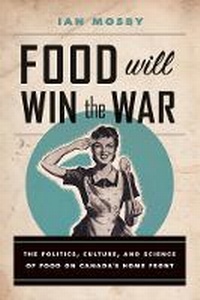
Food Will Win the War
The Politics, Culture, and Science of Food on Canada's Home Front
Published on 31. January 2015
Book
Paperback/Softback
288 pages
978-0-7748-2762-1 (ISBN)
Description
During WWII, as Canada struggled to provide its allies with food, nutritionists warned that malnutrition could derail the war effort. Posters admonished women and children to "Eat Right, Feel Right" because "Canada Needs You Strong" while cookbooks helped housewives become "housoldiers" through food rationing, menu substitutions, and household production.
Food Will Win the War explores the symbolic and material transformations that food and eating underwent during the war and the profound social, political, and cultural changes that took place in the 1940s. Through official food guides and policies, the state took unprecedented steps into the kitchens of the nation, transforming the way women cooked, what their families ate, and how people thought about food. Canadians, in turn, rallied around food and nutrition to articulate new visions of citizenship for their postwar future.
Food Will Win the War explores the symbolic and material transformations that food and eating underwent during the war and the profound social, political, and cultural changes that took place in the 1940s. Through official food guides and policies, the state took unprecedented steps into the kitchens of the nation, transforming the way women cooked, what their families ate, and how people thought about food. Canadians, in turn, rallied around food and nutrition to articulate new visions of citizenship for their postwar future.
Reviews / Votes
Both books [Mosby's Food Will Win the War as well as well as A Small Price to Pay: Consumer Culture on the Canadian Home Front by Graham Broad, UBC Press 2013] are much needed additions to the historiography of Canada's Second World War Experience. Too often have the daily lives of those on the home front been overlooked in favour of the stories of the men and women who marched away in khaki. Those who remained behind - 90 percent of Canadians - also had their worlds fundamentally transformed by war, as these books demonstrate. Specialists will certainly appreciate these works, but both are accessible and appealing to a general audience as well.- Stacey J. Barker (BC Studies)
More details
Language
English
Place of publication
Vancouver
Canada
Product notice
Paperback (trade)
Illustrations
15 illustrations, 2 tables
Dimensions
Height: 229 mm
Width: 152 mm
Weight
420 gr
ISBN-13
978-0-7748-2762-1 (9780774827621)
Copyright in bibliographic data and cover images is held by Nielsen Book Services Limited or by the publishers or by their respective licensors: all rights reserved.
Schweitzer Classification
Person
Ian Mosby is a historian of food, health, and nutrition in Canada and a postdoctoral fellow in the L.R. Wilson Institute for Canadian History at McMaster University.
Content
Introduction
1 "Eat Right, Feel Right - Canada Needs You Strong": Food Rules and the Transformation of Canada's Wartime Nutritional State
2 The Kitchen and the State: Food Rationing, Price Control, and the Gender Politics of Consumption
3 Mobilizing Canada's "Housoldiers" and "Kitchen Commandos" for War: Food, Volunteers, and the Making of Canada's Home Front
4 Tealess Teas, Meatless Days, and Recipes for Victory: Transforming Food Culture and Culinary Practice in Wartime
5 The Politics of Malnutrition: Nutrition Experts and the Making of Canada's Postwar Welfare State
Conclusion
Notes
Index
1 "Eat Right, Feel Right - Canada Needs You Strong": Food Rules and the Transformation of Canada's Wartime Nutritional State
2 The Kitchen and the State: Food Rationing, Price Control, and the Gender Politics of Consumption
3 Mobilizing Canada's "Housoldiers" and "Kitchen Commandos" for War: Food, Volunteers, and the Making of Canada's Home Front
4 Tealess Teas, Meatless Days, and Recipes for Victory: Transforming Food Culture and Culinary Practice in Wartime
5 The Politics of Malnutrition: Nutrition Experts and the Making of Canada's Postwar Welfare State
Conclusion
Notes
Index