

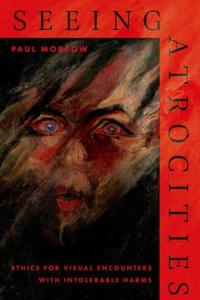
Seeing Atrocities
Ethics for Visual Encounters with Intolerable Harms
Published on 21. October 2025
Book
Hardback
312 pages
978-0-19-779700-6 (ISBN)
Description
In the 21st century, it is impossible to avoid seeing atrocities. Pictures of grievous death populate the pages of newspapers and aggregators almost daily. Billboards and banner ads for humanitarian organizations routinely feature scenes of famine and forced displacement. With the spread of social media, our closest friends and relatives have become key sources of visual encounters with intolerable harms.
Seeing Atrocities explains what we stand to gain from such encounters, and supplies crucial tools for navigating them. Images--from photographs and films to children's drawings and VR-renderings--convey vital information about causes and culpability for atrocities. At the same time, images increasingly serve as vectors for mis- and disinformation, fueling conspiracy theories and inspiring acts of violent extremism. Whether in the classroom or the courtroom, the museum or the living room, the stakes of visual encounters with atrocities are substantial. So too are the risks of misjudging them.
By showing what it means to see atrocities as atrocities, Paul Morrow forges new links between ethics, political philosophy, and the philosophy of perception. By surveying a broad range of visual encounters with atrocities, he aids lawyers, journalists, and educators in their efforts to teach, report on, or adjudicate such harms. Finally, by proposing specific norms for seeing, sharing, and exhibiting atrocities, he addresses moral questions confronting every reader in our globally connected world.
Seeing Atrocities explains what we stand to gain from such encounters, and supplies crucial tools for navigating them. Images--from photographs and films to children's drawings and VR-renderings--convey vital information about causes and culpability for atrocities. At the same time, images increasingly serve as vectors for mis- and disinformation, fueling conspiracy theories and inspiring acts of violent extremism. Whether in the classroom or the courtroom, the museum or the living room, the stakes of visual encounters with atrocities are substantial. So too are the risks of misjudging them.
By showing what it means to see atrocities as atrocities, Paul Morrow forges new links between ethics, political philosophy, and the philosophy of perception. By surveying a broad range of visual encounters with atrocities, he aids lawyers, journalists, and educators in their efforts to teach, report on, or adjudicate such harms. Finally, by proposing specific norms for seeing, sharing, and exhibiting atrocities, he addresses moral questions confronting every reader in our globally connected world.
More details
Language
English
Place of publication
New York
United States
Target group
College/higher education
Product notice
sewn/stitched
Cloth over boards
Illustrations
24 b/w illustrations
Dimensions
Height: 214 mm
Width: 150 mm
Thickness: 31 mm
Weight
431 gr
ISBN-13
978-0-19-779700-6 (9780197797006)
Copyright in bibliographic data and cover images is held by Nielsen Book Services Limited or by the publishers or by their respective licensors: all rights reserved.
Schweitzer Classification
Person
Paul Morrow is a philosopher and human rights scholar currently serving as a visiting research fellow at University College Dublin. His books include Unconscionable Crimes (2020) and the edited collection Museums and Mass Violence (2025). Paul has previously held positions at the University of Dayton Human Rights Center and the University of Virginia. Between 2023 and 2024, he co-led a federally funded grant on the prevention of domestic violent extremism titled PREVENTS-OH.
Content
Introduction: Seeing Atrocities
1: Defining Atrocities
2: Seeing Atrocities
3: Ethical Seeing
4: Professional Sharing
5: Social Sharing
6: Museum Exhibitions
7: Legal Exhibitions
Conclusion
Appendix A: Complete List of Proposed Norms for Visual Encounters with Atrocities
1: Defining Atrocities
2: Seeing Atrocities
3: Ethical Seeing
4: Professional Sharing
5: Social Sharing
6: Museum Exhibitions
7: Legal Exhibitions
Conclusion
Appendix A: Complete List of Proposed Norms for Visual Encounters with Atrocities