

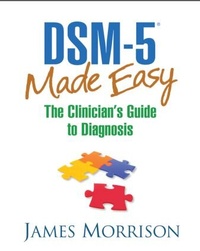
DSM-5 (R) Made Easy
The Clinician's Guide to Diagnosis
1st Edition
Published on 15. May 2014
Book
Hardback
652 pages
978-1-4625-1442-7 (ISBN)
Description
*The top title returns: with over 200,000 in print for its predecessor, Morrison's Made Easy has been the bestselling favorite since 1995.
*Completely revamped for DSM-5, but retains the clear, savvy, and entertaining style that readers love.
*Simply the best: competitors have tried, but Made Easy delivers the winning combination of ease and depth that students and clinicians want.
*Required reading: the density of DSM-5 demands a sure-handed compass.
*Core elements include essential features of disorders, differential diagnosis tips, coding issues and caveats, and more.
*Includes ICD-10-CM codes for broadest possible use worldwide.
*Completely revamped for DSM-5, but retains the clear, savvy, and entertaining style that readers love.
*Simply the best: competitors have tried, but Made Easy delivers the winning combination of ease and depth that students and clinicians want.
*Required reading: the density of DSM-5 demands a sure-handed compass.
*Core elements include essential features of disorders, differential diagnosis tips, coding issues and caveats, and more.
*Includes ICD-10-CM codes for broadest possible use worldwide.
Reviews / Votes
. -Accessible to students and experienced clinicians from all the mental health professions....The tone of the book is conversational, personal, and lively....The reader is 'walked through' the diagnostic process in a way that, especially to the student, would make evaluation seem manageable and masterable. (on the prior edition)--Clinical Social Work Journal, 10/16/2013??This is an enjoyable book full of captivating vignettes that highlight the criteria and diagnoses of DSM-5. In a fun and exciting way, the author reviews every DSM-5 diagnosis and the changes made from previous DSMs, with ICD-9 and ICD-10 code numbers....This is an excellent book for anyone interested in learning how to use DSM-5 to diagnose mental health disorders. The explanations are great, well balanced, and full of humor. It does not read like a textbook and it lives up to its title DSM-5 Made Easy. *****!--Doody's Review Service, 08/01/2014??This book is an invaluable guide to the fifth edition of the Diagnostic and Statistical Manual of Mental Disorders (DSM-5), and to psychiatric disorders and their diagnosis. It incorporates a wide range of useful features....There are more than 130 case studies that illustrate the diagnostic process and side notes to highlight particular pieces of information relevant to the disorder and diagnosis. These case studies help to bring the diagnoses to life and explain them in real-world situations....Nursing students and mental health professionals, and anyone with an interest in mental health and wellbeing.--Nursing Standard, 04/06/2015More details
Language
English
Place of publication
New York
United States
Publishing group
Guilford Publications
Target group
Professional and scholarly
College/higher education
Dimensions
Height: 235 mm
Width: 187 mm
Weight
1270 gr
ISBN-13
978-1-4625-1442-7 (9781462514427)
Copyright in bibliographic data and cover images is held by Nielsen Book Services Limited or by the publishers or by their respective licensors: all rights reserved.
Schweitzer Classification
Other editions
New editions
Book
05/2023
2nd Edition
Guilford Press
€86.00
Shipment within 15-20 days
Person
James Morrison, MD, is Affiliate Professor of Psychiatry at Oregon Health and Science University in Portland. He has extensive experience in both the private and public sectors. With his acclaimed practical books--including DSM-5 Made Easy; Diagnosis Made Easier, Second Edition; The First Interview, Fourth Edition; Interviewing Children and Adolescents, Second Edition; When Psychological Problems Mask Medical Disorders, Second Edition; and The Mental Health Clinician's Workbook--Dr. Morrison has guided hundreds of thousands of mental health professionals and students through the complexities of clinical evaluation and diagnosis.
Content
Frequently Needed Tables
Introduction
1. Neurodevelopmental Disorders
2. Schizophrenia Spectrum and Other Psychotic Disorders
3. Mood Disorders
4. Anxiety Disorders
5. Obsessive-Compulsive and Related Disorders
6. Trauma- and Stressor-Related Disorders
7. Dissociative Disorders
8. Somatic Symptom and Related Disorders
9. Feeding and Eating Disorders
10. Elimination Disorders
11. Sleep-Wake Disorders
12. Sexual Dysfunctions
13. Gender Dysphoria
14. Disruptive, Impulse-Control, and Conduct Disorders
15. Substance-Related and Addictive Disorders
16. Cognitive Disorders
17. Personality Disorders
18. Paraphilic Disorders
19. Other Factors That May Need Clinical Attention
20. Patients and Diagnoses
Appendix. Essential Tables
Global Assessment of Functioning (GAF) Scale
Physical Disorders That Affect Mental Diagnosis
Classes (or Names) of Medications That Can Cause Mental Disorders
Introduction
1. Neurodevelopmental Disorders
2. Schizophrenia Spectrum and Other Psychotic Disorders
3. Mood Disorders
4. Anxiety Disorders
5. Obsessive-Compulsive and Related Disorders
6. Trauma- and Stressor-Related Disorders
7. Dissociative Disorders
8. Somatic Symptom and Related Disorders
9. Feeding and Eating Disorders
10. Elimination Disorders
11. Sleep-Wake Disorders
12. Sexual Dysfunctions
13. Gender Dysphoria
14. Disruptive, Impulse-Control, and Conduct Disorders
15. Substance-Related and Addictive Disorders
16. Cognitive Disorders
17. Personality Disorders
18. Paraphilic Disorders
19. Other Factors That May Need Clinical Attention
20. Patients and Diagnoses
Appendix. Essential Tables
Global Assessment of Functioning (GAF) Scale
Physical Disorders That Affect Mental Diagnosis
Classes (or Names) of Medications That Can Cause Mental Disorders