

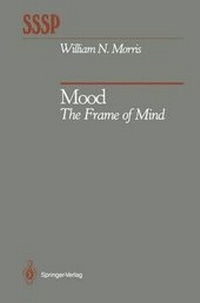
Mood
The Frame of Mind
Published on 13. November 1989
Book
Hardback
XII, 261 pages
978-0-387-96978-7 (ISBN)
Description
This is a book about moods. Though I will define the term somewhat more carefully in Chapter 1, it might help to note here that I use the word "mood" to refer to affective states which do not stimulate the relatively specific response tendencies we associate with "emotions". Instead, moods are pervasive and global, having the capability of influencing a broad range of thought processes and behavior. My interest in mood was provoked initially by the empirical and conceptual contri butions of Alice Isen and her colleagues. What fascinated me most was the sugges tion first made in a paper by Clark & Isen (1982) that mood seemed to affect behavior in two very different ways, i. e. , mood could "automatically" influence the availabil ity of mood-related cognitions and, thereby, behavior, or mood, especially of the "bad" variety, might capture our attention in that if it were sufficiently aversive we might consciously try to get rid of it, a "controlled" or "strategic" response.
More details
Other editions
Additional editions
Persons
Content
1. The Concept of Mood.- Defining Mood.- Distinguishing the Major Types of Mood.- The Figure-Ground Distinction.- 2. Theories of Mood.- 3. Sources of Mood: Events of Affective Significance.- Mood Measurement Issues.- Events Which Produce Mood: Speculations.- Events Which Produce Mood: Evidence.- Evaluation of the Evidence on Proposed Sources of Mood.- 4. Endogenous Factors Associated With Mood.- Neurobiologic Aspects of Disordered Mood.- Neurobiologic Aspects of Everyday Mood.- Neurobiologic Theories of Mood Disorder.- Summary and Conclusions.- 5. The Influence of Mood on Thought and Behavior.- The Effects of Mood on Memory.- The Effects of Mood on Perception and Judgment.- The Effects of Mood on Behavior.- Summary and Conclusions.- 6. Individual Differences in Mood.- Dimensions of Mood.- Correlates of the Tendency to Experience Positive Affect.- Correlates of the Tendency to Experience Negative Affect.- Correlates of Reactivity.- Summary and Conclusions.- 7. The Continuity Hypothesis.- Theories of Depression.- Matching Symptoms of Depression With Correlates of Everyday Mood.- Extending the Continuity Hypothesis to Bipolar Disorder and Cyclothymia.- Postscript.- References.- Author Index.