

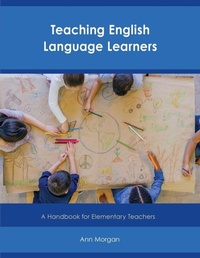
Teaching English Language Learners
A Handbook for Elementary Teachers
Published on 9. January 2019
Book
Paperback/Softback
124 pages
978-1-4758-4387-3 (ISBN)
Description
Teaching English Language Learners is a handbook for elementary staff who work with English Language Learners, but who don't have specialized training in English language acquisition. The book is a handy reference that describes all stages of learning English, and how home language and culture affect English Language Learners in school. It provides a thorough picture of English Language Learners by describing English language levels, adjustment behaviors, family interactions and expectations, non-academic areas of need, and how to discern whether or not student difficulties are language based. It also offers practical strategies for teaching writing and describes general Project Based Learning activities appropriate for both large and small groups. The book supports classroom teachers, para-educators, volunteers, teachers in training, specialists and other adults working with elementary English Language Learners.
Reviews / Votes
Teaching English Language Learners by Ann Morgan is full of workable tips and support ideas for understanding how best to meet the language, cultural, and emotional needs of immigrant and non-English speaking students. This book is easy to read and written in a very practical style without the use of theoretical jargon. The author ends each chapter with "Key Take-aways" that are practical and can be immediately implemented. Every teacher and administrator should read this book to truly understand that teaching an ESOL student is more than just teaching vocabulary and grammar. I recommend this book as it is written by an ESOL teacher who truly understands how best to teach this population of students. -- Ellen M. Curtin, Professor, Texas Wesleyan University, and author of Pathways to Teaching: Practical Strategies for Teaching English Language Learners (Pearson, 2009) This is a vital handbook for elementary classroom teachers with ESOL learners. It is a clear and engaging guide to ensuring young English learners have successful school days. It also gives tools to put in place when faced with the challenges that come with learning a new language. -- Lyla Combs, CEO and Co-Founder of the Global Center for Refugee Education and Science Ann Morgan's concise explanation of who ELL students are goes a long way to help schools and teachers understand the students they are teaching, both academically and culturally. -- Raeda Zietoon, Coordinator of EL, Frederick County Public Schools, Maryland Ann Morgan has woven a tapestry of the realities of guiding students and their families on their journeys to adjust to and become part of the American fabric. Large issues and specific ideas will help all educators reflect on the challenges of welcoming and assimilating new students into our culture with respect and understanding. The picture of an ESOL student's life is so clear and challenging to educators. The use of the anecdotes is powerful and helpful. -- Jerry Perlet, 2005 Washington Post Distinguished Educational Leadership Award, author of kids' series "Dragon Stories" Ann Morgan's examples from her own teaching, along with concrete ideas to support ELLs in the classroom, are valuable to teachers looking for ways to help this population of students. Her key take-aways at the end of each chapter are not only a great way to summarize each of her main points, but also anchor teachers in practical classroom concepts. -- Shannon M. Hilliker, assistant professor TESOL Binghamton University It takes an accomplished educator, a passionate teacher, and an engaging writer to give teachers authentic answers to a complex problem in a format that is easy to read and even easier to understand. Thank you, Ann, for your compassionate approach and masterful explanations; your humor, sensitivity, and hand-on suggestions will make a difference to children trying to acclimate to strange new worlds and languages. I can't wait to share this book with my faculty. -- Lillian Issa, Head of School, St. Thomas Episcopal Parish School, Coral Gables, FloridaMore details
Language
English
Place of publication
United States
Publishing group
Bloomsbury Publishing Plc
Target group
Professional and scholarly
Illustrations
3 b/w illustrations; 22 b/w photos; 11 tables
Dimensions
Height: 280 mm
Width: 216 mm
Thickness: 7 mm
Weight
334 gr
ISBN-13
978-1-4758-4387-3 (9781475843873)
Copyright in bibliographic data and cover images is held by Nielsen Book Services Limited or by the publishers or by their respective licensors: all rights reserved.
Schweitzer Classification
Other editions
Additional editions
E-Book
01/2019
1st Edition
Rowman & Littlefield Publishers
€32.99
Available for download
Person
Ann Morgan is a long-time elementary and ESOL teacher, teacher trainer, and writer with experience at all levels of English Language Acquisition in K-8 and college. She holds multiple Masters degrees and has worked as a writer, editor and/or consultant for the state of Maryland, Oxford University Press, the Library of Congress, Discovery Education, and the National Institutes of Health.
Content
Acknowledgments
Introduction
Acronym Soup and Other Terms
Chapter 1: Who are These Kids?
Countries and Backgrounds
Period of Adjustment
Grade Placement
The Silent Stage
An Adjustment Problem
Not an Adjustment Problem
Clothes
Realistic Expectations
Chapter 2: Home Comes to School
The Cultural Divide
General Information
Gender and Expectations
Socializing
Holidays
Resources
Chapter 3: Domains and Levels of English Language Learning
Language Domains
Listening
Speaking
Reading
Writing
Testing English Language Proficiency
Levels of English Language Proficiency
Level 1-2 Beginner
Level 3-4 Intermediate
Level 5-6 Advanced/Exited
Beginning Level Proficiency Goals
Intermediate Level Proficiency Goals
Advanced Level Proficiency Goals
Chapter 4: How to Talk to Your ELLs
Pace Yourself
Receptive Language
Productive Language
This is Tense. Keep it Simple.
Be an Active Active Speaker
More than Words
I Don't Get It
Chapter 5: Classroom Accommodations
What are Accommodations?
Typical Accommodations
Who is Part of the Accommodations Process?
When and Where do ESOL Students Use Accommodations?
Why Use Accommodations?
Chapter 6: Making the Everyday Puzzle Pieces Fit
The Basics
First Steps
Technology for the Unemployed
Let's Do Lunch-Book Talk
Overview
Before-Setting Up
During-Let's Eat
After-Clean Up
The Book Talk Ripple Effect
Chapter 7: Project Based Learning
Why PBL?
Collect Something
Write to Someone
Make Something
Play Something
Chapter 8: Strategies for Teaching Writing
Summaries
Fiction
Non-Fiction
General Organization
Dots Write
Point of View
The Kid Piece of the Writing Puzzle
Six Word Memoirs
OWL Purdue Online Writing Lab
Maryland Public Television
Chapter 9: What's the Problem?
ESOL and Special Needs
ESOL
Common Errors (Don't Worry)
Uncommon Errors (It's Time to Worry)
Chapter 10: What Teachers and Kids Say
Teachers
Input from Kids (with some grammar corrections)
Appendix A: Basic Skills Chart for Gardner's Multiple Intelligences
Appendix B: Suggested Readings for Book Talk
Appendix C: Project Based Learning (PBL) Activities
Appendix D: The Great Graph
Appendix E: Comparing Proficiency Levels over Time
Appendix F: Comparing Proficiency Scores within a Group
About the Author
Index
Introduction
Acronym Soup and Other Terms
Chapter 1: Who are These Kids?
Countries and Backgrounds
Period of Adjustment
Grade Placement
The Silent Stage
An Adjustment Problem
Not an Adjustment Problem
Clothes
Realistic Expectations
Chapter 2: Home Comes to School
The Cultural Divide
General Information
Gender and Expectations
Socializing
Holidays
Resources
Chapter 3: Domains and Levels of English Language Learning
Language Domains
Listening
Speaking
Reading
Writing
Testing English Language Proficiency
Levels of English Language Proficiency
Level 1-2 Beginner
Level 3-4 Intermediate
Level 5-6 Advanced/Exited
Beginning Level Proficiency Goals
Intermediate Level Proficiency Goals
Advanced Level Proficiency Goals
Chapter 4: How to Talk to Your ELLs
Pace Yourself
Receptive Language
Productive Language
This is Tense. Keep it Simple.
Be an Active Active Speaker
More than Words
I Don't Get It
Chapter 5: Classroom Accommodations
What are Accommodations?
Typical Accommodations
Who is Part of the Accommodations Process?
When and Where do ESOL Students Use Accommodations?
Why Use Accommodations?
Chapter 6: Making the Everyday Puzzle Pieces Fit
The Basics
First Steps
Technology for the Unemployed
Let's Do Lunch-Book Talk
Overview
Before-Setting Up
During-Let's Eat
After-Clean Up
The Book Talk Ripple Effect
Chapter 7: Project Based Learning
Why PBL?
Collect Something
Write to Someone
Make Something
Play Something
Chapter 8: Strategies for Teaching Writing
Summaries
Fiction
Non-Fiction
General Organization
Dots Write
Point of View
The Kid Piece of the Writing Puzzle
Six Word Memoirs
OWL Purdue Online Writing Lab
Maryland Public Television
Chapter 9: What's the Problem?
ESOL and Special Needs
ESOL
Common Errors (Don't Worry)
Uncommon Errors (It's Time to Worry)
Chapter 10: What Teachers and Kids Say
Teachers
Input from Kids (with some grammar corrections)
Appendix A: Basic Skills Chart for Gardner's Multiple Intelligences
Appendix B: Suggested Readings for Book Talk
Appendix C: Project Based Learning (PBL) Activities
Appendix D: The Great Graph
Appendix E: Comparing Proficiency Levels over Time
Appendix F: Comparing Proficiency Scores within a Group
About the Author
Index