

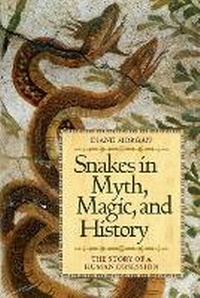
Snakes in Myth, Magic, and History
The Story of a Human Obsession
Published on 30. September 2008
Book
Hardback
208 pages
978-0-313-35292-8 (ISBN)
Description
The snake is one of humankind's most powerful and ambiguous symbols: it has at various times represented immortality and death, male and female, deity and demon, circle and line, killer and healer, the highest wisdom and the deepest subconscious. By virtue of its mysterious movement, potent poison, fearful grip, unblinking gaze and lightning quick strike, the power and image of the snake has wound its way into every culture. Whether snakes are worshipped as gods, feared as devils, or handled in religious ceremonies to test faith, snakes have played a critical role in the human heritage. This book explores the cult of the snake in world history, religion, and folklore.
Fascination with snakes has been around since the dawn of time. Even today, images of snakes attract attention, fear, disgust, or admiration. Morgan examines that obsession with this mysterious creature, covering in vivid details such topics as mythical snakes like the Plumed Serpent, serpent iconography, tall tales, as well as the psychological symbolism that has attached itself to snakes. Cultures as diverse as pre-Columbian America, India, Egypt, China, sub-Saharan Africa, Celtic Europe, and the United States have all accorded the serpent a special place in their culture-apparently regardless of whether or not real snakes play an important part in the life of the people. Here, the mysterious nature of the snake unfolds, enchanting readers with a colorful and lively discussion of its place in our history, stories, religions, and cultures.
Fascination with snakes has been around since the dawn of time. Even today, images of snakes attract attention, fear, disgust, or admiration. Morgan examines that obsession with this mysterious creature, covering in vivid details such topics as mythical snakes like the Plumed Serpent, serpent iconography, tall tales, as well as the psychological symbolism that has attached itself to snakes. Cultures as diverse as pre-Columbian America, India, Egypt, China, sub-Saharan Africa, Celtic Europe, and the United States have all accorded the serpent a special place in their culture-apparently regardless of whether or not real snakes play an important part in the life of the people. Here, the mysterious nature of the snake unfolds, enchanting readers with a colorful and lively discussion of its place in our history, stories, religions, and cultures.
More details
Language
English
Place of publication
United States
Publishing group
Bloomsbury Publishing Plc
Target group
Interest Age: From 7 to 17 years
Dimensions
Height: 235 mm
Width: 156 mm
Weight
482 gr
ISBN-13
978-0-313-35292-8 (9780313352928)
Copyright in bibliographic data and cover images is held by Nielsen Book Services Limited or by the publishers or by their respective licensors: all rights reserved.
Schweitzer Classification
Other editions
Additional editions

E-Book
09/2008
1st Edition
Praeger Publishers Inc
€53.49
Available for download
Person
Diane Morgan is Adjunct Professor of Religion and Philosophy at Wilson College. Author of more than 30 books, she is a three-time winner of the Maxwell Award for excellence in writing on pet care. She is the author of Fire and Blood: Rubies in Myth, Magic, and History (Praeger, 2007), From Satan's Crown to the Holy Grail: Emeralds in Myth, Magic, and History (Praeger, 2007), and The Buddhist Experience in America (Greenwood, 2004).
Content
Introduction
Chapter 1: The Natural and Unnatural History of the Snake
Chapter 2: The Cold-Hearted Family of Serpents
Chapter 3: Snakebite!
Chapter 4: Mortal Coils: The Big Constrictors
Chapter 5: Real Charmers: Cobras and Their Kin
Chapter 6: Generation of Vipers
Afterword
Chapter 1: The Natural and Unnatural History of the Snake
Chapter 2: The Cold-Hearted Family of Serpents
Chapter 3: Snakebite!
Chapter 4: Mortal Coils: The Big Constrictors
Chapter 5: Real Charmers: Cobras and Their Kin
Chapter 6: Generation of Vipers
Afterword