

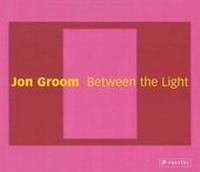
Jon Groom
Between the Light
Published on 1. June 2007
Book
Hardback
144 pages
978-3-7913-3805-7 (ISBN)
Description
Die Bilder Jon Grooms überraschen: Zunächst sieht man flächige geometrische Formen, die in vielen Farbschichten aufgetragen wurden. Je nach Standpunkt und Lichteinfall verändern sich die Farben, und aus den Flächen ergeben sich Räume und Körper. Aus diesem Grund sieht sich Jon Groom auch eher als Bildhauer denn als Maler.
Jon Groom, der Maler "wider Willen", ist ein Magier, der uns auf eine Reise in die Welt der Farbe mitnimmt. Betrachtet man die Werke Jon Grooms in Katalogen, so wird die Begrenzung auf ein geometrisches Format evident. In der direkten Konfrontation in Ausstellungen tritt dieser formale Aspekt völlig zurück, der Betrachter erlebt einen vielschichtigen Farbraum-Kosmos von starker Präsenz und suggestiver Strahlungsenergie, welche die Ausstellungsräume verändert, doch gleichzeitig wirken die Werke wie für diese Räume geschaffen. Seine Bilder haben Tiefe und Räumlichkeit, die ohne perspektivische Mittel, nur mit Farbe und Geometrie erzeugt werden, wobei die geometrische Form nicht abstrakt, sondern architektonisch wirkt.
Jon Groom, der Maler "wider Willen", ist ein Magier, der uns auf eine Reise in die Welt der Farbe mitnimmt. Betrachtet man die Werke Jon Grooms in Katalogen, so wird die Begrenzung auf ein geometrisches Format evident. In der direkten Konfrontation in Ausstellungen tritt dieser formale Aspekt völlig zurück, der Betrachter erlebt einen vielschichtigen Farbraum-Kosmos von starker Präsenz und suggestiver Strahlungsenergie, welche die Ausstellungsräume verändert, doch gleichzeitig wirken die Werke wie für diese Räume geschaffen. Seine Bilder haben Tiefe und Räumlichkeit, die ohne perspektivische Mittel, nur mit Farbe und Geometrie erzeugt werden, wobei die geometrische Form nicht abstrakt, sondern architektonisch wirkt.
More details
Persons
BEATE REIFENSCHEID is Director of the Ludwig Museum in Koblenz, Germany. ROBERT C. MORGAN is a critic, art historian, curator, artist, and poet. He is the author of The End of the Art World and editor of books on the work of Bruce Nauman, Gary Hill and Clement Greenberg.
Content
For Jon Groom, there is nothing more important in his art than the ongoing tussle with color and, bound up therewith, the experience of color as a phenomenon. For Groom, color is not a static thing but a living body that is subject to constant permutations - or, more accurately, provokes them of its own accord. Color is seen as a cosmos of its own that viewers can immerse themselves in like a deep sea of visual sensations and spiritual vibrations. Groom's understanding of art is to a very great extent both phenomenological in a scientific sense and sensually emotional.
Fully aware that numerous artists before him have already exploited and explored the realm of color field painting, his style takes this circumstance as a direct constant from which he deliberately deviates with great consistency. In this context, it may seem seductive or even downright obvious to make comparisons with Josef Albers, whose small-format pictures of "squares" carefully determine first and foremost what color enters into what dialogue with a second or third color and how far this dialogue is steered by sensations of depth, three-dimensionality, and mutual acceptance. The procedure of color field exploration - basically a simple matter in this structural system - Albers aptly described as the "interaction of color," which he formulated in theory as well. His extensive manual under that name contains his research into color and was to a considerable extent based on the insights of Bauhaus Meister Johannes Itten and Wassily Kandinsky. Basically, Albers distinguished between fact and illusion. The fact was that monochrome squares of different colors were superimposed on each other on a pre-set grid. The illusion was that the interaction of the colors created the impression that the color within a square changed as the eye moved from center to margin, and if the picture was imagined as three-dimensional, individual squares would appear to be staggered behind each other at varying distances. Albers referred to this contradictory form of color existence as "factual fact" and "actual fact." In this distinction he was getting at the conditional nature of our perception, i.e. the physiological and psychological effect of the colors. In this, our eye is not infrequently taken in by a deceptive maneuver, because the interaction of the colors in quality and quantity changes their effect - compared with how they would look by themselves.
Jon Groom calls one of his pictures Who's Afraid of Joseph Albers?, noting with a suspicion of a grin that it is a provocative picture. Why provocative? After all, at first glance it looks perhaps like a mutation of an Albers in vertical elongation. But once you try to describe the picture, difficulties crop up that follow from the actual reality and factual reality of the picture. It starts with the ocher ground, which, depending on the incident light turns more gold or reacts more strongly to the red placed on the ocher ground as a dominant square. Narrow margins at the sides and broad equal strips above and below lend the intense, very bright red solidity and permanence, even though the red square seems in our minds to float. The center axis cutting the picture symmetrically in half abuts another square, whose dark, dull reddish-brown color leads our eye into the depth like a large window, without generating an echo. As with Albers, the colors here move forward or recede, creating an effect of depth and spatial density that sets the viewer's eye in permanent motion and at the same time disturbs. But the gold ocher by itself achieves greater things in the color experience than any color constellation of Albers could do. This fluctuating light and dull gold coloration evoked by a million-fold refraction of ultra-fine light particles on the surface, generates a phenomenological reality in the picture that cannot be deductively or rationally explained or clarified, and can for its part only be experienced if the phenomenological and empirically tangible also unlocks the emotional and the irrational.
In fact, Jon Groom uses "classic" color field painting only peripherally, and does not go on to conjugate the whole Albers experience. Indeed, why should he? Basically, that would be too dry and not sensory enough for him. Essentially, the painting of Josef Albers is a deeply empirically minded affair, like a field research model with only a handful of variables - a modular system that has nonetheless a certain rigidity and dry objectivity to it. For Groom, painting is something quite different, containing a huge cosmos of possibilities. "Painting is a journey to simplify the complexity of existence," he once said. Painting itself thus ventures abroad, committing itself to the adventure of a constant challenge. It might fail, or it might start over. In essence, Groom's paintings are on the constant lookout for frontiers to cross, by means of which every sensory perception ends in an act of spiritual absorption and a spiritualized reflection about color, whose materiality he basically strives to utterly abolish so as to bring out its purism and thereby in turn the infinity of possibilities. This involves forgoing neither allusions to landscape elements nor rejecting the example of his great predecessors who influenced and stimulated him considerably during a long spell in Umbria - the Italian paintings of the International Gothic and the early Renaissance. It is the clarity of color, the lighting of the space in which the events take place that distinguishes the jewel-like art of Duccio, Perugino, and Fra Angelico, among others. Disregarding the iconographical implications of the scenes of mostly Christian import, which do not interest Groom very much, it is above all the rigor of composition and the plain and yet delicate nuancing of color that captivate viewers of these pictures over and over again. The very fact that for centuries gold was used as a background - sometimes flat, sometimes in relief - is fascinating.
Fully aware that numerous artists before him have already exploited and explored the realm of color field painting, his style takes this circumstance as a direct constant from which he deliberately deviates with great consistency. In this context, it may seem seductive or even downright obvious to make comparisons with Josef Albers, whose small-format pictures of "squares" carefully determine first and foremost what color enters into what dialogue with a second or third color and how far this dialogue is steered by sensations of depth, three-dimensionality, and mutual acceptance. The procedure of color field exploration - basically a simple matter in this structural system - Albers aptly described as the "interaction of color," which he formulated in theory as well. His extensive manual under that name contains his research into color and was to a considerable extent based on the insights of Bauhaus Meister Johannes Itten and Wassily Kandinsky. Basically, Albers distinguished between fact and illusion. The fact was that monochrome squares of different colors were superimposed on each other on a pre-set grid. The illusion was that the interaction of the colors created the impression that the color within a square changed as the eye moved from center to margin, and if the picture was imagined as three-dimensional, individual squares would appear to be staggered behind each other at varying distances. Albers referred to this contradictory form of color existence as "factual fact" and "actual fact." In this distinction he was getting at the conditional nature of our perception, i.e. the physiological and psychological effect of the colors. In this, our eye is not infrequently taken in by a deceptive maneuver, because the interaction of the colors in quality and quantity changes their effect - compared with how they would look by themselves.
Jon Groom calls one of his pictures Who's Afraid of Joseph Albers?, noting with a suspicion of a grin that it is a provocative picture. Why provocative? After all, at first glance it looks perhaps like a mutation of an Albers in vertical elongation. But once you try to describe the picture, difficulties crop up that follow from the actual reality and factual reality of the picture. It starts with the ocher ground, which, depending on the incident light turns more gold or reacts more strongly to the red placed on the ocher ground as a dominant square. Narrow margins at the sides and broad equal strips above and below lend the intense, very bright red solidity and permanence, even though the red square seems in our minds to float. The center axis cutting the picture symmetrically in half abuts another square, whose dark, dull reddish-brown color leads our eye into the depth like a large window, without generating an echo. As with Albers, the colors here move forward or recede, creating an effect of depth and spatial density that sets the viewer's eye in permanent motion and at the same time disturbs. But the gold ocher by itself achieves greater things in the color experience than any color constellation of Albers could do. This fluctuating light and dull gold coloration evoked by a million-fold refraction of ultra-fine light particles on the surface, generates a phenomenological reality in the picture that cannot be deductively or rationally explained or clarified, and can for its part only be experienced if the phenomenological and empirically tangible also unlocks the emotional and the irrational.
In fact, Jon Groom uses "classic" color field painting only peripherally, and does not go on to conjugate the whole Albers experience. Indeed, why should he? Basically, that would be too dry and not sensory enough for him. Essentially, the painting of Josef Albers is a deeply empirically minded affair, like a field research model with only a handful of variables - a modular system that has nonetheless a certain rigidity and dry objectivity to it. For Groom, painting is something quite different, containing a huge cosmos of possibilities. "Painting is a journey to simplify the complexity of existence," he once said. Painting itself thus ventures abroad, committing itself to the adventure of a constant challenge. It might fail, or it might start over. In essence, Groom's paintings are on the constant lookout for frontiers to cross, by means of which every sensory perception ends in an act of spiritual absorption and a spiritualized reflection about color, whose materiality he basically strives to utterly abolish so as to bring out its purism and thereby in turn the infinity of possibilities. This involves forgoing neither allusions to landscape elements nor rejecting the example of his great predecessors who influenced and stimulated him considerably during a long spell in Umbria - the Italian paintings of the International Gothic and the early Renaissance. It is the clarity of color, the lighting of the space in which the events take place that distinguishes the jewel-like art of Duccio, Perugino, and Fra Angelico, among others. Disregarding the iconographical implications of the scenes of mostly Christian import, which do not interest Groom very much, it is above all the rigor of composition and the plain and yet delicate nuancing of color that captivate viewers of these pictures over and over again. The very fact that for centuries gold was used as a background - sometimes flat, sometimes in relief - is fascinating.