

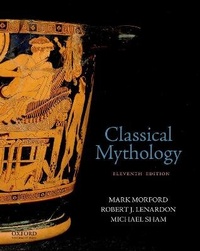
Classical Mythology
11th Edition
Published on 27. June 2018
Book
Paperback/Softback
792 pages
978-0-19-085164-4 (ISBN)
Description
Building on the best-selling tradition of previous editions, Classical Mythology, Eleventh Edition, is the most comprehensive survey of classical mythology available--and the first full-color textbook of its kind. Featuring the authors' clear and extensive translations of original sources, it brings to life the myths and legends of Greece and Rome in a lucid and engaging style. The text contains a wide variety of faithfully translated passages from Greek
and Latin sources, including Homer, Hesiod, all the Homeric Hymns, Pindar, Aeschylus, Sophocles, Euripides, Herodotus, Plato, Lucian, Lucretius, Vergil, Ovid, and Seneca. Acclaimed authors
Mark P.O. Morford, Robert J. Lenardon, and Michael Sham incorporate a dynamic combination of poetic narratives and enlightening commentary to make the myths come alive for students. Offering historical and cultural background, they also examine the enduring survival of classical mythology and its influence in the fields of art, literature, music, dance, and film.
and Latin sources, including Homer, Hesiod, all the Homeric Hymns, Pindar, Aeschylus, Sophocles, Euripides, Herodotus, Plato, Lucian, Lucretius, Vergil, Ovid, and Seneca. Acclaimed authors
Mark P.O. Morford, Robert J. Lenardon, and Michael Sham incorporate a dynamic combination of poetic narratives and enlightening commentary to make the myths come alive for students. Offering historical and cultural background, they also examine the enduring survival of classical mythology and its influence in the fields of art, literature, music, dance, and film.
Reviews / Votes
"Classical Mythology, Eleventh Edition, features a thoughtful and engaging presentation of material, good use of color and graphics, and an excellent layout. The range and coverage of topics is very thorough; most of what a mythology class or instructor might look for is here in some form."--Glen Robert Gill, Montclair State University"This book offers broad, rich, yet detailed coverage and is superior to all competitors I know. This has been my main text (with a few interruptions) for considerably more than twenty years. It is reliable and appeals to students."--Zoja Pavlovskis-Petit, Binghamton University
"I particularly like the glossary, which explains how concepts or names that originate with Greek myth have become part of the language. This is great for building vocabulary and enhancing student literacy. The phonetic pronunciations provided in one index are very helpful, as is the audio element on the website, which says words aloud so that students (and instructors) can hear how they are pronounced."--Alice Goode-Elman, Suffolk Community College
More details
Edition
11th edition
Language
English
Place of publication
New York
United States
Target group
College/higher education
Illustrations
Illustrations
Weight
1420 gr
ISBN-13
978-0-19-085164-4 (9780190851644)
Copyright in bibliographic data and cover images is held by Nielsen Book Services Limited or by the publishers or by their respective licensors: all rights reserved.
Schweitzer Classification
Persons
Mark P.O. Morford is Professor Emeritus of Classics at the University of Virginia, where he joined the faculty in 1984 after teaching for twenty-one years at The Ohio State University and serving as chairman of the Department of Classics.
Robert J. Lenardon is Professor Emeritus of Classics at The Ohio State University, where he was on the faculty for twenty-five years and served as Director of Graduate Studies in Classics.
Michael Sham is Professor of Classics at Siena College, where for the past twenty years he has developed a small but vigorous program. He is currently also Chair of the Department of Modern Languages and Classics.
Robert J. Lenardon is Professor Emeritus of Classics at The Ohio State University, where he was on the faculty for twenty-five years and served as Director of Graduate Studies in Classics.
Michael Sham is Professor of Classics at Siena College, where for the past twenty years he has developed a small but vigorous program. He is currently also Chair of the Department of Modern Languages and Classics.
Content
Art, Maps, and Figures:
Preface:
About the Authors:
About the Website:
PART ONE. THE MYTHS OF CREATION: THE GODS
1. Interpretation and Definition of Classical Mythology
Appendix to Chapter 1: Sources for Classical Mythology:
2. Historical Background of Greek Mythology
3. Myths of Creation
4. Zeus' Rise to Power: The Creation of Mortals
Appendix to Chapter 4: Parallels in Myths of Greece and the Ancient Near East:
5. The Twelve Olympians: Zeus, Hera, and Their Children
6. The Nature of the Gods and Greek Religion
7. Poseidon, Sea Deities, Group Divinities, and Monsters
8. Athena
9. Aphrodite and Eros
10. Artemis
Additional Reading: Euripides' Hippolytus
11. Apollo
Additional Reading: The Homeric Hymn to Pythian Apollo
12. Hermes
13. Dionysus, Pan, Echo, and Narcissus
14. Demeter and the Eleusinian Mysteries
15. Views of the Afterlife: The Realm of Hades
16. Orpheus and Orphism: Mystery Religions in Roman Times
PART TWO. THE GREEK SAGAS
Introduction to the Greek Sagas:
17. The Theban Saga
18. The Mycenaean Saga
Additional Reading: Orestes and the Three Electras:
19. The Trojan Saga and the Iliad
Appendix to Chapter 19: Meleager and the Calydonian Boar Hunt:
20. The Returns and the Odyssey
21. Perseus and the Legends of Argos
Appendix: Bellerophon and the Chimera:
22. Heracles
23. Theseus and the Legends of Attica
Additional Reading: Jason and Medea in Euripides:
PART THREE. THE NATURE OF ROMAN MYTHOLOGY
25. Greek Mythology in the Roman World
26. Roman Mythology and Saga
Glossary of Mythological Words and Phrases in English:
The Greek Spelling of Names:
Indexes
A. Index of Authors, Composers, and Titles I-1000
B. Glossary/Index of Mythological and Historical Persons, Places, and Subjects I-13000
Preface:
About the Authors:
About the Website:
PART ONE. THE MYTHS OF CREATION: THE GODS
1. Interpretation and Definition of Classical Mythology
Appendix to Chapter 1: Sources for Classical Mythology:
2. Historical Background of Greek Mythology
3. Myths of Creation
4. Zeus' Rise to Power: The Creation of Mortals
Appendix to Chapter 4: Parallels in Myths of Greece and the Ancient Near East:
5. The Twelve Olympians: Zeus, Hera, and Their Children
6. The Nature of the Gods and Greek Religion
7. Poseidon, Sea Deities, Group Divinities, and Monsters
8. Athena
9. Aphrodite and Eros
10. Artemis
Additional Reading: Euripides' Hippolytus
11. Apollo
Additional Reading: The Homeric Hymn to Pythian Apollo
12. Hermes
13. Dionysus, Pan, Echo, and Narcissus
14. Demeter and the Eleusinian Mysteries
15. Views of the Afterlife: The Realm of Hades
16. Orpheus and Orphism: Mystery Religions in Roman Times
PART TWO. THE GREEK SAGAS
Introduction to the Greek Sagas:
17. The Theban Saga
18. The Mycenaean Saga
Additional Reading: Orestes and the Three Electras:
19. The Trojan Saga and the Iliad
Appendix to Chapter 19: Meleager and the Calydonian Boar Hunt:
20. The Returns and the Odyssey
21. Perseus and the Legends of Argos
Appendix: Bellerophon and the Chimera:
22. Heracles
23. Theseus and the Legends of Attica
Additional Reading: Jason and Medea in Euripides:
PART THREE. THE NATURE OF ROMAN MYTHOLOGY
25. Greek Mythology in the Roman World
26. Roman Mythology and Saga
Glossary of Mythological Words and Phrases in English:
The Greek Spelling of Names:
Indexes
A. Index of Authors, Composers, and Titles I-1000
B. Glossary/Index of Mythological and Historical Persons, Places, and Subjects I-13000