

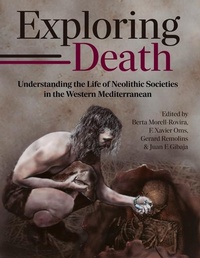
Exploring Death
Understanding the Life of Neolithic Societies in the Western Mediterranean
Published on 15. July 2025
Book
Hardback
304 pages
979-8-88857-141-5 (ISBN)
Description
Since the dawn of archaeology, the study of funerary contexts has provided invaluable insights into past societies, a trend that persists in contemporary research. Ongoing discoveries, site re-evaluations and advancements in techniques like DNA analysis continually reshape our understanding of the past.
In the specific contexts we are addressing - the emergence of the first farming and herding communities in the Western Mediterranean - few regions in Europe display such systematic funerary practices. A notable example is the Sepulcros de Fosa horizon in the northeastern Iberian Peninsula. Approximately 6,500 years ago in this area, there was a significant increase in the number of found inhumations, with some clustering in cemeteries containing several dozen individuals.
Despite sporadic mentions in international publications, the details of the Sepulcros de Fosa horizon funerary practices - such as burial locations, characteristics and performed analysis - are generally not well known, primarily because most of the publications have been presented in Catalan or Spanish. This limits awareness of one of the best-documented archaeological records shedding light on Neolithic communities in the Western Mediterranean.
Over a century, the northeastern Iberian Peninsula has yielded numerous Neolithic burials, totalling over 896 graves, predominantly featuring single inhumations. Many of these graves, excavated in ground pits, remain remarkably intact, facilitating interpretations of burial treatments and grave goods, indicative of time and effort invested in acquisition and production.
Furthermore, this was also a period of well-established social networks, allowing the distribution of materials such as flint, obsidian or jadeite for crafting lithic tools, and variscite for producing ornaments across extensive territories spanning hundreds of kilometres. These networks had an impact on the social, economic and ideological organization of these communities, as well as their interactions with other European populations. This interconnected world left archaeological traces, evident in the early stages of subsequent megalithic developments.
In the specific contexts we are addressing - the emergence of the first farming and herding communities in the Western Mediterranean - few regions in Europe display such systematic funerary practices. A notable example is the Sepulcros de Fosa horizon in the northeastern Iberian Peninsula. Approximately 6,500 years ago in this area, there was a significant increase in the number of found inhumations, with some clustering in cemeteries containing several dozen individuals.
Despite sporadic mentions in international publications, the details of the Sepulcros de Fosa horizon funerary practices - such as burial locations, characteristics and performed analysis - are generally not well known, primarily because most of the publications have been presented in Catalan or Spanish. This limits awareness of one of the best-documented archaeological records shedding light on Neolithic communities in the Western Mediterranean.
Over a century, the northeastern Iberian Peninsula has yielded numerous Neolithic burials, totalling over 896 graves, predominantly featuring single inhumations. Many of these graves, excavated in ground pits, remain remarkably intact, facilitating interpretations of burial treatments and grave goods, indicative of time and effort invested in acquisition and production.
Furthermore, this was also a period of well-established social networks, allowing the distribution of materials such as flint, obsidian or jadeite for crafting lithic tools, and variscite for producing ornaments across extensive territories spanning hundreds of kilometres. These networks had an impact on the social, economic and ideological organization of these communities, as well as their interactions with other European populations. This interconnected world left archaeological traces, evident in the early stages of subsequent megalithic developments.
More details
Language
English
Place of publication
United States
Target group
Professional and scholarly
College/higher education
Illustrations
180 b/w and color illustrations
Dimensions
Height: 222 mm
Width: 289 mm
Thickness: 23 mm
Weight
1334 gr
ISBN-13
979-8-88857-141-5 (9798888571415)
Copyright in bibliographic data and cover images is held by Nielsen Book Services Limited or by the publishers or by their respective licensors: all rights reserved.
Schweitzer Classification
Persons
Berta Morell-Rovira is a researcher in archaeology at the Mila i Fontanals Institution - Spanish National Research Council. She completed her PhD at the Autonomous University of Barcelona in 2019. Her research focuses on studying Neolithic funerary contexts in the Western Mediterranean and Central Europe using 14C dating, as well as 87Sr/86Sr, ?18O, ?15N & ?13C isotopic analysis. F. Xavier Oms held his PhD in 2014, and he is currently a lecturer at the Section of Prehistory and Archaeology of the University of Barcelona. His research focuses primarily on the Mesolithic-Neolithic transition and the study of early Neolithic colonisations in the northeast of the Iberian Peninsula through chronology and ceramics. He has directed and is currently directing numerous field archaeology projects. Gerard Remolins is an archaeologist at the company ReGiraRocs. He is currently pursuing a doctorate in Geostatistics and Spatial Archeology with the study of spatial patterns of intra-site organization in prehistoric sites in the central and western Mediterranean. Juan F. Gibaja received his PhD in prehistory from the Autonomous University of Barcelona in 2002. He is currently a researcher at the Spanish National Research Council (CSIC). He specialises in use-wear analysis, and his research has focused on the Mesolithic to Neolithic societies in the Mediterranean. In recent years he has directed several projects on the funerary contexts of northeast Iberia.
Content
List of contributors
Acknowledgements
Note on the edition, by Luis Calvo Calvo
1. Introduction
Berta Morell-Rovira, F. Xavier Oms, Gerard Remolins, Izaro Quevedo and Juan F. Gibaja
2. The last Mesolithic groups in the western Mediterranean
F. Xavier Oms, Fabio Santaniello and Juan F. Gibaja
3. The Neolithic expansion across the central and western Mediterranean: revisiting the radiocarbon framework
Niccolo Mazzucco, Thomas Huet and Juan F. Gibaja
4. The arrival of the first farmers and herders in the Iberian Peninsula
F. Xavier Oms, Juan F. Gibaja and Berta Morell-Rovira
5. A view of the mortuary world in the northeast of the Iberian Peninsula through the history of research
Araceli Martin
6. Geographic distribution and funerary diversity in the Sepulcros de Fosa Culture
Gerard Remolins, Juan F. Gibaja, Alfons Figuls and Izaro Quevedo
7. Chronology and periodisation of the funerary practices
Berta Morell-Rovira, F. Xavier Oms and Juan F. Gibaja
8. Neolithic burials in the northeast Iberian Peninsula: typology and chronology
Araceli Martin, Stephanie Duboscq, F. Xavier Oms, Roser Pou, Josep Mestres, Miquel Marti, Xavier Esteve, M. Eulalia Subira and Juan F. Gibaja
9. The Bobila Madurell-Can Gambus paradox: an iconic burial site and an outlier?
Florence Alliese
10. Skeletal modifications: lesions and physical activities
Stephanie Duboscq
11. The diet of Neolithic communities in northeast Iberia
Maria Fontanals-Coll
12. Evidence of hunter-gatherer biological profile retention in farmer populations in the Iberian Peninsula based
on dental non-metric trait analysis
Diego Lopez-Onaindia and M. Eulalia Subira
13. DNA analysis: characterisation and origin of populations
Claudia Gomes
14. Middle Neolithic vessels as grave goods in the northeast Iberian Peninsula
F. Xavier Oms, Araceli Martin, Josep Mestres, Josep Tarrus, Anna Bach, Claudia Maso, Izaro Quevedo and Miriam Cubas
15. Faunal remains
Silvia Albizuri and Patricia Martin
16. Chipped lithic implements at mortuary and domestic sites
Juan F. Gibaja, Gerard Remolins, Alfons Figuls and Berta Morell-Rovira
17. Polished and bevelled artefacts in the northeastern Iberia Sepulcros de Fosa communities. A petrological,
functional and technological contribution
Alba Masclans and Alfons Figuls
18. Grinding tools and their value in burial contexts: an approach during the Neolithic in the northeast of Iberia
Cristian Emens
19. Bone tools
Millan Mozota
20. Personal ornaments
Monica Oliva
21. Connections with Neolithic societies in northern Italy: the funerary practices of the VBQ Culture
Elisabetta Mottes
22. Neolithic cist graves in the Alps: the Chamblandes Horizon
Noah Steuri, Marco Milella and Sandra Loesch
23. Connections with Middle Neolithic societies in southeastern France
Aurore Schmitt
24. Connections with other populations in the Iberian Peninsula
Serafin Becerra, Eduardo Vijande, Antonio Faustino Carvalho and Carlos Rodriguez Rellan
25. A society in transformation. The transition to collective burials
Araceli Martin, Josep Tarrus and F. Xavier Oms
26. To conclude ...
Berta Morell-Rovira, F. Xavier Oms, Gerard Remolins, Izaro Quevedo and Juan F. Gibaja
Bibliography
Acknowledgements
Note on the edition, by Luis Calvo Calvo
1. Introduction
Berta Morell-Rovira, F. Xavier Oms, Gerard Remolins, Izaro Quevedo and Juan F. Gibaja
2. The last Mesolithic groups in the western Mediterranean
F. Xavier Oms, Fabio Santaniello and Juan F. Gibaja
3. The Neolithic expansion across the central and western Mediterranean: revisiting the radiocarbon framework
Niccolo Mazzucco, Thomas Huet and Juan F. Gibaja
4. The arrival of the first farmers and herders in the Iberian Peninsula
F. Xavier Oms, Juan F. Gibaja and Berta Morell-Rovira
5. A view of the mortuary world in the northeast of the Iberian Peninsula through the history of research
Araceli Martin
6. Geographic distribution and funerary diversity in the Sepulcros de Fosa Culture
Gerard Remolins, Juan F. Gibaja, Alfons Figuls and Izaro Quevedo
7. Chronology and periodisation of the funerary practices
Berta Morell-Rovira, F. Xavier Oms and Juan F. Gibaja
8. Neolithic burials in the northeast Iberian Peninsula: typology and chronology
Araceli Martin, Stephanie Duboscq, F. Xavier Oms, Roser Pou, Josep Mestres, Miquel Marti, Xavier Esteve, M. Eulalia Subira and Juan F. Gibaja
9. The Bobila Madurell-Can Gambus paradox: an iconic burial site and an outlier?
Florence Alliese
10. Skeletal modifications: lesions and physical activities
Stephanie Duboscq
11. The diet of Neolithic communities in northeast Iberia
Maria Fontanals-Coll
12. Evidence of hunter-gatherer biological profile retention in farmer populations in the Iberian Peninsula based
on dental non-metric trait analysis
Diego Lopez-Onaindia and M. Eulalia Subira
13. DNA analysis: characterisation and origin of populations
Claudia Gomes
14. Middle Neolithic vessels as grave goods in the northeast Iberian Peninsula
F. Xavier Oms, Araceli Martin, Josep Mestres, Josep Tarrus, Anna Bach, Claudia Maso, Izaro Quevedo and Miriam Cubas
15. Faunal remains
Silvia Albizuri and Patricia Martin
16. Chipped lithic implements at mortuary and domestic sites
Juan F. Gibaja, Gerard Remolins, Alfons Figuls and Berta Morell-Rovira
17. Polished and bevelled artefacts in the northeastern Iberia Sepulcros de Fosa communities. A petrological,
functional and technological contribution
Alba Masclans and Alfons Figuls
18. Grinding tools and their value in burial contexts: an approach during the Neolithic in the northeast of Iberia
Cristian Emens
19. Bone tools
Millan Mozota
20. Personal ornaments
Monica Oliva
21. Connections with Neolithic societies in northern Italy: the funerary practices of the VBQ Culture
Elisabetta Mottes
22. Neolithic cist graves in the Alps: the Chamblandes Horizon
Noah Steuri, Marco Milella and Sandra Loesch
23. Connections with Middle Neolithic societies in southeastern France
Aurore Schmitt
24. Connections with other populations in the Iberian Peninsula
Serafin Becerra, Eduardo Vijande, Antonio Faustino Carvalho and Carlos Rodriguez Rellan
25. A society in transformation. The transition to collective burials
Araceli Martin, Josep Tarrus and F. Xavier Oms
26. To conclude ...
Berta Morell-Rovira, F. Xavier Oms, Gerard Remolins, Izaro Quevedo and Juan F. Gibaja
Bibliography