

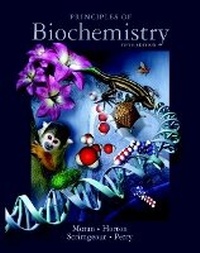
Principles of Biochemistry
5th Edition
Published on 6. October 2011
Book
Hardback
832 pages
978-0-321-70733-8 (ISBN)
Description
Principles of Biochemistry provides a concise introduction to fundamental concepts of biochemistry, striking the right balance of rigor and detail between the encyclopedic volumes and the cursory overview texts available today. Widely praised for accuracy, currency, and clarity of exposition, the Fifth Edition offers a new student-friendly design, an enhanced visual program, new Application Boxes, contemporary research integrated throughout, and updated end-of-chapter problems.
More details
Other editions
Previous edition
Robert A. Horton | Laurence A. Moran | Gray Scrimgeour
Principles of Biochemistry
United States Edition
Book
11/2005
4th Edition
Pearson
€103.98
Article exhausted; check for reprint
Persons
Laurence A. Moran
After earning his PhD from Princeton University in 1974, Professor Moran spent four years at the Universite de Geneve in Switzerland. He has been a member of the Department of Biochemistry at the University of Toronto since 1978, specializing in molecular biology and molecular evolution. His research findings on heat-shock genes have been published in many scholarly journals.
H. Robert Horton
Dr. Horton, who received his PhD from the University of Missouri in 1962, is William Neal Reynolds Professor Emeritus and Alumni Distinguished Professor Emeritus in the Department of Biochemistry at North Carolina State University, where he served on the faculty for over 30 years. Most of Professor Horton's research was in protein and enzyme mechanisms.
K. Gray Scrimgeour
Professor Scrimgeour received his doctorate from the University of Washington in 1961 and has been a faculty member at the University of Toronto since 1967. He is the author of The Chemistry and Control of Enzymatic Reactions (1977, Academic Press), and his work on enzymatic systems has been published in more than 50 professional journal articles during the past 40 years. From 1984-1992, he was editor of the journal Biochemistry and Cell Biology.
Marc D. Perry
After earning his PhD from the University of Toronto in 1988, Dr. Perry trained at the University of Colorado, where he studied sex determination in the nematode C. elegans. In 1994 he returned to the University of Toronto as a faculty member in the department of Molecular and Medical Genetics. His research has focused on developmental genetics, meiosis and bioinformatics. In 2004 he joined the Heart & Stroke / Richard Lewar Centre of Excellence in Cardiovascular Research in the University of Toronto's Faculty of Medicine.
After earning his PhD from Princeton University in 1974, Professor Moran spent four years at the Universite de Geneve in Switzerland. He has been a member of the Department of Biochemistry at the University of Toronto since 1978, specializing in molecular biology and molecular evolution. His research findings on heat-shock genes have been published in many scholarly journals.
H. Robert Horton
Dr. Horton, who received his PhD from the University of Missouri in 1962, is William Neal Reynolds Professor Emeritus and Alumni Distinguished Professor Emeritus in the Department of Biochemistry at North Carolina State University, where he served on the faculty for over 30 years. Most of Professor Horton's research was in protein and enzyme mechanisms.
K. Gray Scrimgeour
Professor Scrimgeour received his doctorate from the University of Washington in 1961 and has been a faculty member at the University of Toronto since 1967. He is the author of The Chemistry and Control of Enzymatic Reactions (1977, Academic Press), and his work on enzymatic systems has been published in more than 50 professional journal articles during the past 40 years. From 1984-1992, he was editor of the journal Biochemistry and Cell Biology.
Marc D. Perry
After earning his PhD from the University of Toronto in 1988, Dr. Perry trained at the University of Colorado, where he studied sex determination in the nematode C. elegans. In 1994 he returned to the University of Toronto as a faculty member in the department of Molecular and Medical Genetics. His research has focused on developmental genetics, meiosis and bioinformatics. In 2004 he joined the Heart & Stroke / Richard Lewar Centre of Excellence in Cardiovascular Research in the University of Toronto's Faculty of Medicine.
Content
1. Biochemistry and the Language of Chemistry
2. The Chemical Foundation of Life: Weak Interactions in an Aqueous Environment
3. The Energetics of Life
4. Nucleic Acids
5. Introduction to Proteins: The Primary Level of Protein Structure
6. The Three-Dimensional Structure of Proteins
7. Protein Function and Evolution
8. Enzymes: Biological Catalysts
9. Carbohydrates: Sugars, Saccharides, Glycans
10. Lipids, Membranes, and Cellular Transport
11. Chemical Logic of Metabolism
12. Carbohydrate Metabolism: Glycolysis, Gluconeogenesis, Glycogen Metabolism, and the Pentose Phosphate Pathway
13. The Citric Acid Cycle
14. Electron Transport, Oxidative Phosphorylation, and Oxygen Metabolism
15. Photosynthesis
16. Lipid Metabolism
17. Interorgan and Intracellular Coordination of Energy Metabolism in Vertebrates
18. Amino Acid and Nitrogen Metabolism
19. Nucleotide Metabolism
20. Mechanisms of Signal Transduction
21. Genes, Genomes, and Chromosomes
22. DNA Replication
23. DNA Repair, Recombination, and Rearrangement
24. Transcription and Posttranscriptional Processing
25. Information Decoding: Translation and Posttranslational Protein Processing
26. Regulation of Gene Expression
APPENDICES
I: ANSWERS TO SELECTED PROBLEMS
II: REFERENCES
2. The Chemical Foundation of Life: Weak Interactions in an Aqueous Environment
3. The Energetics of Life
4. Nucleic Acids
5. Introduction to Proteins: The Primary Level of Protein Structure
6. The Three-Dimensional Structure of Proteins
7. Protein Function and Evolution
8. Enzymes: Biological Catalysts
9. Carbohydrates: Sugars, Saccharides, Glycans
10. Lipids, Membranes, and Cellular Transport
11. Chemical Logic of Metabolism
12. Carbohydrate Metabolism: Glycolysis, Gluconeogenesis, Glycogen Metabolism, and the Pentose Phosphate Pathway
13. The Citric Acid Cycle
14. Electron Transport, Oxidative Phosphorylation, and Oxygen Metabolism
15. Photosynthesis
16. Lipid Metabolism
17. Interorgan and Intracellular Coordination of Energy Metabolism in Vertebrates
18. Amino Acid and Nitrogen Metabolism
19. Nucleotide Metabolism
20. Mechanisms of Signal Transduction
21. Genes, Genomes, and Chromosomes
22. DNA Replication
23. DNA Repair, Recombination, and Rearrangement
24. Transcription and Posttranscriptional Processing
25. Information Decoding: Translation and Posttranslational Protein Processing
26. Regulation of Gene Expression
APPENDICES
I: ANSWERS TO SELECTED PROBLEMS
II: REFERENCES