


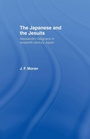
The Japanese and the Jesuits
Alessandro Valignano in Sixteenth Century Japan
1st Edition
Published on 26. November 1992
Book
Hardback
250 pages
978-0-415-08813-8 (ISBN)
Description
The Japanese and the Jesuits examines the attempt by sixteenth century Jesuits to convert the Japanese to Christianity. Directing the Jesuits was the Italian Alessandro Valignano, whose own magisterial writings, many of them not previously translated or published, are the principle source material for this account of one of the most remarkable of all meetings between East and West.
Valignano arrived in Japan in 1579. In promoting Christianity, he always sought the support of the ruling classes, but an important part of his strategy was also to have the missionaries adapt themselves thoroughly to Japanese customs, etiquette and culture. He was insistent that they must master the Japanese language, and he brought to Japan a European printing press, which turned out grammars and dictionaries for the missionaries, and works of instruction and devotion for the Japanese Christians.
Following Valignano's death, Christianity was proscribed and missionaries banished from Japan. This does not detract from his remarkable achievements. He understood perfectly well that foreign missionaries by themselves were not capable of converting Japan to Christianity, and one of his principal concerns was the training of Japanese Jesuits and priests, and breaking down the barriers between them and the Europeans. Few people have ever been more acutely aware of, or grappled more determinedly with, problems in Japanese-Western relationships.
Valignano arrived in Japan in 1579. In promoting Christianity, he always sought the support of the ruling classes, but an important part of his strategy was also to have the missionaries adapt themselves thoroughly to Japanese customs, etiquette and culture. He was insistent that they must master the Japanese language, and he brought to Japan a European printing press, which turned out grammars and dictionaries for the missionaries, and works of instruction and devotion for the Japanese Christians.
Following Valignano's death, Christianity was proscribed and missionaries banished from Japan. This does not detract from his remarkable achievements. He understood perfectly well that foreign missionaries by themselves were not capable of converting Japan to Christianity, and one of his principal concerns was the training of Japanese Jesuits and priests, and breaking down the barriers between them and the Europeans. Few people have ever been more acutely aware of, or grappled more determinedly with, problems in Japanese-Western relationships.
Reviews / Votes
`This is a necessary book for all students of this fascinating period of Japanese history.' - Sir Hugh Cortazzi, Proceedings of the Japan SocietyMore details
Language
English
Place of publication
London
United Kingdom
Publishing group
Taylor & Francis Ltd
Target group
College/higher education
Dimensions
Height: 222 mm
Width: 145 mm
Thickness: 18 mm
Weight
491 gr
ISBN-13
978-0-415-08813-8 (9780415088138)
Copyright in bibliographic data and cover images is held by Nielsen Book Services Limited or by the publishers or by their respective licensors: all rights reserved.
Schweitzer Classification
Other editions
Additional editions
Book
03/2014
1st Edition
Routledge
€83.70
Shipment within 15-20 days
E-Book
10/2012
1st Edition
Routledge
€77.99
Available for download
E-Book
10/2012
1st Edition
Routledge
€77.99
Available for download
Person
J.F. Moran has taught at the Universities of Hiroshima, Sheffield, Tsukuba, Yamaguchi, Oxford and Tokyo. His Oxford doctorate is on the history of the Japanese language, and he has published textbooks of English for Japanese students, and learned articles on Japanese language and Jesuit history. J.F.Moran is now head of the Department of Japanese at Stirling University.
Content
Chapter 1 Orientation; Chapter 2 The ambassadors; Chapter 3 The Visitor; Chapter 4 Full and complete information; Chapter 5 Ships and sealing-wax; Chapter 6 The enterprise; Chapter 7 Friars from the Philippines; Chapter 8 High and low; Chapter 9 The alms from the China ship; Chapter 10 Rich and poor; Chapter 11 The press; Chapter 12 Japanese Jesuits; Chapter 13 The Japanese language; Chapter 14 Conclusion;