


The Amarna Letters
Published on 27. July 1992
Book
Hardback
448 pages
978-0-8018-4251-1 (ISBN)
Description
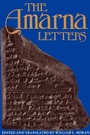
An ancient inscription identified some of the ruins at el Amarna as "The Place of the Letters of the Pharaoh." Discovered there, circa 1887, were nearly four hundred cuneiform tablets containing correspondence of the Egyptian court with rulers of neighboring states in the mid-fourteenth century B.C. Previous translations of these letters were both incomplete and reflected an imperfect understanding of the Babylonian dialects in which they were written. William Moran devoted a lifetime of study to the Amarna letters to prepare this authoritative English translation.
The letters provide a vivid record of high-level diplomatic exchanges that, by modern standards, are often less than diplomatic. An Assyrian ruler complains that the Egyptian king's latest gift of gold was not even sufficient to pay the cost of the messengers who brought it. The king of Babylon refuses to give his daughter in marriage to the pharaoh without first having proof that the king's sister-already one of the pharaoh's many wives-is still alive and well. The king of Karaduniyash complains that the Egyptian court has "detained" his messenger-for the past six years. And Egyptian vassal Rib-Hadda, writing from the besieged port of Byblos, repeatedly demands military assistance for his city or, failing that, an Egyptian ship to permit his own escape.
The letters provide a vivid record of high-level diplomatic exchanges that, by modern standards, are often less than diplomatic. An Assyrian ruler complains that the Egyptian king's latest gift of gold was not even sufficient to pay the cost of the messengers who brought it. The king of Babylon refuses to give his daughter in marriage to the pharaoh without first having proof that the king's sister-already one of the pharaoh's many wives-is still alive and well. The king of Karaduniyash complains that the Egyptian court has "detained" his messenger-for the past six years. And Egyptian vassal Rib-Hadda, writing from the besieged port of Byblos, repeatedly demands military assistance for his city or, failing that, an Egyptian ship to permit his own escape.
Reviews / Votes
"A superb treatment of the Amarna Letters."'--Zeitschrift f|r Assyriologie' William Moran, who has devoted a lifetime of study to the Amarna Letters, offers the first authoritative English translation. Meticulously edited with an introduction, extensive notes, and commentary, The Amarna Letters is an essential resource for the study of the Egyptian New Kingdom as well as of Syria-Palestine in the late Bronze Age.More details
Language
English
Place of publication
Baltimore, MD
United States
Target group
College/higher education
Professional and scholarly
Dimensions
Height: 229 mm
Width: 152 mm
Thickness: 33 mm
Weight
816 gr
ISBN-13
978-0-8018-4251-1 (9780801842511)
DOI
10.56021/9780801842511
Copyright in bibliographic data is held by Nielsen Book Services Limited or its licensors: all rights reserved.
Schweitzer Classification
Other editions
Additional editions
William L. Moran
The Amarna Letters
Book
02/2002
Johns Hopkins University Press
€46.40
Article not available for order
Person
William L. Moran (1921-2000) was Andrew W. Mellon Professor of Humanities, Emeritus, in the Department of Near Eastern Languages and Civilizations, Harvard University.