

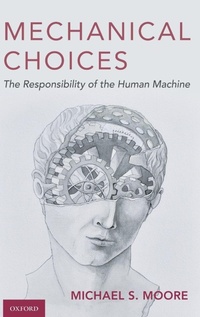
Mechanical Choices
The Responsibility of the Human Machine
Published on 17. July 2020
Book
Hardback
612 pages
978-0-19-086399-9 (ISBN)
Description
Mechanical Choices details the intimate connection that exists between morality and law: the morality we use to blame others for their misdeeds and the criminal law that punishes them for these misdeeds. This book shows how both law and morality presuppose the accuracy of common sense, a centuries-old psychology that defines people as rational agents who make honorable choices and act for just reasons. It then shows how neuroscience is commonly taken to challenge these fundamental psychological assumptions. Such challenges--four in number--are distinguished from each other by the different neuroscientific facts from which they arise: the fact that human choices are caused by brain events; the fact that those choices don't cause the actions that are their objects but are only epiphenomenal to those choices; the fact that those choices are identical to certain physical events in the brain; and the fact that human subjects are quite fallible in their knowledge of what they are doing and why. The body of this book shows how such challenges are either based on faulty facts or misconceived as to the relevance of such facts to responsibility. The book ends with a detailed examination of the neuroscience of addiction, an examination which illustrates how neuroscience can help rather than challenge both law and morality in their quest to accurately define excuses from responsibility.
Reviews / Votes
Mechanical Choices has much to offer...those interested in the base assumptions of extant criminal law and a detailed compatibilist account of moral responsibility will reap great intellectual dividends by investing their time in Mechanical Choices. * Andreas Kuersten, Georgetown University Medical Center, Journal of Moral Philosophy * The book is well worth a read. Moore truly does an admirable job of teasing apart different arguments and "challenges" one finds in neuroscience-based attacks on moral responsibility and retributivism and shows how each can be met. He does prove the negative thesis that neither folk-psychological ideas about agency and responsibility nor retributivist criminal justice depend on disproven claims. * Sofia M. I. Jeppsson, Ethical Theory and Moral Practice * Mechanical Choices is a monumental book, rich with ideas. * Alex Kaiserman, Criminal Law and Philosophy * Mechanical Choices is a monumental book, rich with ideas. * Alex Kaiserman, Criminal Law and Philosophy *More details
Language
English
Place of publication
New York
United States
Target group
Professional and scholarly
Dimensions
Height: 240 mm
Width: 161 mm
Thickness: 37 mm
Weight
1074 gr
ISBN-13
978-0-19-086399-9 (9780190863999)
Copyright in bibliographic data and cover images is held by Nielsen Book Services Limited or by the publishers or by their respective licensors: all rights reserved.
Schweitzer Classification
Other editions
Additional editions
E-Book
05/2020
OUP eBook
€62.99
Available for download
E-Book
05/2020
OUP eBook
€48.99
Available for download
Person
Michael S. Moore is Charles R. Walgreen, Jr. Chair in Law at the University of Illinois and Co-Director of the Program in Law and Philosophy.
Content
Preface and Acknowledgments
Chapter 1: Introduction
Part I: Criminal Law and the Morality of Ascribing Responsibility
Chapter 2: The General Structure of Criminal Law in Terms of Ascriptive Moral Principles
Part II: The Criminal Law's Suppositions About the Psychology of Persons
Chapter 3: Human Actions at the Root of Moral Wrongdoing and Criminal Law's Actus Reus
Chapter 4: Intention and Belief at the Root of Moral Culpability and Mens Rea
Chapter 5: Further Questions About the Basic Distinction Between Intention and Belief
Chapter 6: The Royal Road to the Criminal Law's Concept of the Psychology of Persons: The Insanity Defense
Part III: The Challenges to Criminal Law by Neuroscience
Chapter 7: The Challenging Data of Neuroscience and the Challenges Mounted From that Data
Part IV: The Hard Determinist Challenge
Chapter 8: The Libertarian, Fictionalist, and Compatibilist Responses to Hard Determinism
Chapter 9: Rescuing the Volitional Excuses from Compatibilism (The Overshoot Problem for Compatibilism)
PART V: The Epiphenomenalist Challenge
Chapter 10: The Initiation of the Epiphenomenalist Challenge in the Work of Benjamin Libet
Chapter 11: The Limited Compatibilism of Epiphenomenalism with Responsibility
PART VI: The Reductionist Challenge
Chapter 12: "Nothing But a Pack of Neurons"
Part VII: Neuroscience as the Helper rather than the Challenger of the Criminal Law
Chapter 13: The Potential Contributions of Neuroscience to our Understanding of Addiction
Chapter 1: Introduction
Part I: Criminal Law and the Morality of Ascribing Responsibility
Chapter 2: The General Structure of Criminal Law in Terms of Ascriptive Moral Principles
Part II: The Criminal Law's Suppositions About the Psychology of Persons
Chapter 3: Human Actions at the Root of Moral Wrongdoing and Criminal Law's Actus Reus
Chapter 4: Intention and Belief at the Root of Moral Culpability and Mens Rea
Chapter 5: Further Questions About the Basic Distinction Between Intention and Belief
Chapter 6: The Royal Road to the Criminal Law's Concept of the Psychology of Persons: The Insanity Defense
Part III: The Challenges to Criminal Law by Neuroscience
Chapter 7: The Challenging Data of Neuroscience and the Challenges Mounted From that Data
Part IV: The Hard Determinist Challenge
Chapter 8: The Libertarian, Fictionalist, and Compatibilist Responses to Hard Determinism
Chapter 9: Rescuing the Volitional Excuses from Compatibilism (The Overshoot Problem for Compatibilism)
PART V: The Epiphenomenalist Challenge
Chapter 10: The Initiation of the Epiphenomenalist Challenge in the Work of Benjamin Libet
Chapter 11: The Limited Compatibilism of Epiphenomenalism with Responsibility
PART VI: The Reductionist Challenge
Chapter 12: "Nothing But a Pack of Neurons"
Part VII: Neuroscience as the Helper rather than the Challenger of the Criminal Law
Chapter 13: The Potential Contributions of Neuroscience to our Understanding of Addiction