

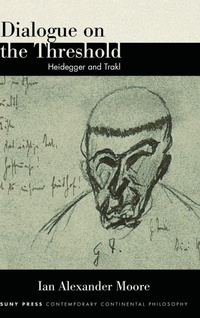
Dialogue on the Threshold
Heidegger and Trakl
Published on 1. November 2022
Book
Hardback
420 pages
978-1-4384-9067-0 (ISBN)
Description
A reconstruction and critical interpretation of Heidegger's remarkable relationship to the poet Georg Trakl.
Winner of the 2023 Symposium Book Award presented by Symposium: Canadian Journal of Continental Philosophy
In the early 1950s, German philosopher Martin Heidegger proclaimed the Austrian expressionist Georg Trakl to be the poet of his generation and of the hidden Occident. Trakl, a guilt-ridden lyricist who died of a cocaine overdose in the early days of World War I, thus became for Heidegger a redemptive successor to Hoelderlin. Drawing on Derrida's Geschlecht series and substantial archival research, Dialogue on the Threshold explores the productive and problematic tensions that pervade Heidegger's reading of Trakl and reflects more broadly on the thresholds that separate philosophy from poetry, gathering from dispersion, the same from the other, and the native from the foreigner. Ian Alexander Moore examines why Heidegger was reluctant to follow Trakl's invitation to cross these thresholds, even though his encounter with the poet did compel him to take up, in astounding ways, many underrepresented topics in his philosophical corpus such as sexual difference, pain, animality, and Christianity. A contribution not just to Heidegger and Trakl studies but also, more modestly, to the old quarrel between philosophy and poetry, Dialogue on the Threshold concludes with new translations of eighteen poems by Trakl.
Winner of the 2023 Symposium Book Award presented by Symposium: Canadian Journal of Continental Philosophy
In the early 1950s, German philosopher Martin Heidegger proclaimed the Austrian expressionist Georg Trakl to be the poet of his generation and of the hidden Occident. Trakl, a guilt-ridden lyricist who died of a cocaine overdose in the early days of World War I, thus became for Heidegger a redemptive successor to Hoelderlin. Drawing on Derrida's Geschlecht series and substantial archival research, Dialogue on the Threshold explores the productive and problematic tensions that pervade Heidegger's reading of Trakl and reflects more broadly on the thresholds that separate philosophy from poetry, gathering from dispersion, the same from the other, and the native from the foreigner. Ian Alexander Moore examines why Heidegger was reluctant to follow Trakl's invitation to cross these thresholds, even though his encounter with the poet did compel him to take up, in astounding ways, many underrepresented topics in his philosophical corpus such as sexual difference, pain, animality, and Christianity. A contribution not just to Heidegger and Trakl studies but also, more modestly, to the old quarrel between philosophy and poetry, Dialogue on the Threshold concludes with new translations of eighteen poems by Trakl.
Reviews / Votes
"...Moore's text is a tour de force of the later Heidegger's thinking of being. Moore provides access to much of Heidegger's thinking, sources, and marginalia on Trakl that have heretofore either been unavailable or unavailable in English. Beyond this, he develops trenchant critiques of Heidegger via an engagement with Derridean deconstruction." - Symposium"One thing will be apparent to any reader of Ian Alexander Moore's Dialogue on the Threshold: this is a singularly impressive work of scholarship ... Dialogue on the Threshold, in short, is exemplary of what it means to inherit Heidegger critically without either cheap polemic or unconvincing apologetics." - Research in Phenomenology
"This is an extremely impressive book. Full of original insights and meticulous scholarship, as well as new primary source material that is not available elsewhere, Dialogue on the Threshold establishes Moore among the leading Heidegger scholars of his generation." - Robert Bernasconi, Pennsylvania State University
More details
Series
Language
English
Place of publication
Albany, NY
United States
Target group
Professional and scholarly
US School Grade: College Graduate Student and over
Illustrations
8 Illustrations, black and white
Dimensions
Height: 235 mm
Width: 157 mm
Thickness: 29 mm
Weight
832 gr
ISBN-13
978-1-4384-9067-0 (9781438490670)
Copyright in bibliographic data and cover images is held by Nielsen Book Services Limited or by the publishers or by their respective licensors: all rights reserved.
Schweitzer Classification
Other editions
Additional editions
E-Book
11/2022
1st Edition
De Gruyter
from
€91.99
Available for download
Person
Ian Alexander Moore is Assistant Professor of Philosophy at Loyola Marymount University and a faculty member at St. John's College. He is the author of Eckhart, Heidegger, and the Imperative of Releasement, also published by SUNY Press.
Content
List of Images
Acknowledgments
Abbreviations
Note on Translations
Introduction
Chapter 1: "The Poet of Our Generation": Heidegger Reads Trakl
1. Discovering the Poet (Thanks to a Journal for the Avant-Garde)
2. Lecturing at a Luxury Resort
3. Speaking of Language
4. Celebrating Trakl, Saving the West
5. Post eventum
6. Annotating the Trakl Bible
Chapter 2: Language of Bread and Wine
1. Gesture, the Inexpressible, and the Speaking of the Unspoken
2. Language of Earth and Sky
3. Digression on Christianity
4. Language of Body and Blood
Chapter 3: For the Love of Detachment
1. The Problem of Polysemy
2. Heidegger's Placement of Detachment
3. Abgeschiedenheit in (Our?) Middle High German
4. Heidegger's Early Acquaintance with Detachment
5. Deconstructing Detachment
6. Pour l'amour de l'Abgeschiedenheit
Chapter 4: Pain Is Being Itself
1. Heidegger's On Pain
2. Ernst Juenger: On or beyond Pain?
3. Via doloris heideggeriana
4. Zum Schmerz selbst!
5. The Gentle Gathering of Pain
6. Algos: An Etymological Excursus
7. In the Name of Schmerz
8. "ein gewaltiger Schmerz": Trakl's "Grodek"
Chapter 5: Poetic Colors of the Holy: Trakl with Pindar
1. Chrusology, Ontology, Hierology
2. Sacre bleu
3. A Heideggerian Farbenlehre?
4. (Un)holy Madness: Trakl with Hoelderlin and Celan
Chapter 6: Geschlecht
1. "A Grand Discourse on Sexual Difference"
2. The Wild Blue Game
3. Humanimalit
Chapter 7: Spirit in Tatters
1. The Promise
2. The Promise, Painfully Broken
3. "Grodek" Redux
Postscript
Appendix 1: Heidegger's Trakl Marginalia
1. Background
2. Marginalia in the Zurich Edition
3. Marginalia to "Into an Old Family Album"
Appendix 2: Heidegger's Occasional References to Trakl
Appendix 3: References to Trakl's Works in "Language in the Poem"
Appendix 4: Selected Poems by Trakl
Abendlaendisches Lied / Song of the Occident
An den Knaben Elis / To the Boy Elis
An Novalis / To Novalis
Das Herz / The Heart
De profundis / Out of the Depths
Der Tau des Fruehlings / The Dew of Spring
Fruehling der Seele / Springtime of the Soul
Geistliche Daemmerung / Spiritual Twilight
Gesang des Abgeschiedenen / Song of the Departed One
Grodek / Grodek
Herbstseele / Autumn Soul
Hoelderlin / Hoelderlin
Im Winter (Ein Winterabend) / In Winter (A Winter Evening)
In ein altes Stammbuch / Into an Old Family Album
Karl Kraus / Karl Kraus
Klage / Lamentation
Passion / The Passion
Nachtergebung / Surrender to the Night
Notes
Works Cited
Index
Acknowledgments
Abbreviations
Note on Translations
Introduction
Chapter 1: "The Poet of Our Generation": Heidegger Reads Trakl
1. Discovering the Poet (Thanks to a Journal for the Avant-Garde)
2. Lecturing at a Luxury Resort
3. Speaking of Language
4. Celebrating Trakl, Saving the West
5. Post eventum
6. Annotating the Trakl Bible
Chapter 2: Language of Bread and Wine
1. Gesture, the Inexpressible, and the Speaking of the Unspoken
2. Language of Earth and Sky
3. Digression on Christianity
4. Language of Body and Blood
Chapter 3: For the Love of Detachment
1. The Problem of Polysemy
2. Heidegger's Placement of Detachment
3. Abgeschiedenheit in (Our?) Middle High German
4. Heidegger's Early Acquaintance with Detachment
5. Deconstructing Detachment
6. Pour l'amour de l'Abgeschiedenheit
Chapter 4: Pain Is Being Itself
1. Heidegger's On Pain
2. Ernst Juenger: On or beyond Pain?
3. Via doloris heideggeriana
4. Zum Schmerz selbst!
5. The Gentle Gathering of Pain
6. Algos: An Etymological Excursus
7. In the Name of Schmerz
8. "ein gewaltiger Schmerz": Trakl's "Grodek"
Chapter 5: Poetic Colors of the Holy: Trakl with Pindar
1. Chrusology, Ontology, Hierology
2. Sacre bleu
3. A Heideggerian Farbenlehre?
4. (Un)holy Madness: Trakl with Hoelderlin and Celan
Chapter 6: Geschlecht
1. "A Grand Discourse on Sexual Difference"
2. The Wild Blue Game
3. Humanimalit
Chapter 7: Spirit in Tatters
1. The Promise
2. The Promise, Painfully Broken
3. "Grodek" Redux
Postscript
Appendix 1: Heidegger's Trakl Marginalia
1. Background
2. Marginalia in the Zurich Edition
3. Marginalia to "Into an Old Family Album"
Appendix 2: Heidegger's Occasional References to Trakl
Appendix 3: References to Trakl's Works in "Language in the Poem"
Appendix 4: Selected Poems by Trakl
Abendlaendisches Lied / Song of the Occident
An den Knaben Elis / To the Boy Elis
An Novalis / To Novalis
Das Herz / The Heart
De profundis / Out of the Depths
Der Tau des Fruehlings / The Dew of Spring
Fruehling der Seele / Springtime of the Soul
Geistliche Daemmerung / Spiritual Twilight
Gesang des Abgeschiedenen / Song of the Departed One
Grodek / Grodek
Herbstseele / Autumn Soul
Hoelderlin / Hoelderlin
Im Winter (Ein Winterabend) / In Winter (A Winter Evening)
In ein altes Stammbuch / Into an Old Family Album
Karl Kraus / Karl Kraus
Klage / Lamentation
Passion / The Passion
Nachtergebung / Surrender to the Night
Notes
Works Cited
Index