

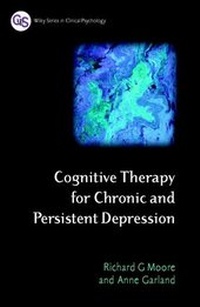
Cognitive Therapy for Chronic and Persistent Depression
Published on 19. August 2003
Book
Hardback
436 pages
978-0-471-89278-6 (ISBN)
Description
Which depressed patients are the best candidates for cognitive therapy? Who should receive medication alone and who might benefit from combination treatments? Is there the need to adapt classical cognitive therapy approaches to meet the needs of patients with more severe or more persistent depressive disorders?
This unique book tackles these crucial questions by looking specifically at the needs of this patient population.
The book covers three key areas. Firstly, a comprehensive and extensive review of the prevalent definitions, concepts and causes of chronic depression is presented. The core of the text offers a coherent overview of cognitive conceptualisations of chronic depression and the appropriate adaptations of cognitive behavioural approaches to this population. The third section will deal with three related topics - service delivery; research outcome data; and a summary of therapy approaches, the need for training and future issues.
* A comprehensive and coherent overview of cognitive conceptualisations of chronic depression
* Describes the author's therapy approach, with supporting outcome and research evidence
* Discusses the needs for training, supervision and support for therapists working with these difficult to treat patients
More details
Other editions
Additional editions
Richard G. Moore | Anne Garland
Cognitive Therapy for Chronic and Persistent Depression
E-Book
12/2003
Wiley
€53.99
Available for download
Richard G. Moore | Anne Garland
Cognitive Therapy for Chronic and Persistent Depression
Book
08/2003
Wiley
€82.00
Shipment within 10-20 days
Persons
Richard Moore works as a clinical psychologist in the Department of Cognitive and Behavioural Psychotherapies at Addenbrooke's Hospital in Cambridge. After obtaining an M.A. and a PhD. from the University of Cambridge and completing his clinical psychology training at the University of Edinburgh, he trained as a cognitive therapist at the Center for Cognitive Therapy in Philadelphia. He has been a therapist on major controlled trials of cognitive therapy for recurrent and residual depression in Edinburgh and in Cambridge. He is a Founding Fellow of the Academy of Cognitive Therapy.
Anne Garland is a nurse consultant in psychological therapies at the Nottingham Psychotherapy Unit. After training in cognitive therapy at Sheffield and Oxford, Anne worked as a therapist in two Medical Research Council funded trails investigating the efficacy of using cognitive therapy in the treatment of residual depression and bi-polar disorder. She has developed clinical expertise in the delivery of cognitive therapy across NHS service settings including primary care, community mental health teams, inpatient units and specialist psychotherapy services. She is currently President-elect to the British Association of Behavioural and Cognitive Psychotherapies (BABCP) as a member of the psychotherapy accreditation sub-committee.
Content
About the Authors.
Preface.
Acknowledgements.
Introduction: The Challenge of Persistent Depression.
Chapter 1: The Cognitive Model of Persistent Depression.
Chapter 2: The Foundations of Therapy: Therapeutic Relationship, Style and Structure.
Chapter 3: Initial Assessment and Formulation.
Chapter 4: Initiating Therapy: Socialisation and Setting Goals.
Chapter 5: Using Standard Behavioural Techniques.
Chapter 6: Working with Automatic Thoughts.
Chapter 7: Recognising Underlying Beliefs and Their Effects.
Chapter 8: Modifying Underlying Beliefs.
Chapter 9: Working with Some Typical Themes in Persistent Depression.
Chapter 10: Beyond Therapy: Preventing Relapse and Furthering Progress.
Chapter 11: Delivering Treatment.
Chapter 12: Outcomes and Processes of Therapy.
Appendix 1: Meet the Patients.
Appendix 2: Handouts for Patients.
References.
Index.