

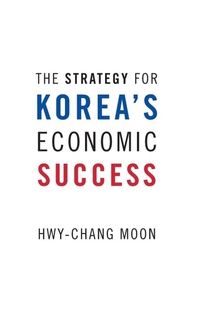
The Strategy for Korea's Economic Success
Published on 19. May 2016
Book
Hardback
304 pages
978-0-19-022879-8 (ISBN)
Description
The success of Korea has inspired numerous studies and research in the past decades. Despite good efforts to analyze the strategy of Korea, earlier studies have not been able to satisfactorily explain the country's "miraculous " growth. After thorough analysis of these earlier studies, a new model was developed to show that a country or firm does not have to be more innovative or possess more resources to have a competitive advantage over others.
In The Strategy for Korea's Economic Success, Hwy-Chang Moon details four factors that comprise the ABCD model and illustrates how Korean government, corporations, and people have exemplified these factors in achieving their current level of success. The four factors are agility (speed + precision), benchmarking (learning + best practices), convergence (mixing + synergy), and dedication (diligence + goal-orientation), and together, they have enabled Korea's economic success and will continue to drive the next level of growth.
Anyone can become more competitive with proper management of the ABCDs. Korea's development strategy holds special value, because it is more practical and appropriate for many developing countries. For more developed countries, on the other hand, the ABCDs can be used to fast-track the next phase of growth. This book also highlights the role of internationalization in broadening the scope of strategic choices, and shows how the combined implementation of internationalization and the ABCDs deepens pool of strategic resources.
In The Strategy for Korea's Economic Success, Hwy-Chang Moon details four factors that comprise the ABCD model and illustrates how Korean government, corporations, and people have exemplified these factors in achieving their current level of success. The four factors are agility (speed + precision), benchmarking (learning + best practices), convergence (mixing + synergy), and dedication (diligence + goal-orientation), and together, they have enabled Korea's economic success and will continue to drive the next level of growth.
Anyone can become more competitive with proper management of the ABCDs. Korea's development strategy holds special value, because it is more practical and appropriate for many developing countries. For more developed countries, on the other hand, the ABCDs can be used to fast-track the next phase of growth. This book also highlights the role of internationalization in broadening the scope of strategic choices, and shows how the combined implementation of internationalization and the ABCDs deepens pool of strategic resources.
Reviews / Votes
"This is a mind-opening book in two ways. First, it analyzes Korea's development with all the depth of a sharp witness. Second, it goes much beyond an analysis of Korea by providing the ABCD model-a comprehensive framework that should be seen as a 'hub' for many existing models and enriches considerably the Western concepts on economic development."-- Patrick Messerlin, Professor of Economics, Sciences Po
"An insightful book by a veteran of competitiveness, provides a holistic explanation of 'Strategy for Korea's Economic Success' spanning leadership across levels; ideas can be adapted by firms and nations. The ABCD model explains competitive advantages and core competence."
-- K. S. Momaya, Professor, SJM School of Management, IIT Bombay
"This book is must reading for business researchers, policymakers and consultants who seek a comprehensive understanding of the economic success of Korea and the lessons learned for other countries. Unlike previous studies that were mostly based on an economic perspective, Moon presents a comprehensive interdisciplinary analysis of both economic and non-economic factors at the country, industry, firm, and individual levels that have contributed to Korea's
rapid economic growth. This integrative analysis results in an insightful four-dimensional (with eight explanatory factors) ABCD model of economic competitiveness.
I see great potential in the ABCD model as an analytic framework for studying the economic development of other countries, particularly those that lack substantial factor endowments and need to create their own competitive advantages just like Korea was some 50 years ago."
-- Joe Cheng, Professor of Management and Michael J. Crouch Chair in Innovation, Australian School of Business, University of New South Wales, Australia and Professor Emeritus of Business Administration, College of Business, University of Illinois at Urbana-Champaign
"This book has the most comprehensive account to date of South Korea's rise through a novel and convincing framework of what the author calls the 'ABCD' model. It is an excellent resource for experts and policymakers as well as students who are interested in learning more about the Korean miracle."
-- Gi-Wook Shin, Korea Stanford Alumni Chair of Korean Studies, Stanford University
More details
Language
English
Place of publication
New York
United States
Target group
College/higher education
Professional and scholarly
Dimensions
Height: 240 mm
Width: 161 mm
Thickness: 21 mm
Weight
619 gr
ISBN-13
978-0-19-022879-8 (9780190228798)
Copyright in bibliographic data and cover images is held by Nielsen Book Services Limited or by the publishers or by their respective licensors: all rights reserved.
Schweitzer Classification
Other editions
Additional editions
Hwy-chang Moon
The Strategy for Korea's Economic Success
E-Book
04/2016
1st Edition
OUP eBook
€70.99
Available for download
Hwy-chang Moon
The Strategy for Korea's Economic Success
E-Book
04/2016
1st Edition
OUP eBook
€70.99
Available for download
Person
Hwy-Chang Moon received his PhD from the University of Washington and is currently a professor at Seoul National University, where he also served as dean. He has delivered special lectures at various institutions, including the Helsinki School of Economics, Keio University, and Stanford University. Dr. Moon has also consulted for several multinational companies, international organizations, and governments (e.g., Malaysia, Dubai, Azerbaijan, and the Guangdong Province of China). He has published numerous articles and books on topics covering International Business Strategy, Cross-Cultural Management, and Economic Development in East Asia with a focus on South Korea.
Content
PART I. THE MIRACLE OF KOREA
Chapter 1. Foundations of Korea's Economic Development
Chapter 2. Korean Government Leadership for National Growth
Chapter 3. Korean Business Leadership for Corporate Growth
PART II. THE ABCD MODEL: A NEW FRAMEWORK FOR EXPLAINING KOREA'S ECONOMIC SUCCESS
Chapter 4. The ABCD Model: The Success Factors of Korea's Economic Growth
Chapter 5. The ABCD Model: Theoretical Foundation
Chapter 6. The ABCD Model: Application to Korea's Three Successful Firms
PART III. INTERNATIONALIZATION: BROADENING THE SCOPE OF STRATEGIC CHOICES
Chapter 7. Internationalization at the National Level
Chapter 8. Internationalization at the Firm Level
Chapter 9. Understanding Internationalization from a Cultural Perspective
PART IV. KOREA IN THE FUTURE
Chapter 10. New Challenges in Korea
Chapter 11. Korea's Competitive Advantages in the Future
Chapter 12. The Generalization of the ABCD Model
Conclusion
Chapter 1. Foundations of Korea's Economic Development
Chapter 2. Korean Government Leadership for National Growth
Chapter 3. Korean Business Leadership for Corporate Growth
PART II. THE ABCD MODEL: A NEW FRAMEWORK FOR EXPLAINING KOREA'S ECONOMIC SUCCESS
Chapter 4. The ABCD Model: The Success Factors of Korea's Economic Growth
Chapter 5. The ABCD Model: Theoretical Foundation
Chapter 6. The ABCD Model: Application to Korea's Three Successful Firms
PART III. INTERNATIONALIZATION: BROADENING THE SCOPE OF STRATEGIC CHOICES
Chapter 7. Internationalization at the National Level
Chapter 8. Internationalization at the Firm Level
Chapter 9. Understanding Internationalization from a Cultural Perspective
PART IV. KOREA IN THE FUTURE
Chapter 10. New Challenges in Korea
Chapter 11. Korea's Competitive Advantages in the Future
Chapter 12. The Generalization of the ABCD Model
Conclusion