

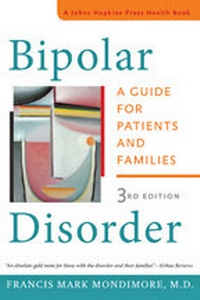
Bipolar Disorder
A Guide for Patients and Families
3rd Edition
Published on 18. April 2014
Book
Paperback/Softback
304 pages
978-1-4214-1206-1 (ISBN)
Description
Compassionate and comprehensive, Dr. Francis Mondimore's pathbreaking guide has helped thousands of people and their loved ones cope with bipolar disorder. Now in its third edition, Bipolar Disorder has been thoroughly updated with new information about the causes of the disorder, tools for diagnosis, and advances in treatment. Dr. Mondimore surveys new medications for treating bipolar disorder, including asenapine, iloperidone, paliperidone, lurasidone, and oxcarbazepine, exploring the benefits and potential side effects of each. He also reviews the scientific studies that back up claims for recommended nutritional supplements, such as omega-3s and NAC - and tells you which ones to leave on the shelf. Dr. Mondimore discusses recent changes in the Diagnostic and Statistical Manual of Mental Disorders (DSM-5) and reviews the exciting new findings of the largest multicenter evaluation of best-treatment practices for bipolar disorder ever carried out, the Systematic Treatment Enhancement Program for Bipolar Disorder (STEP-BD). He describes how these findings, gleaned from the treatment experiences of thousands of patients, will improve treatment decisions.
With insight and sensitivity, Dr. Mondimore makes complex medical concepts easy to understand and describes what it is like for people to live with bipolar disorder. He recommends changes to daily routines and lifestyle that will improve the quality of life for patients and offers expert advice on planning for emergencies and identifying when and how to seek help. Throughout the book, Dr. Mondimore focuses on the importance of building a support system for everyone affected by this unpredictable illness.
With insight and sensitivity, Dr. Mondimore makes complex medical concepts easy to understand and describes what it is like for people to live with bipolar disorder. He recommends changes to daily routines and lifestyle that will improve the quality of life for patients and offers expert advice on planning for emergencies and identifying when and how to seek help. Throughout the book, Dr. Mondimore focuses on the importance of building a support system for everyone affected by this unpredictable illness.
Reviews / Votes
A 'must' for both health and general-interest collections, this organizes and presents information in a format professionals and lay readers can equally use. Midwest Book Review In the author's eyes, the purpose is to save lives. His vivid approach with real-life examples provides a glimpse into the everyday struggles of people who live with bipolar disorder, as well as their families and friends. -- Alyson Myers, MD Doody's Review ServiceMore details
Series
Edition
third edition
Language
English
Place of publication
Baltimore, MD
United States
Edition type
Revised edition
Product notice
Paperback (trade)
Illustrations
13 s/w Zeichnungen, 3 s/w Photographien bzw. Rasterbilder
3 Halftones, black and white; 13 Line drawings, black and white
Dimensions
Height: 229 mm
Width: 152 mm
Thickness: 18 mm
Weight
431 gr
ISBN-13
978-1-4214-1206-1 (9781421412061)
Copyright in bibliographic data and cover images is held by Nielsen Book Services Limited or by the publishers or by their respective licensors: all rights reserved.
Schweitzer Classification
Other editions
New editions
Book
12/2020
4th Edition
Johns Hopkins University Press
€23.00
Shipment within 10-20 days
Additional editions
Book
04/2014
3rd Edition
Johns Hopkins University Press
€49.52
Article exhausted; check for reprint
Previous edition

Book
05/2006
2nd Edition
Johns Hopkins University Press
€36.09
Article exhausted; check for reprint
Person
Francis Mark Mondimore, M.D., is a psychiatrist on the faculty of the Johns Hopkins University School of Medicine and director of the Mood Disorders Clinic at Johns Hopkins Bayview Medical Center. His books include Borderline Personality Disorder: New Reasons for Hope; Depression, the Mood Disease; and Adolescent Depression: A Guide for Parents, all published by Johns Hopkins.
Content
Preface
Part I: Symptoms, Syndromes, and Diagnosis
1. Normal and Abnormal Mood
Abnormal Mood
Mania
Hypomania
The Syndrome of Depression
Mixed States
2. The Diagnosis of Bipolar Disorder
Psychiatric Diagnosis
Bipolar I
Bipolar II
Cyclothymic Disorder
Bipolar Spectrum Disorders
Rapid-Cycling Bipolar Disorder
Schizoaffective Disorder
3. Bipolar Disorder and the DSM-5
What Is the DSM?
Bipolar Categories in the DSM-5
4. The Mood Disease
Before "Bipolar"
Dr. Kraepelin and "Manic-Depressive Insanity"
Dr. Cade and Lithium
Part II: Treatment
5. The Plastic Brain
6. Mood-Stabilizing Medications
Lithium
Lamotrigine (Lamictal)
Valproate (Depakote, Depakene, Epival)
Carbamazepine (Tegretol, Equetro, Epitol)
Oxcarbazepine (Trileptal)
Other Mood Stabilizers
On the Horizon: Promising New Approaches
Antidepressant Medications
Tricyclic Antidepressants
Selective Serotonin Reuptake Inhibitors
New Antidepressants
Monoamine Oxidase Inhibitors
Treating Bipolar Depression
8. Antipsychotic Medications
Typical Antipsychotic Medications
Atypical Antipsychotic Medications
9. More Medications, Hormones, and Dietary Supplements
Medications for Anxiety and Sleep Disturbances
Thyroid Hormones
Herbal Preparations and Nutritional Supplements
Omega-3 Fatty Acids and Fish Oil
N-Acetyl Cysteine
St. John's Wort
10. Brain-Stimulation Treatments
Electroconvulsive Therapy
Transcranial Magnetic Stimulation
Vagal Nerve Stimulation
Emerging Technologies
11. Counseling and Psychotherapy
Brain and Mind
What Can Therapy Do?
Group Psychotherapy
Individual Therapy for Depression
New Psychotherapies for Bipolar Disorder
"Traditional" Individual Psychotherapy
Psychotherapy in Bipolar Disorder: Is It Really Necessary?
The Psychiatrist-Psychotherapist: An Extinct Species?
12. Treatment Approaches in Bipolar Disorder
Therapeutic Results as a Guide to Treatment
Some Principles of Treatment
Part III: Variations, Causes, and Connections
13. Bipolar Disorder in Children and Adolescents
Symptoms of Pediatric Bipolar Disorder
Bipolar Disorder and Attention-Deficit Hyperactivity Disorder
Treatment and Prognosis
14. Women with Bipolar Disorder: Special Considerations
Symptom Differences in Women
Postpartum Mood Disorders and Family Planning
Premenstrual Syndromes
15. Alcoholism and Drug Abuse
Bipolar Binges
Effect, Cause, or Association?
Use or Abuse?
A Deadly Combination
Treating Substance Abuse and Addiction
16. The Science of Cycles: Chronobiology
Circadian Rhythms
Seasonal Affective Disorder
The Sleep Cycle and Bipolar Disorder
17. The Genetics of Bipolar Disorder
Genes, Chromosomes, and DNA
Genetic Diseases
What We Know
The Search Continues
18. Bipolar Biology
How the Body Handles Stress
Bipolar Disorder and Hormonal Systems
Picturing Bipolar Disorder in the Brain
19. Bipolar Disorder and Creativity
Part IV: Getting Better and Staying Well
20. Living with Bipolar Disorder
Confront and Accept the Illness
Practice Mood Hygiene
Build Your Support System
Don't Be a "Bipolar Victim"
21. Planning for Emergencies
Know Whom to Call for Help
Insurance Issues
Safety Issues and Hospitalization
22. The Role of the Family
Recognizing Symptoms
Involuntary Treatment and Other Legal Issues
More on Safety
Getting Support
23. Looking Ahead
Resources
Suggested Reading
Support and Advocacy Organizations
Internet Resources
Notes
Index
Part I: Symptoms, Syndromes, and Diagnosis
1. Normal and Abnormal Mood
Abnormal Mood
Mania
Hypomania
The Syndrome of Depression
Mixed States
2. The Diagnosis of Bipolar Disorder
Psychiatric Diagnosis
Bipolar I
Bipolar II
Cyclothymic Disorder
Bipolar Spectrum Disorders
Rapid-Cycling Bipolar Disorder
Schizoaffective Disorder
3. Bipolar Disorder and the DSM-5
What Is the DSM?
Bipolar Categories in the DSM-5
4. The Mood Disease
Before "Bipolar"
Dr. Kraepelin and "Manic-Depressive Insanity"
Dr. Cade and Lithium
Part II: Treatment
5. The Plastic Brain
6. Mood-Stabilizing Medications
Lithium
Lamotrigine (Lamictal)
Valproate (Depakote, Depakene, Epival)
Carbamazepine (Tegretol, Equetro, Epitol)
Oxcarbazepine (Trileptal)
Other Mood Stabilizers
On the Horizon: Promising New Approaches
Antidepressant Medications
Tricyclic Antidepressants
Selective Serotonin Reuptake Inhibitors
New Antidepressants
Monoamine Oxidase Inhibitors
Treating Bipolar Depression
8. Antipsychotic Medications
Typical Antipsychotic Medications
Atypical Antipsychotic Medications
9. More Medications, Hormones, and Dietary Supplements
Medications for Anxiety and Sleep Disturbances
Thyroid Hormones
Herbal Preparations and Nutritional Supplements
Omega-3 Fatty Acids and Fish Oil
N-Acetyl Cysteine
St. John's Wort
10. Brain-Stimulation Treatments
Electroconvulsive Therapy
Transcranial Magnetic Stimulation
Vagal Nerve Stimulation
Emerging Technologies
11. Counseling and Psychotherapy
Brain and Mind
What Can Therapy Do?
Group Psychotherapy
Individual Therapy for Depression
New Psychotherapies for Bipolar Disorder
"Traditional" Individual Psychotherapy
Psychotherapy in Bipolar Disorder: Is It Really Necessary?
The Psychiatrist-Psychotherapist: An Extinct Species?
12. Treatment Approaches in Bipolar Disorder
Therapeutic Results as a Guide to Treatment
Some Principles of Treatment
Part III: Variations, Causes, and Connections
13. Bipolar Disorder in Children and Adolescents
Symptoms of Pediatric Bipolar Disorder
Bipolar Disorder and Attention-Deficit Hyperactivity Disorder
Treatment and Prognosis
14. Women with Bipolar Disorder: Special Considerations
Symptom Differences in Women
Postpartum Mood Disorders and Family Planning
Premenstrual Syndromes
15. Alcoholism and Drug Abuse
Bipolar Binges
Effect, Cause, or Association?
Use or Abuse?
A Deadly Combination
Treating Substance Abuse and Addiction
16. The Science of Cycles: Chronobiology
Circadian Rhythms
Seasonal Affective Disorder
The Sleep Cycle and Bipolar Disorder
17. The Genetics of Bipolar Disorder
Genes, Chromosomes, and DNA
Genetic Diseases
What We Know
The Search Continues
18. Bipolar Biology
How the Body Handles Stress
Bipolar Disorder and Hormonal Systems
Picturing Bipolar Disorder in the Brain
19. Bipolar Disorder and Creativity
Part IV: Getting Better and Staying Well
20. Living with Bipolar Disorder
Confront and Accept the Illness
Practice Mood Hygiene
Build Your Support System
Don't Be a "Bipolar Victim"
21. Planning for Emergencies
Know Whom to Call for Help
Insurance Issues
Safety Issues and Hospitalization
22. The Role of the Family
Recognizing Symptoms
Involuntary Treatment and Other Legal Issues
More on Safety
Getting Support
23. Looking Ahead
Resources
Suggested Reading
Support and Advocacy Organizations
Internet Resources
Notes
Index