

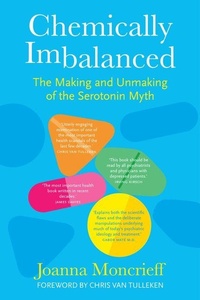
Chemically Imbalanced
The Making and Unmaking of the Serotonin Myth
Will be published approx. on 16. January 2025
Book
Hardback
978-1-80399-679-0 (ISBN)
Description
Featured on ITV's THIS MORNING and in SUNDAY TIMES MAGAZINE
'controversial and courageous' - DAILY MAIL
For years, we've been led to believe that depression is caused by a chemical imbalance in the brain and antidepressants are the solution. But what if this widely accepted belief has been built on unreliable truths?
In Chemically Imbalanced, renowned psychiatrist Joanna Moncrieff takes readers on a thought-provoking journey through the history of the serotonin theory of depression, from its origins in the 1960s to its widespread acceptance in the 1990s. With clarity and compelling evidence, Moncrieff exposes how scientific understanding has been swayed by social and economic forces, leading to misconceptions that have shaped treatment decisions for millions.
Accessible yet profoundly insightful, Chemically Imbalanced is essential reading for anyone seeking to make more informed choices about their mental health and understand the forces that shape the way we perceive and treat depression today.
'controversial and courageous' - DAILY MAIL
For years, we've been led to believe that depression is caused by a chemical imbalance in the brain and antidepressants are the solution. But what if this widely accepted belief has been built on unreliable truths?
In Chemically Imbalanced, renowned psychiatrist Joanna Moncrieff takes readers on a thought-provoking journey through the history of the serotonin theory of depression, from its origins in the 1960s to its widespread acceptance in the 1990s. With clarity and compelling evidence, Moncrieff exposes how scientific understanding has been swayed by social and economic forces, leading to misconceptions that have shaped treatment decisions for millions.
Accessible yet profoundly insightful, Chemically Imbalanced is essential reading for anyone seeking to make more informed choices about their mental health and understand the forces that shape the way we perceive and treat depression today.
Reviews / Votes
'controversial and courageous.' * <i>Daily Mail</i> * 'the most comprehensive rebuttal to date.' * <i>New Scientist</i> * 'Authoritative and well-researched, Chemically Imbalanced documents the overinflation of antidepressant efficacy, where the false scientific information repeated is altogether misleading. The scale of deception and fraud unearthed is staggering and incendiary.' -- Christopher Lane * <i>Psychology Today</i> * 'A complicated story told with patience and passion on behalf of the patient.' -- Jeannette Hyde, author of <i>The Gut Makeover</i>More details
Language
English
Place of publication
Stroud
United Kingdom
Dimensions
Height: 236 mm
Width: 157 mm
Thickness: 32 mm
Weight
500 gr
ISBN-13
978-1-80399-679-0 (9781803996790)
Copyright in bibliographic data and cover images is held by Nielsen Book Services Limited or by the publishers or by their respective licensors: all rights reserved.
Schweitzer Classification
Other editions
Additional editions
E-Book
01/2025
The History Press Ltd
€18.49
Available for download
Persons
JOANNA MONCRIEFF is Professor of Critical and Social Psychiatry at University College London, and a consultant psychiatrist for the NHS. She is an expert in the field, and in 2022 she was the lead author of a landmark study into the theory of serotonin and depression. She is a founder member and co-chairperson of the Critical Psychiatry Network, an influential network of psychiatrists and other doctors. She has written for The Guardian, Daily Mail, The Conversation, Literary Review, was profiled in the Spectator magazine and has been interviewed for The Guardian's Science Weekly podcast and the Evening Standard's Tech and Science Daily, amongst others.
Content
Title
Copyright
Contents
Foreword by Chris van Tulleken
Preface
Part 1 The Issues
1 How the Chemical Imbalance Theory Changed Our Lives
2 Justifying Antidepressants: The Purpose of the Chemical Imbalance Theory
3 So, What is Depression?
4 What are Antidepressants?
Part 2 The History
5 The Origins of the Chemical Imbalance Theory and the Early History of Antidepressants
6 Serotonin Arrives on the Scene
7 The 'Age of Depression'
Part 3 The Science
8 Reviewing the Evidence on the Serotonin Theory of Depression
9 What Antidepressant Research Really Shows
10 Spinning Straw into Gold: How We Came to Believe that Antidepressants are Effective
11 How Antidepressants Affect Feelings and Sex
12 Dependence and Withdrawal Effects of Antidepressants
Part 4 Reactions
13 Moving the Goalposts
14 Battening Down the Hatches: Public Reactions
15 The Profession Strikes Back
Part 5 The Future
16 Alternative Approaches: The Good, the Bad and the Worrying
17 Informed Consent
Epilogue
Appendix 1: Public Information Suggesting Depression is Linked to a 'Chemical Imbalance'
Appendix 2: What to Do if You are Taking Antidepressants: Advice and Resources
Glossary
Acknowledgements
Notes
Copyright
Contents
Foreword by Chris van Tulleken
Preface
Part 1 The Issues
1 How the Chemical Imbalance Theory Changed Our Lives
2 Justifying Antidepressants: The Purpose of the Chemical Imbalance Theory
3 So, What is Depression?
4 What are Antidepressants?
Part 2 The History
5 The Origins of the Chemical Imbalance Theory and the Early History of Antidepressants
6 Serotonin Arrives on the Scene
7 The 'Age of Depression'
Part 3 The Science
8 Reviewing the Evidence on the Serotonin Theory of Depression
9 What Antidepressant Research Really Shows
10 Spinning Straw into Gold: How We Came to Believe that Antidepressants are Effective
11 How Antidepressants Affect Feelings and Sex
12 Dependence and Withdrawal Effects of Antidepressants
Part 4 Reactions
13 Moving the Goalposts
14 Battening Down the Hatches: Public Reactions
15 The Profession Strikes Back
Part 5 The Future
16 Alternative Approaches: The Good, the Bad and the Worrying
17 Informed Consent
Epilogue
Appendix 1: Public Information Suggesting Depression is Linked to a 'Chemical Imbalance'
Appendix 2: What to Do if You are Taking Antidepressants: Advice and Resources
Glossary
Acknowledgements
Notes