


The Politics of Space Security
Strategic Restraint and the Pursuit of National Interests, Third Edition
3rd Edition
Published on 16. April 2019
Book
Paperback/Softback
400 pages
978-1-5036-0893-1 (ISBN)
Description
For the past sixty years, countries have conducted military and civilian activities in space, often for competitive purposes. But they have not yet fought in this environment. This book examines the international politics of the space age from 1957 to the present, the reasons why strategic restraint emerged among the major military powers, and how recent trends toward weaponization may challenge prior norms of conflict avoidance. James Clay Moltz analyzes the competing demands of national interests in space against the shared interests of all spacefarers in preserving the safe use of space in the face of emerging threats, such as man-made orbital debris.
This new edition offers analysis of the 2011 to 2018 period, including the second term of President Obama and the beginning of the Trump administration. Focusing on great power competition and cooperation, as well as questions related to the sustainability of current and future national space policies, The Politics of Space Security is an authoritative history of the space age.
This new edition offers analysis of the 2011 to 2018 period, including the second term of President Obama and the beginning of the Trump administration. Focusing on great power competition and cooperation, as well as questions related to the sustainability of current and future national space policies, The Politics of Space Security is an authoritative history of the space age.
Reviews / Votes
"In The Politics of Space Security, James Clay Moltz presents a concise yet brilliant analysis of the history of space security through the lens of the political environment that shaped it. Moltz's book does a fantastic job of giving just enough detail to strengthen his arguments while still keeping the text flowing."-Brian Weeden, author of Arms Control TodayMore details
Edition
3rd New edition
Language
English
Place of publication
Palo Alto
United States
Target group
Professional and scholarly
College/higher education
Edition type
New edition
Product notice
Paperback (trade)
Dimensions
Height: 227 mm
Width: 154 mm
Thickness: 27 mm
Weight
592 gr
ISBN-13
978-1-5036-0893-1 (9781503608931)
Copyright in bibliographic data and cover images is held by Nielsen Book Services Limited or by the publishers or by their respective licensors: all rights reserved.
Schweitzer Classification
Other editions
Additional editions
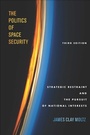
James Clay Moltz
The Politics of Space Security
Strategic Restraint and the Pursuit of National Interests, Third Edition
E-Book
04/2019
3rd Edition
Stanford University Press
from
€64.99
Available for download
Person
James Clay Moltz is chairman of the Department of National Security Affairs at the Naval Postgraduate School, where he also holds a joint faculty appointment in the Space Systems Academic Group. He is the author of Crowded Orbits: Conflict and Cooperation in Space (2014) and Asia's Space Race: National Motivations, Regional Rivalries, and International Risks (2012).
Content
Introduction
1. The Dynamics of Space Security: Existing Explanations
2. Space and Environmental Security
3. Roots of the U.S.-Soviet Space Race: 1920s-1962
4. The Emergence of Cooperative Restraint: 1962-1975
5. Challenges to Space Security and Their Resolution: 1976-1991
6. Post-Cold War Space Uncertainty: 1992-2000
7. Renewed U.S. Space Nationalism: 2001-2008
8. Expanding International Norms amid Tensions: 2009-Present
9. Alternative Futures for Space Security
1. The Dynamics of Space Security: Existing Explanations
2. Space and Environmental Security
3. Roots of the U.S.-Soviet Space Race: 1920s-1962
4. The Emergence of Cooperative Restraint: 1962-1975
5. Challenges to Space Security and Their Resolution: 1976-1991
6. Post-Cold War Space Uncertainty: 1992-2000
7. Renewed U.S. Space Nationalism: 2001-2008
8. Expanding International Norms amid Tensions: 2009-Present
9. Alternative Futures for Space Security