

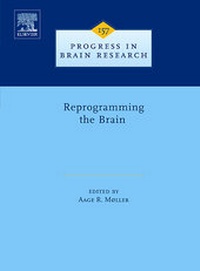
Reprogramming the Brain: Volume 157
Published on 27. October 2006
Book
Hardback
408 pages
978-0-444-51602-2 (ISBN)
Description
The brain is plastic and it can change its function to adapt to changing demands of various kinds. The brain can also re-organize and change its function to better utilize its resources when parts of the brain have been damaged through injuries and diseases. This means that the brain is not "hard wired? but can be reprogrammed when needed. This book describes different aspects of how the plasticity can become activated and how it can benefit the individual person.
This book provides in-depth coverage of many important aspects of neural plasticity and how it applies to trauma, including strokes and disorders of the central nervous system that affect memory and cognition. The book also discusses how neural plasticity is involved in aphasia, pain and tinnitus. The roles of neural plasticity in motor rehabilitation and in adaptation to prostheses such as cochlear and cochlear nucleus implants are also topics of the book.
This book provides in-depth coverage of many important aspects of neural plasticity and how it applies to trauma, including strokes and disorders of the central nervous system that affect memory and cognition. The book also discusses how neural plasticity is involved in aphasia, pain and tinnitus. The roles of neural plasticity in motor rehabilitation and in adaptation to prostheses such as cochlear and cochlear nucleus implants are also topics of the book.
More details
Series
Language
English
Place of publication
Oxford
United Kingdom
Publishing group
Elsevier Science & Technology
Target group
Professional and scholarly
Neuroscientists.
Dimensions
Height: 262 mm
Width: 192 mm
Weight
1290 gr
ISBN-13
978-0-444-51602-2 (9780444516022)
Copyright in bibliographic data and cover images is held by Nielsen Book Services Limited or by the publishers or by their respective licensors: all rights reserved.
Schweitzer Classification
Other editions
Additional editions
Person
Dr. Moller is currently the M.F. Jonsson Professor of Hearing, University of Texas at Dallas, the Callier Center for Communication Disorders. He was on the faculty of the University of Pittsburgh School of Medicine for 19 years, where he held positions as Research Professor of Otolaryngology and later of Neurological Surgery. From 1988 to 1997 he held the position of Professor of Neurological Surgery. He received his medical education at the Karolinska Institutet in Stockholm, Sweden, where he also held faculty positions for more than 10 years. Dr. Moller is founder and Editor-in-Chief of the international journal Hearing Research.
Content
I. Basis for Cortical Re-Wiring.
Visual activity and cortical rewiring: activity-dependent plasticity of cortical networks.
II. Molecular Basis for Signaling in CNS and Memory.
TrkB mediated excitatory synaptogenesis.
Signal transduction mechanisms in memory disorders.
III. The Aging Brain.
Altered brain activity in healthy seniors: what does it mean?
Cortical re-organization in the aging brain.
Brain plasticity and functional losses in the aged: scientific bases for a novel intervention.
Cortical plasticity and rehabilitation.
Neural mechanisms of prefrontal cortical function: implications for cognitive rehabilitation.
IV. Brain Injury.
Recovery from aphasia following brain injury: the role of reorganization.
Relocation of specific visual functions following damage of mature posterior parietal cortex.
A SPECT study of language and brain reorganization three years after pediatric brain injury.
Activation of neural stem and progenitor cells after injury.
Cognitive neural plasticity during learning and recovery from brain damage.
Novel cell therapy approaches for brain repair.
Recovery of motor function after stroke.
V. Spinal Cord.
Functional plasticity following spinal cord lesions.
The education and re-education of the spinal cord.
VI. Prostheses and Plasticity.
Cochlear implants: cortical plasticity in congenital deprivation.
Disrupting the brain to guide plasticity and improve behavior.
VII. Pain and Tinnitus.
Plasticity in brain processing and modulation of pain.
Plasticity of pain-related neuronal activity in the human thalamus.
Neural platicity in Tinnitus.
Visual activity and cortical rewiring: activity-dependent plasticity of cortical networks.
II. Molecular Basis for Signaling in CNS and Memory.
TrkB mediated excitatory synaptogenesis.
Signal transduction mechanisms in memory disorders.
III. The Aging Brain.
Altered brain activity in healthy seniors: what does it mean?
Cortical re-organization in the aging brain.
Brain plasticity and functional losses in the aged: scientific bases for a novel intervention.
Cortical plasticity and rehabilitation.
Neural mechanisms of prefrontal cortical function: implications for cognitive rehabilitation.
IV. Brain Injury.
Recovery from aphasia following brain injury: the role of reorganization.
Relocation of specific visual functions following damage of mature posterior parietal cortex.
A SPECT study of language and brain reorganization three years after pediatric brain injury.
Activation of neural stem and progenitor cells after injury.
Cognitive neural plasticity during learning and recovery from brain damage.
Novel cell therapy approaches for brain repair.
Recovery of motor function after stroke.
V. Spinal Cord.
Functional plasticity following spinal cord lesions.
The education and re-education of the spinal cord.
VI. Prostheses and Plasticity.
Cochlear implants: cortical plasticity in congenital deprivation.
Disrupting the brain to guide plasticity and improve behavior.
VII. Pain and Tinnitus.
Plasticity in brain processing and modulation of pain.
Plasticity of pain-related neuronal activity in the human thalamus.
Neural platicity in Tinnitus.