

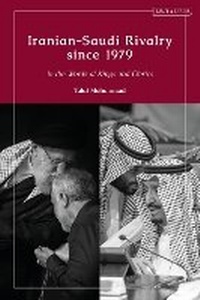
Iranian-Saudi Rivalry since 1979
In the Words of Kings and Clerics
Published on 21. March 2024
Book
Paperback/Softback
480 pages
978-0-7556-3476-7 (ISBN)
Description
The fraught relationship between Saudi Arabia and Iran is usually attributed to sectarian differences, even by the states' own elites. However, this book shows that in their official speeches, newspaper editorials and Friday sermons, these elites use sectarian and nationalist references and tropes to denigrate each other and promote themselves in the eyes of their respective constituencies in the region.
Talal Mohammad, who is fluent in both Arabic and Persian, examines Saudi-Iranian rivalry using discourse analysis of these religious, political and journalistic sources. Tracing what has been produced since 1979 in parallel, he argues for a consistent pattern of mutual misrepresentation, whereby each frames its counterpart as the 'Other' to which a specific political agenda can be justified and advanced. The book covers key events including the Iranian Revolution, the invasion of Kuwait in 1990, the Taliban war, the fall of Saddam, the Arab Spring, the rise of Mohammed bin Salman, and the war on ISIS. While until now Saudi-Iranian rivalry has been understood in primarily sectarian or geopolitical terms, the author argues here that the discursive othering serves as a propagandist function that supports more fundamental political and geopolitical considerations.
Talal Mohammad, who is fluent in both Arabic and Persian, examines Saudi-Iranian rivalry using discourse analysis of these religious, political and journalistic sources. Tracing what has been produced since 1979 in parallel, he argues for a consistent pattern of mutual misrepresentation, whereby each frames its counterpart as the 'Other' to which a specific political agenda can be justified and advanced. The book covers key events including the Iranian Revolution, the invasion of Kuwait in 1990, the Taliban war, the fall of Saddam, the Arab Spring, the rise of Mohammed bin Salman, and the war on ISIS. While until now Saudi-Iranian rivalry has been understood in primarily sectarian or geopolitical terms, the author argues here that the discursive othering serves as a propagandist function that supports more fundamental political and geopolitical considerations.
Reviews / Votes
This extraordinary account breaks new ground by drawing upon Arabic and Persian sources to provide an analytically distinct, compelling, and highly original examination of the rivalry between Saudi Arabia and Iran and how narratives in each country have evolved and interacted over four turbulent decades. -- Kristian Coates Ulrichsen, Baker Institute fellow for the Middle East, Rice University, USMore details
Language
English
Place of publication
United Kingdom
Publishing group
Bloomsbury Publishing PLC
Target group
Professional and scholarly
College/higher education
Dimensions
Height: 234 mm
Width: 156 mm
Thickness: 30 mm
Weight
737 gr
ISBN-13
978-0-7556-3476-7 (9780755634767)
Copyright in bibliographic data and cover images is held by Nielsen Book Services Limited or by the publishers or by their respective licensors: all rights reserved.
Schweitzer Classification
Other editions
Additional editions
E-Book
08/2022
1st Edition
I.B. Tauris
€32.99
Available for download
E-Book
08/2022
1st Edition
I.B. Tauris
€32.99
Available for download
Person
Talal Mohammad is an Academic Visitor at the Middle East Centre at The University of Oxford, UK, where he obtained his DPhil on Iran-Saudi Relations. Since 2015, he has been giving expert strategic consultancies and geopolitical analysis with a focus on the Persian Gulf to a range of institutions and enterprises.
Content
Introduction
Part I. Khomeini's Revolution and Islamic Leadership, 1979-1988
Chapter 1. Imam Ali's Government & The Kingdom of Islam
Chapter 2. Export of the Revolution and the GCC
Chapter 3. Iranian Sacred Defence & the Arab Qadissiya
Part 2. Vali-ye Faqih II and the de facto King, 1989-2002
Chapter 4. Arab Treachery in the Persian Gulf: Iran's 'Active Neutrality'
Chapter 5. Against All Odds: Abdullah and Rafsanjani's Seeds of Detente
Chapter 6. 'Dialogue of Civilizations' and Islamic Partnership
Part 3. The Rise of the Shi'i Crescent, 2003-2010
Chapter 7. Fall of Saddam and the Rise of Iran: Return to Radicalism?
Chapter 8. Contest for Arab Leadership: Hezbollah's 34-Day War
Chapter 9. The Road to Jerusalem: A Question of Islamic and Arab Legitimacy and Leadership
Part 4. Iran and Saudi After 2011: The Battle for Regional Hegemony, 2011-2020
Chapter 10. Arab Spring: Bahrain, Eastern Saudi Arabia, and Syria
Chapter 11. A Treaty with the World: Iran Goes Nuclear
Chapter 12. The Fight to Save Islam: The War on ISIS
Chapter 13. 'Maximum Pressure': A Cold War Turns Hot
Conclusion
Part I. Khomeini's Revolution and Islamic Leadership, 1979-1988
Chapter 1. Imam Ali's Government & The Kingdom of Islam
Chapter 2. Export of the Revolution and the GCC
Chapter 3. Iranian Sacred Defence & the Arab Qadissiya
Part 2. Vali-ye Faqih II and the de facto King, 1989-2002
Chapter 4. Arab Treachery in the Persian Gulf: Iran's 'Active Neutrality'
Chapter 5. Against All Odds: Abdullah and Rafsanjani's Seeds of Detente
Chapter 6. 'Dialogue of Civilizations' and Islamic Partnership
Part 3. The Rise of the Shi'i Crescent, 2003-2010
Chapter 7. Fall of Saddam and the Rise of Iran: Return to Radicalism?
Chapter 8. Contest for Arab Leadership: Hezbollah's 34-Day War
Chapter 9. The Road to Jerusalem: A Question of Islamic and Arab Legitimacy and Leadership
Part 4. Iran and Saudi After 2011: The Battle for Regional Hegemony, 2011-2020
Chapter 10. Arab Spring: Bahrain, Eastern Saudi Arabia, and Syria
Chapter 11. A Treaty with the World: Iran Goes Nuclear
Chapter 12. The Fight to Save Islam: The War on ISIS
Chapter 13. 'Maximum Pressure': A Cold War Turns Hot
Conclusion