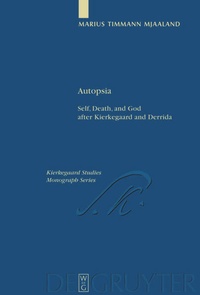
Autopsia
Description
There are certain things that
can
be explained and certain things that
cannot
be explained. This book is about the latter. It is a book about death: how death interrupts and influences the reflection on the self. It is a book about God: a detailed and critical discussion on how Kierkegaard and Derrida apply the concept of God in their philosophical reflections.
The most ground-breaking analysis concerns the famous passage on the self (A.A) in
The Sickness unto Death
, where the author combines logical, rhetorical and dialectical means to establish a new perspective on Kierkegaard's thinking in general. The Cartesian
doubt
then constitutes a common trait for his detailed and rigorous analysis of Derrida and Kierkegaard on death, madness, faith, and rationality - showing how they both seek to break up the Hegelian
Aufhebung
from within, but still remain dependent on Hegel.
After
Kierkegaard and Derrida, the certainty and total uncertainty of death - and of God as infinite other - gives the self a basic, though non-foundational, responsibility. The significance of this responsibility, of this other, of this death, requires sustained and thorough consideration. Where others mark a conclusion, this book therefore marks a point of departure: reflecting on oneself at the graveside of a dead man - thus introducing an
Autopsia
.
More details
Other editions
Additional editions