


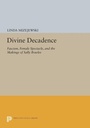
Divine Decadence
Fascism, Female Spectacle, and the Makings of Sally Bowles
Published on 19. November 1992
Book
Paperback/Softback
284 pages
978-0-691-02346-5 (ISBN)
Description
As femme fatale, cabaret siren, and icon of Camp, the Christopher Isherwood character Sally Bowles has become this century's darling of "divine decadence"--a measure of how much we are attracted by the fiction of the "shocking" British/American vamp in Weimar Berlin. Originally a character in a short story by Isherwood, published in 1939, "Sally" has appeared over the years in John Van Druten's stage play I Am a Camera, Henry Cornelius's film of the same name, and Joe Masteroff's stage musical and Bob Fosse's Academy Award-winning musical film, both entitled Cabaret. Linda Mizejewski shows how each successive repetition of the tale of the showgirl and the male writer/scholar has linked the young man's fascination with Sally more closely to the fascination of fascism. In every version, political difference is read as sexual difference, fascism is disavowed as secretly female or homosexual, and the hero eventually renounces both Sally and the corruption of the coming regime. Mizejewski argues, however, that the historical and political aspects of this story are too specific--and too frightening--to explain in purely psychoanalytic terms. Instead, Divine Decadence examines how each text engages particular cultural issues and anxieties of its era, from postwar "Momism" to the Vietnam War. Sally Bowles as the symbol of "wild Weimar" or Nazi eroticism represents "history" from within the grid of many other controversial discourses, including changing theories of fascism, the story of Camp, vicissitudes of male homosexual representations and discourses, and the relationships of these issues to images of female sexuality. To Mizejewski, the Sally Bowles adaptations end up duplicating the fascist politics they strain to condemn, reproducing the homophobia, misogyny, fascination for spectacle, and emphasis of sexual difference that characterized German fascism.
Originally published in 1992.
The Princeton Legacy Library uses the latest print-on-demand technology to again make available previously out-of-print books from the distinguished backlist of Princeton University Press. These editions preserve the original texts of these important books while presenting them in durable paperback and hardcover editions. The goal of the Princeton Legacy Library is to vastly increase access to the rich scholarly heritage found in the thousands of books published by Princeton University Press since its founding in 1905.
Originally published in 1992.
The Princeton Legacy Library uses the latest print-on-demand technology to again make available previously out-of-print books from the distinguished backlist of Princeton University Press. These editions preserve the original texts of these important books while presenting them in durable paperback and hardcover editions. The goal of the Princeton Legacy Library is to vastly increase access to the rich scholarly heritage found in the thousands of books published by Princeton University Press since its founding in 1905.
More details
Series
Language
English
Place of publication
New Jersey
United States
Target group
College/higher education
Product notice
Paperback (trade)
Weight
397 gr
ISBN-13
978-0-691-02346-5 (9780691023465)
Copyright in bibliographic data is held by Nielsen Book Services Limited or its licensors: all rights reserved.
Schweitzer Classification
Other editions
Additional editions
E-Book
07/2014
1st Edition
Princeton University Press
€49.99
Available for download