

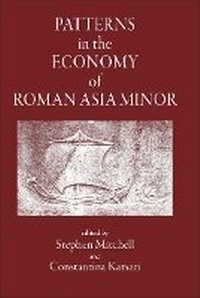
Patterns in the Economy of Roman Asia Minor
Published on 1. December 2005
Book
Hardback
335 pages
978-1-905125-02-9 (ISBN)
Description
Asia Minor under Rome was one of the wealthiest and most developed parts of the Empire, but there have been few modern studies of its economics. The twelve papers in this book, by an international team of scholars, work from literary texts, inscriptions, coinage and archaeology. They study the direct impact of Roman rule; the organisation of large agricultural estates; changing patterns of olive production; threats to rural prosperity from pests and the animal world; inter-regional trade in the Black Sea; the significance of civic market buildings; the economic role of temples and sanctuaries; the contribution of private benefactors to civic finances; monetization in the third century AD, and the effect of transitory populations on local economic activity.
More details
Series
Language
English
Place of publication
Swansea
United Kingdom
Target group
College/higher education
Professional and scholarly
Dimensions
Height: 234 mm
Width: 156 mm
Weight
761 gr
ISBN-13
978-1-905125-02-9 (9781905125029)
Copyright in bibliographic data and cover images is held by Nielsen Book Services Limited or by the publishers or by their respective licensors: all rights reserved.
Schweitzer Classification
Other editions
Additional editions
Constantina Katsari
Patterns in the Economy of Roman Asia Minor
E-Book
12/2005
The Classical Press of Wales
€83.99
Available for download
Content
Stephen Mitchell and Constantina Katsari, 'Introduction: the economy of Roman Asia Minor'; Thomas Corsten (Heidelberg), 'Estates in Roman Asia Minor: the case of Kibyratis'; Johannes Nolle (Munich), `Boars, bears and bugs: farming in Asia Minor and the protection of men, animals and crops'; Stephen Mitchell (Exeter), 'Olive cultivation in the economy of Roman Asia Minor'; David Braund (Exeter), 'Across the Black Sea: patterns of maritime exchange on the periphery of Roman Asia Minor'; Veli Kose (Cologne), 'The origin and development of market buildings in Hellenistic and Roman Asia Minor'; Arjan Zuiderhoek (Amsterdam), 'The icing on the cake: benefactors, economics and public buildings in Roman Asia Minor'; Giovanni Salmeri (Pisa), 'Central power intervention and the economy of the provinces in the Roman Empire: the case of Pontus and Bithynia'; Beate Dignas (Michigan), 'Sacred revenues in Roman hands: the economic dimension of sanctuaries in western Asia Minor'; Margherita Facella (Pisa), 'Coinage and the economy of Commagene'; Stanley Ireland (Warwick), 'Coinage in Roman Pontus and Paphlagonia: problems of evidence and interpretation'; Constantina Katsari (Galway), 'The monetization of Roman Asia Minor from Septimius Severus to Gallienus'; Hugh Elton (Ankara), 'Military supply and the south coast of Anatolia in the third century AD'; Turhan Kacar (Balikesir), 'Church councils and their impact on the economy of the cities in Roman Asia Minor'.