

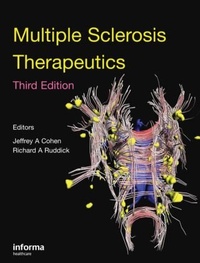
Multiple Sclerosis Therapeutics
Third Edition
3rd Edition
Published on 6. March 2007
Book
Hardback
928 pages
978-1-84184-525-8 (ISBN)
Description
Since the publication of the previous edition of this volume, there has been substantial progress in a number of areas of multiple sclerosis (MS) research. Although immunosuppressive treatments continue to be developed and refined, more targeted immunomodulatory therapies are surfacing as we learn more about how the immune system works in health and disease.
Multiple Sclerosis Therapeutics, Third Edition provides a comprehensive review of clinical trial methodology and therapeutic modalities in MS. This edition reflects current understanding of the pathophysiology of the disease and includes popular and emerging treatments.
Topics include:
Biomarkers in MS
Pharmacogenomics
Emerging therapeutic modalities such as natalizumab, T-cell-based and B-cell-based therapies, cytokine/chemokine-based therapies, statins, and 4-aminopyridine
Neuroprotection
The use of OCT and MRI to guide disease therapy
Within the next several years, we will begin to discover the utility and the limitations of stem cells in the treatment of MS. It is likely that the next edition of this text will include clinical trial data that evaluate early attempts at nervous system regeneration in MS. Until that time occurs, this volume remains an essential resource for neurologists and anyone involved in the treatment of MS.
Multiple Sclerosis Therapeutics, Third Edition provides a comprehensive review of clinical trial methodology and therapeutic modalities in MS. This edition reflects current understanding of the pathophysiology of the disease and includes popular and emerging treatments.
Topics include:
Biomarkers in MS
Pharmacogenomics
Emerging therapeutic modalities such as natalizumab, T-cell-based and B-cell-based therapies, cytokine/chemokine-based therapies, statins, and 4-aminopyridine
Neuroprotection
The use of OCT and MRI to guide disease therapy
Within the next several years, we will begin to discover the utility and the limitations of stem cells in the treatment of MS. It is likely that the next edition of this text will include clinical trial data that evaluate early attempts at nervous system regeneration in MS. Until that time occurs, this volume remains an essential resource for neurologists and anyone involved in the treatment of MS.
More details
Edition
3rd edition
Language
English
Place of publication
London
United Kingdom
Publishing group
Taylor & Francis Ltd
Target group
College/higher education
Professional and scholarly
Professional Practice & Development
Illustrations
100 s/w Abbildungen
100 Illustrations, black and white
Dimensions
Height: 246 mm
Width: 189 mm
Weight
2668 gr
ISBN-13
978-1-84184-525-8 (9781841845258)
Copyright in bibliographic data and cover images is held by Nielsen Book Services Limited or by the publishers or by their respective licensors: all rights reserved.
Schweitzer Classification
Other editions
Additional editions
Eli Minkoff | Eli Baker | Jeffrey A. Cohen
Multiple Sclerosis Therapeutics
E-Book
03/2007
3rd Edition
CRC Press
€390.99
Available for download
Eli Minkoff | Eli Baker | Jeffrey A. Cohen
Multiple Sclerosis Therapeutics
E-Book
03/2007
3rd Edition
CRC Press
€390.99
Available for download
Previous edition
Richard A. Rudick | Jeffrey A. Cohen
Multiple Sclerosis Therapeutics, Second Edition
Book
01/2003
2nd Edition
CRC Press
€254.04
Article exhausted; check for reprint
Persons
Jeffrey A. Cohen, Richard A. Rudick, Eli Minkoff, Eli Baker
Content
1. Aspects of multiple sclerosis that relate to trial design and clinical management. 2. Biological concepts of multiple sclerosis pathogenesis and relationship to treatment. 3. The multiple sclerosis disease process as characterized by magnetic resonance imaging. 4. Measures of neurological impairment and disability in multiple sclerosis. 5. Assessment of neuropsychological function in multiple sclerosis. 6. Health-related quality of life assessment in multiple sclerosis. 7. Measures of gadolinium enhancement, T1 black holes and T2-hyperintense magnetic resonance imaging in multiple sclerosis. 8. Measures of magnetization transfer in multiple sclerosis. 9. Measurement of central nervous system atrophy in multiple sclerosis. 10. Axonal pathology in patients with multiple sclerosis: evidence from in vivo proton magnetic resonance spectroscopy. 11. Functional imaging in multiple sclerosis. 12. Magnetic resonance imaging of pathway-specific structure and function in multiple sclerosis. 13. Optical coherence tomography to monitor neuronal integrity in multiple sclerosis. 14. Biomarkers in multiple sclerosis. 15. The process of drug development and approval in
the United States, the European Union and Canada. 16. Selection and interpretation of end-points in multiple sclerosis clinical trials. 17. Clinical trial logistics. 18. The challenge of long-term studies in multiple sclerosis: use of pooled data, historical controls and observational studies to determine efficacy. 19. Alternative designs for multiple sclerosis clinical trials. 20. Ethical considerations in multiple sclerosis clinical trials. 21. Pharmacogenetics and pharmacogenomics in multiple sclerosis. 22. Interferons in relapsing.remitting multiple sclerosis. 23. Interferons in secondary progressive multiple sclerosis. 24. Neutralizing antibodies directed against interferon A. 25. Glatiramer acetate as therapy for multiple sclerosis. 26. Use of mitoxantrone to treat multiple sclerosis. 27. Use of cyclophosphamide and other immunosuppressants
to treat multiple sclerosis. 28. Natalizumab in multiple sclerosis. 29. High-dose methylpredisolone in the treatment of multiple sclerosis. 30. Intravenous immunoglobulin in multiple sclerosis. 31. Therapeutic plasma exchange for multiple sclerosis. 32. Statins in multiple sclerosis. 33. Stem cell transplantation for multiple sclerosis. 34. T cell-based therapies in multiple sclerosis. 35. B cell-based therapies for multiple sclerosis and related diseases. 36. Chemokines and central nervous system inflammation: relevance to multiple sclerosis. 37. Sex hormones and other pregnancy-related factors with therapeutic potential in multiple sclerosis. 38. Neuroprotection in multiple sclerosis. 39. Combination therapy in multiple sclerosis. 40. Fampridine in multiple sclerosis. 41. Complementary and alternative treatments in multiple sclerosis.
42. Disease-modifying therapy for multiple sclerosis in clinical practice. 43. Treatment for patients with primary progressive multiple sclerosis. 44. Use of magnetic resonance imaging in clinical management of multiple sclerosis. 45. Fatigue in multiple sclerosis.
46. Management of spasticity in multiple sclerosis. 47. Management of bladder and sexual dysfunction in multiple sclerosis. 48. Depression in multiple sclerosis. 49. Treatment of pain, paresthesias and paroxysmal disorders in multiple sclerosis. 50. Rehabilitation in multiple sclerosis patients.
the United States, the European Union and Canada. 16. Selection and interpretation of end-points in multiple sclerosis clinical trials. 17. Clinical trial logistics. 18. The challenge of long-term studies in multiple sclerosis: use of pooled data, historical controls and observational studies to determine efficacy. 19. Alternative designs for multiple sclerosis clinical trials. 20. Ethical considerations in multiple sclerosis clinical trials. 21. Pharmacogenetics and pharmacogenomics in multiple sclerosis. 22. Interferons in relapsing.remitting multiple sclerosis. 23. Interferons in secondary progressive multiple sclerosis. 24. Neutralizing antibodies directed against interferon A. 25. Glatiramer acetate as therapy for multiple sclerosis. 26. Use of mitoxantrone to treat multiple sclerosis. 27. Use of cyclophosphamide and other immunosuppressants
to treat multiple sclerosis. 28. Natalizumab in multiple sclerosis. 29. High-dose methylpredisolone in the treatment of multiple sclerosis. 30. Intravenous immunoglobulin in multiple sclerosis. 31. Therapeutic plasma exchange for multiple sclerosis. 32. Statins in multiple sclerosis. 33. Stem cell transplantation for multiple sclerosis. 34. T cell-based therapies in multiple sclerosis. 35. B cell-based therapies for multiple sclerosis and related diseases. 36. Chemokines and central nervous system inflammation: relevance to multiple sclerosis. 37. Sex hormones and other pregnancy-related factors with therapeutic potential in multiple sclerosis. 38. Neuroprotection in multiple sclerosis. 39. Combination therapy in multiple sclerosis. 40. Fampridine in multiple sclerosis. 41. Complementary and alternative treatments in multiple sclerosis.
42. Disease-modifying therapy for multiple sclerosis in clinical practice. 43. Treatment for patients with primary progressive multiple sclerosis. 44. Use of magnetic resonance imaging in clinical management of multiple sclerosis. 45. Fatigue in multiple sclerosis.
46. Management of spasticity in multiple sclerosis. 47. Management of bladder and sexual dysfunction in multiple sclerosis. 48. Depression in multiple sclerosis. 49. Treatment of pain, paresthesias and paroxysmal disorders in multiple sclerosis. 50. Rehabilitation in multiple sclerosis patients.