

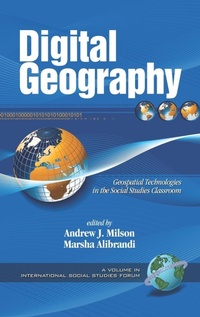
Digital Geography
Geospatial Technologies in the Social Studies Classroom
Will be published approx. on 12. February 2008
Book
Hardback
336 pages
978-1-59311-673-6 (ISBN)
Description
The purpose of this volume is to provide a review and analysis of the theory, research, and practice related to geospatial technologies in social studies education. In the first section, the history of geospatial technologies in education, the influence of the standards movement, and the growth of an international geospatial education community are explored. The second section consists of examples and discussion of the use of geospatial technologies for teaching and learning history, geography, civics, economics, and environmental science. In the third section, theoretical perspectives are proposed that could guide research and practice in this field. This section also includes reviews and critiques of recent research relevant to geospatial technologies in education. The final section examines the theory, research, and practice associated with teacher preparation for using geospatial technologies in education.
More details
Series
Language
English
Place of publication
Charlotte
United States
Publishing group
Emerald Publishing Inc
Target group
Professional and scholarly
Illustrations
illustrations
Dimensions
Height: 240 mm
Width: 161 mm
Thickness: 23 mm
Weight
669 gr
ISBN-13
978-1-59311-673-6 (9781593116736)
Copyright in bibliographic data and cover images is held by Nielsen Book Services Limited or by the publishers or by their respective licensors: all rights reserved.
Schweitzer Classification
Other editions
Additional editions
Andrew J. Milson | Marsha Alibrandi
Digital Geography
Geospatial Technologies in the Social Studies Classroom
E-Book
02/2008
1st Edition
Information Age Publishing
from
€62.33
Available for download
Content
Preface; Marsha Alibrandi.
Acknowledgements.
List of Tables, Figures, and Maps.
Part I. The Landscape of Geospatial Technologies in Education.
Chapter 1. A Social History of GIS in Education, 1985-2007; Marsha Alibrandi and Thomas Baker.
Chapter 2. The Status of Geospatial Technologies in U.S. High School Geography Standards; Andrew J. Milson and Jennifer A. Roberts.
Chapter 3. Towards an International Geospatial Education Community; Joseph J. Kerski.
Part II. Social Studies Expeditions with Geospatial Technologies.
Chapter 4. Beyond Interactive Mapping: Bringing Data Analysis with GIS into the Social Studies Classroom; Daniel C. Edelson, David A. Smith, and Matthew Brown.
Chapter 5. GIS for History: A GIS Learning Environment to Teach Historical Reasoning; Josh Radinsky.
Chapter 6. The World at the Student's Fingertips: Internet-Based GIS Education Opportunities; Joseph J. Kerski.
Chapter 7. Geospatial Online Learning Activities for Middle School Students; Sven Fuhrmann, Alan M. MacEachren, Mark Gahegan, and Roger Downs.
Chapter 8. The Digital Globe: Using Google Earth for Virtual Fieldtrips of Coastal Environments; David R. Green and Joanna Mouatt.
Part III. Explorations of Theory and Research on Geospatial Technologies in Education.
Chapter 9. Diffusion of Innovations Theory: Framing IT and GIS Adoption; Shannon White.
Chapter 10. Going Flat: The Changing Dynamics and Integrative Nature of Geography in the Digital Classroom; Jay D. Gatrell and John L. Conant.
Chapter 11. Coming of Age: Research and Pedagogy on Geospatial Technologies within K-12 Social Studies Education; Aaron Doering, George Veletsianos, and Cassandra Scharber.
Chapter 12. Instructional Geographic Information Science: A Multi-Disciplinary Framework for Geospatial Technologies in Education; Rick Bunch, Elisabeth Nelson, Robert Earl Lloyd, Michael Kane, and Thomas Tricot.
Part IV. Teacher Preparation for Journeys with Geospatial Technologies.
Chapter 13. Spatial Thinking: The Key to Success in Using Geospatial Technologies in the Social Studies Classroom; Sarah Witham Bednarz and Robert S. Bednarz.
Chapter 14. Examining the Teacher's Role When Teaching with Geographic Information System (GIS); Eui-kyung Shin.
Chapter 15. Diving In: Preparing Teachers to Implement Geospatial Technologies in the K-12 Classroom; Kristin J. Alvarez.
Chapter 16. Conclusion: Mapping Geospatial Technologies in Social Studies Education; Andrew J. Milson.
About the Contributors.
Acknowledgements.
List of Tables, Figures, and Maps.
Part I. The Landscape of Geospatial Technologies in Education.
Chapter 1. A Social History of GIS in Education, 1985-2007; Marsha Alibrandi and Thomas Baker.
Chapter 2. The Status of Geospatial Technologies in U.S. High School Geography Standards; Andrew J. Milson and Jennifer A. Roberts.
Chapter 3. Towards an International Geospatial Education Community; Joseph J. Kerski.
Part II. Social Studies Expeditions with Geospatial Technologies.
Chapter 4. Beyond Interactive Mapping: Bringing Data Analysis with GIS into the Social Studies Classroom; Daniel C. Edelson, David A. Smith, and Matthew Brown.
Chapter 5. GIS for History: A GIS Learning Environment to Teach Historical Reasoning; Josh Radinsky.
Chapter 6. The World at the Student's Fingertips: Internet-Based GIS Education Opportunities; Joseph J. Kerski.
Chapter 7. Geospatial Online Learning Activities for Middle School Students; Sven Fuhrmann, Alan M. MacEachren, Mark Gahegan, and Roger Downs.
Chapter 8. The Digital Globe: Using Google Earth for Virtual Fieldtrips of Coastal Environments; David R. Green and Joanna Mouatt.
Part III. Explorations of Theory and Research on Geospatial Technologies in Education.
Chapter 9. Diffusion of Innovations Theory: Framing IT and GIS Adoption; Shannon White.
Chapter 10. Going Flat: The Changing Dynamics and Integrative Nature of Geography in the Digital Classroom; Jay D. Gatrell and John L. Conant.
Chapter 11. Coming of Age: Research and Pedagogy on Geospatial Technologies within K-12 Social Studies Education; Aaron Doering, George Veletsianos, and Cassandra Scharber.
Chapter 12. Instructional Geographic Information Science: A Multi-Disciplinary Framework for Geospatial Technologies in Education; Rick Bunch, Elisabeth Nelson, Robert Earl Lloyd, Michael Kane, and Thomas Tricot.
Part IV. Teacher Preparation for Journeys with Geospatial Technologies.
Chapter 13. Spatial Thinking: The Key to Success in Using Geospatial Technologies in the Social Studies Classroom; Sarah Witham Bednarz and Robert S. Bednarz.
Chapter 14. Examining the Teacher's Role When Teaching with Geographic Information System (GIS); Eui-kyung Shin.
Chapter 15. Diving In: Preparing Teachers to Implement Geospatial Technologies in the K-12 Classroom; Kristin J. Alvarez.
Chapter 16. Conclusion: Mapping Geospatial Technologies in Social Studies Education; Andrew J. Milson.
About the Contributors.