

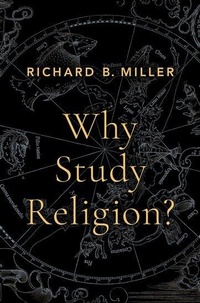
Why Study Religion?
Published on 12. January 2023
Book
Hardback
384 pages
978-0-19-756681-7 (ISBN)
Description
Can the study of religion be justified? Scholarship in religion, especially work in "theory and method," is preoccupied with matters of research procedure and thus inarticulate about the goals that motivate scholarship in the field. For that reason, the field suffers from a crisis of rationale. Richard B. Miller identifies six prevailing methodologies in the field, and then offers an alternative framework for thinking about the purposes of the discipline. Shadowing these various methodologies, he notes, is a Weberian scientific ideal for studying religion, one that aspires to value-neutrality. This ideal fortifies a "regime of truth" that undercuts efforts to think normatively and teleologically about the field's purpose and value. Miller's alternative framework, Critical Humanism, theorizes about the ends rather than the means of humanistic scholarship.
Why Study Religion? offers an account of humanistic inquiry that is held together by four values: Post-critical Reasoning, Social Criticism, Cross-cultural Fluency, and Environmental Responsibility. Ordered to such purposes, Miller argues, scholars of religion can relax their commitment to matters of methodological procedure and advocate for the value of studying religion. The future of religious studies will depend on how well it can articulate its goals as a basis for motivating scholarship in the field.
Why Study Religion? offers an account of humanistic inquiry that is held together by four values: Post-critical Reasoning, Social Criticism, Cross-cultural Fluency, and Environmental Responsibility. Ordered to such purposes, Miller argues, scholars of religion can relax their commitment to matters of methodological procedure and advocate for the value of studying religion. The future of religious studies will depend on how well it can articulate its goals as a basis for motivating scholarship in the field.
Reviews / Votes
This brilliant book is both a powerful criticism of the current state of religious studies and an impassioned plea for an entirely new approach.... Essential. * CHOICE * Religious studies scholars often struggle to articulate the value of what they do. Why Study Religion? offers a robust vindication of the academic study of religions that will be of value to any scholar (or any dean)looking to see the future of the humanities. * Kevin Schilbrack, Professor of Religious Studies and Department Chair, Appalachian State University * Miller's book is a major contribution to the critical study of leading methods in the field of Religious Studies. But the heart of the book, and where it really shines, is in its extension of the 'normative turn' in religious studies. Miller wants us to look beyond our obsession with method and to leave behind the scholarly ideal of 'value neutrality' and instead ask ourselves why we should study religious people, ideas, practices, and artifacts. His own answer to this question, which frames religious studies as a form of 'critical humanism,' is as persuasive as it is provocative. It is an answer that takes us beyond the study of religion to the humanities and to the question of what it is to be a thinking, responsible actor in the world. * Tyler T. Roberts, Professor of Religious Studies, Grinnell College * Miller has written a thoughtful, creative, clear, and well-researched book that offers an important contribution to the field of religious studies. It is wide-ranging, brimming with arguments, and attuned to detail. What we have here is the most robust, intellectually serious, and comprehensive "meta-disciplinary" work in religious studies to date. * David Decosimo, Associate Professor of Theology, Boston University * Religious studies scholars often struggle to articulate the value of what they do. Why Study Religion? offers a robust vindication of the academic study of religions that will be of value to any scholar (or any dean) looking to see the future of the humanities. * Kevin Schilbrack, Professor of Religious Studies and Department Chair, Appalachian State University* Miller's book is a major contribution to the critical study of leading methods in the field of Religious Studies. But the heart of the book, and where it really shines, is in its extension of the 'normative turn' in religious studies. Miller wants us to look beyond our obsession with method and to leave behind the scholarly ideal of 'value neutrality' and instead ask ourselves why we should study religious people, ideas, practices, and artifacts. His own answer to this question, which frames religious studies as a form of 'critical humanism,' is as persuasive as it is provocative. It is an answer that takes us beyond the study of religion to the humanities and to the question of what it is to be a thinking, responsible actor in the world. * Tyler T. Roberts was Professor of Religious Studies, Grinnell College
* There are many reasons to admire this book and many ways in which scholarship might benefit from it. Miller's critical engagements with the field's prominent methodologies are well executed and insightful. * Andrew Dole, Journal of the American Academy of Religion *
More details
Language
English
Place of publication
New York
United States
Target group
College/higher education
Product notice
sewn/stitched
Cloth over boards
Dimensions
Height: 242 mm
Width: 166 mm
Thickness: 33 mm
Weight
644 gr
ISBN-13
978-0-19-756681-7 (9780197566817)
Copyright in bibliographic data and cover images is held by Nielsen Book Services Limited or by the publishers or by their respective licensors: all rights reserved.
Schweitzer Classification
Other editions
Additional editions
Person
Richard B. Miller is a Laura Spelman Rockefeller Professor of Religion, Politics, and Ethics at the University of Chicago Divinity School. He is the author of Friends and Other Strangers: Studies in Religion, Ethics, and Culture, and the award-winning Interpretations of Conflict: Ethics, Pacifism, and the Just-War Tradition; Casuistry and Modern Ethics: A Poetics of Practical Reasoning; and Terror, Religion, and Liberal Thought.
Content
Acknowledgments I. A Crisis of Rationale Chapter 1: On Justifying the Study of Religion
Chapter 2: The Ethics of Religious Studies II. A Regime of Truth
Chapter 3: Interpretation, Comparison, and the History of Religions
Chapter 4: Scientific Rationality and Causal Explanation
Chapter 5: Existential Symbolism and Theological Anthropology Chapter 6: Embodied Practice and Materialistic Phenomenology Chapter 7: Genealogy, Ideology, and Critical Theory Chapter 8: Philosophy, Normativity, and Metacriticism III. Purposes, Desires, and Critical Humanism
Chapter 9: Religious Studies and the Values of Critical Humanism 1. The End of Religious Studies 2. Acts and Moral Agency 3. Critical Humanism 4. Four Values 5. Exemplary Works in the Study of Religion 6. Critical Humanism and the Ethics of Religious Studies Epilogue: Critical Humanism as a Vocation
Chapter 2: The Ethics of Religious Studies II. A Regime of Truth
Chapter 3: Interpretation, Comparison, and the History of Religions
Chapter 4: Scientific Rationality and Causal Explanation
Chapter 5: Existential Symbolism and Theological Anthropology Chapter 6: Embodied Practice and Materialistic Phenomenology Chapter 7: Genealogy, Ideology, and Critical Theory Chapter 8: Philosophy, Normativity, and Metacriticism III. Purposes, Desires, and Critical Humanism
Chapter 9: Religious Studies and the Values of Critical Humanism 1. The End of Religious Studies 2. Acts and Moral Agency 3. Critical Humanism 4. Four Values 5. Exemplary Works in the Study of Religion 6. Critical Humanism and the Ethics of Religious Studies Epilogue: Critical Humanism as a Vocation