

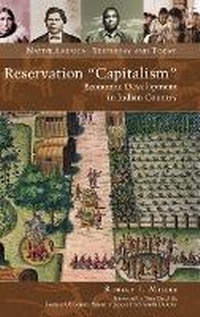
Reservation "Capitalism"
Economic Development in Indian Country
Published on 9. March 2012
Book
Hardback
224 pages
978-1-4408-0111-2 (ISBN)
Description
This unique book investigates the history and future of American Indian economic activities and explains why tribal governments and reservation communities must focus on creating sustainable privately and tribally owned businesses if reservation communities and tribal cultures are to continue to exist.
Native American peoples suffer from health, educational, infrastructure, and social deficiencies that most Americans who live outside of tribal lands are wholly unaware of and would not tolerate. By creating sustainable economic development on reservations, however, gradual, long-term change can be effected, thereby improving the standard of living and sustaining tribal cultures.
Reservation "Capitalism": Economic Development in Indian Country supplies the true history, present-day circumstances, and potential future of Indian communities and economics. It provides key background information on indigenous economic systems and property rights regimes in what is now the United States, and explains how the vast majority of native lands and natural resource assets were lost. The book focuses on strategies for establishing privately and publicly owned economic activities on reservations and creating economies where reservation inhabitants can be employed, live, and buy the necessities of life, thereby enabling complete tribal self-sufficiency and self-determination.
Native American peoples suffer from health, educational, infrastructure, and social deficiencies that most Americans who live outside of tribal lands are wholly unaware of and would not tolerate. By creating sustainable economic development on reservations, however, gradual, long-term change can be effected, thereby improving the standard of living and sustaining tribal cultures.
Reservation "Capitalism": Economic Development in Indian Country supplies the true history, present-day circumstances, and potential future of Indian communities and economics. It provides key background information on indigenous economic systems and property rights regimes in what is now the United States, and explains how the vast majority of native lands and natural resource assets were lost. The book focuses on strategies for establishing privately and publicly owned economic activities on reservations and creating economies where reservation inhabitants can be employed, live, and buy the necessities of life, thereby enabling complete tribal self-sufficiency and self-determination.
Reviews / Votes
His book is scholarly yet practical, and above all timely. It is a must-read for employees of tribal economic development departmental persons wanting more information on establishing business in tribal communities, students at tribal colleges, and those in any American Indian course that incorporates an entrepreneurial perspective. * Wicazo Sa Review * While Miller's fluid style makes his book accessible to the casual reader, the level of research and its extensive endnotes make this book a viable choice as the primary text for a course on tribal economic development. Although not a legal text, Miller provides an excellent synopsis of the legal history and background necessary to understand the impediments to tribal economic development. * Great Plains Review * This excellent scholarly volume includes enlightening history as well as analyses of present realities and the future of American Indian communities and economies. . . . This is a valuable volume for Native American studies collections and for those interested in the economic opportunities of today's Indian tribes, including business, government, and tribal leaders. Summing Up: Highly recommended. * Choice *More details
Series
Language
English
Place of publication
United States
Publishing group
Bloomsbury Publishing Plc
Target group
College/higher education
Dimensions
Height: 235 mm
Width: 156 mm
Weight
539 gr
ISBN-13
978-1-4408-0111-2 (9781440801112)
Copyright in bibliographic data and cover images is held by Nielsen Book Services Limited or by the publishers or by their respective licensors: all rights reserved.
Schweitzer Classification
Other editions
Additional editions
E-Book
03/2012
1st Edition
Praeger Publishers Inc
€61.89
Available for download
Person
Robert J. Miller is faculty director, Rosette LLP, American Indian Economic Development Program, Sandra Day O'Connor College of Law, Arizona State University.. He is Chief Justice of the Court of Appeals for the Grand Ronde Tribe, and served on the board of the Oregon Native American Business and Entrepreneurial Network for 12 years. Miller is a citizen of the Eastern Shawnee Tribe.
Content
Series Foreword by Series Editor Bruce E. Johansen
Foreword by Tom Daschle, Former U.S. Senate Majority Leader from South Dakota
Acknowledgments
1. Introduction
2. Historic American Indian Economies and Property Rights
3. Euro-American Impacts on American Indian Economies
4. Current Economic Activity in Indian Country
5. Tribal Gaming
6. Attracting Investments
7. Indian Entrepreneurship
8. Creating Reservation Economies
9. Conclusion
Notes
Selected Bibliography
Index
Foreword by Tom Daschle, Former U.S. Senate Majority Leader from South Dakota
Acknowledgments
1. Introduction
2. Historic American Indian Economies and Property Rights
3. Euro-American Impacts on American Indian Economies
4. Current Economic Activity in Indian Country
5. Tribal Gaming
6. Attracting Investments
7. Indian Entrepreneurship
8. Creating Reservation Economies
9. Conclusion
Notes
Selected Bibliography
Index