

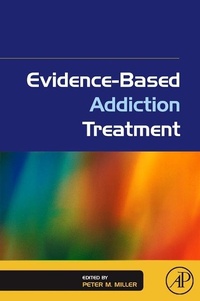
Evidence-Based Addiction Treatment
Published on 8. July 2009
Book
Hardback
488 pages
978-0-12-374348-0 (ISBN)
Description
Evidence-Based Addiction Treatment provides a state-of-the-art compilation of assessment and treatment practices with proven effectiveness.
A substantial body of evidence is presented to provide students, academics, and clinicians with specific science-based treatments that work. The book includes contributions by well-known researchers on addiction treatment and explicit case examples.
Written at a level appropriate for a variety of audiences, research studies are discussed but highly sophisticated knowledge in research methodology is not required.
A substantial body of evidence is presented to provide students, academics, and clinicians with specific science-based treatments that work. The book includes contributions by well-known researchers on addiction treatment and explicit case examples.
Written at a level appropriate for a variety of audiences, research studies are discussed but highly sophisticated knowledge in research methodology is not required.
More details
Language
English
Place of publication
San Diego
United States
Publishing group
Elsevier Science Publishing Co Inc
Target group
College/higher education
Graduate level clinical psychology student, psychiatry residents, entry-level clinicians
Product notice
Unsewn / adhesive bound
Paper over boards
Dimensions
Height: 237 mm
Width: 159 mm
Thickness: 32 mm
Weight
768 gr
ISBN-13
978-0-12-374348-0 (9780123743480)
Copyright in bibliographic data and cover images is held by Nielsen Book Services Limited or by the publishers or by their respective licensors: all rights reserved.
Schweitzer Classification
Other editions
Additional editions
Peter M. Miller
Evidence-Based Addiction Treatment
E-Book
07/2009
Academic Press
€46.99
Available for download
Person
Peter M. Miller, Ph.D., is a clinical psychologist and Professor of Psychiatry and Behavioral Sciences in the Center for Drug and Alcohol Programs at the Medical University of South Carolina. He is Editor-in-Chief of the journal Addictive Behaviors and an experienced researcher and clinician in the field of alcohol use disorders.
Content
Part I: Introduction to Evidence-Based Practices
Ch1: What is Evidence Based Treatment?
Ch2: The Clinical Course of Addiction Treatment: The Role of Nonspecific Therapeutic Factors
Part II: Clinical Assessment and Treatment Monitoring
Ch3: History and Current Substance Use
Ch4: Dependence and Diagnosis
Ch5: Assessment of Co-occurring Addictive and Other Mental Disorders (AMDs)
Ch6: Individualized Problem Assessment I: Assessing Cognitive and Behavioral Factors
Ch7: Individualized Problem Assessment II: Assessing Clients from a Broader Perspective
Part III: Treatment Methods
Ch8: Cognitive Behavioral Treatments for Substance Use Disorders
Ch9: Motivational Interviewing (MI) for Addictions
Ch10: Brief Intervention
Ch11: Relapse Prevention: Evidence Base and Future Directions
Ch12: Behavioral Couples' Therapy in the Treatment of Alcohol Problems
Ch13: Contingency Management and the Community Reinforcement Approach
Ch14: How Much Treatment Does a Person Need? Self-Change and the Treatment System
Ch 15: Adjunctive Pharmacotherapy in the Treatment of Alcohol and Drug Dependence
Part IV: Special Populations and Applications
Ch 16: Addiction Treatment Disparities: Ethnic and Sexual Minority Populations
Ch 17: Treating the patient with co-morbidity
Ch 18: Evidence-Based Interventions for Adolescent Substance Users
Ch 19: College Student Applications
Ch 20: Internet Evidence-Based Treatments
Part V: Evidence-Based Treatment in Action
Ch 21: Evidence-Based Treatment Planning for Substance Abuse Therapy
Ch 22: Adoption and Implementation of Evidence-Based Treatment
Part VI: A Look toward the Future
Ch 23: Challenges of an Evidence-Based Approach to Addiction Treatment
Ch1: What is Evidence Based Treatment?
Ch2: The Clinical Course of Addiction Treatment: The Role of Nonspecific Therapeutic Factors
Part II: Clinical Assessment and Treatment Monitoring
Ch3: History and Current Substance Use
Ch4: Dependence and Diagnosis
Ch5: Assessment of Co-occurring Addictive and Other Mental Disorders (AMDs)
Ch6: Individualized Problem Assessment I: Assessing Cognitive and Behavioral Factors
Ch7: Individualized Problem Assessment II: Assessing Clients from a Broader Perspective
Part III: Treatment Methods
Ch8: Cognitive Behavioral Treatments for Substance Use Disorders
Ch9: Motivational Interviewing (MI) for Addictions
Ch10: Brief Intervention
Ch11: Relapse Prevention: Evidence Base and Future Directions
Ch12: Behavioral Couples' Therapy in the Treatment of Alcohol Problems
Ch13: Contingency Management and the Community Reinforcement Approach
Ch14: How Much Treatment Does a Person Need? Self-Change and the Treatment System
Ch 15: Adjunctive Pharmacotherapy in the Treatment of Alcohol and Drug Dependence
Part IV: Special Populations and Applications
Ch 16: Addiction Treatment Disparities: Ethnic and Sexual Minority Populations
Ch 17: Treating the patient with co-morbidity
Ch 18: Evidence-Based Interventions for Adolescent Substance Users
Ch 19: College Student Applications
Ch 20: Internet Evidence-Based Treatments
Part V: Evidence-Based Treatment in Action
Ch 21: Evidence-Based Treatment Planning for Substance Abuse Therapy
Ch 22: Adoption and Implementation of Evidence-Based Treatment
Part VI: A Look toward the Future
Ch 23: Challenges of an Evidence-Based Approach to Addiction Treatment