

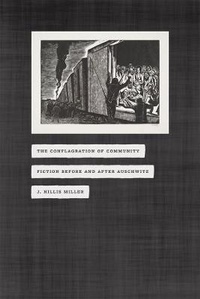
The Conflagration of Community
Fiction before and after Auschwitz
Published on 15. September 2011
Book
Paperback/Softback
336 pages
978-0-226-52722-2 (ISBN)
Description
"After Auschwitz to write even a single poem is barbaric". "The Conflagration of Community" challenges Theodor Adorno's famous statement about aesthetic production after the Holocaust, arguing for the possibility of literature to bear witness to extreme collective and personal experiences. J. Hillis Miller considers how novels about the Holocaust relate to fictions written before and after it, and uses theories of community from Jean-Luc Nancy and Derrida to explore the dissolution of community bonds in its wake. Miller juxtaposes readings of books about the Holocaust - Keneally's "Schindler's List", McEwan's "Black Dogs", Spiegelman's "Maus", and Kertesz's "Fatelessness" - with Kafka's novels and Morrison's "Beloved", asking what it means to think of texts as acts of testimony. Throughout, Miller questions the resonance between the difficulty of imagining, understanding, or remembering Auschwitz - a difficulty so often a theme in records of the Holocaust - and the exasperating resistance to clear, conclusive interpretation of these novels. "The Conflagration of Community" is an eloquent study of literature's value to fathoming the unfathomable.
More details
Language
English
Place of publication
Chicago
United States
Publishing group
The University of Chicago Press
Target group
College/higher education
Dimensions
Height: 23 mm
Width: 15 mm
Thickness: 2 mm
Weight
482 gr
ISBN-13
978-0-226-52722-2 (9780226527222)
Copyright in bibliographic data and cover images is held by Nielsen Book Services Limited or by the publishers or by their respective licensors: all rights reserved.
Schweitzer Classification
Other editions
Additional editions
E-Book
05/2024
1st Edition
University of Chicago Press
from
€53.89
Available for download
Person
J. Hillis Miller is Distinguished Research Professor of Comparative Literature and English at the University of California, Irvine. He is the author of many books and articles on literature and literary theory, most recently of For Derrida.