


Handbook of Augmented Reality Training Design Principles
Published on 1. June 2023
Book
Paperback/Softback
172 pages
978-1-009-21615-9 (ISBN)
Description
The Handbook of Augmented Reality Training Design Principles is for anyone interested in using augmented reality and other forms of simulation to design better training. It includes eleven design principles aimed at training recognition skills for combat medics, emergency department physicians, military helicopter pilots, and others who must rapidly assess a situation to determine actions. Chapters on engagement, creating scenario-based training, fidelity and realism, building mental models, and scaffolding and reflection use real-world examples and theoretical links to present approaches for incorporating augmented reality training in effective ways. The Learn, Experience, Reflect framework is offered as a guide to applying these principles to training design. This handbook is a useful resource for innovative design training that leverages the strengths of augmented reality to create an engaging and productive learning experience.
Reviews / Votes
'This handbook lays out the foundations of skilled decision making and cognitive performance, focusing on recognition skills as fundamental. Designing training for developing and improving cognitive performance has been a hidden practice offered by only a very few pioneering researchers and practitioners until now. This book opens the lid on how to do this effectively based on both cutting-edge theory and models in cognitive performance, as well as an understanding of the technology offering. Every technology company investing money into developing these technology-driven mixed-reality training systems should be reading this to ensure relevance, utility, usability, and adoption to their training organisation customers.' Rob Hutton, University of the West of England, UK 'Augmented reality applications are unlikely to have an impact without guidelines for putting the technology into practice, and that's what this book delivers. It is clearly written, with a number of good examples. This book's implications extend beyond augmented reality - implications for anyone wanting to improve training programs.' Gary Klein, Cognitive Psychologist and CEO of ShadowBox LLC 'Finally! A gem of a handbook on how to design virtual learning experiences. Building on the science of learning, this handbook offers practical guidance to create training that makes a difference and works. A must source for scientists, instructional designers, practitioners, and for all who engineer technology-based learning environments.' Eduardo Salas, Rice University, USAMore details
Language
English
Place of publication
Cambridge
United Kingdom
Product notice
Paperback (trade)
Illustrations
Worked examples or Exercises
Dimensions
Height: 224 mm
Width: 148 mm
Thickness: 12 mm
Weight
266 gr
ISBN-13
978-1-009-21615-9 (9781009216159)
Copyright in bibliographic data and cover images is held by Nielsen Book Services Limited or by the publishers or by their respective licensors: all rights reserved.
Schweitzer Classification
Other editions
Additional editions
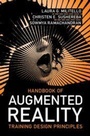
Laura G. Militello | Christen E. Sushereba | Sowmya Ramachandran
Handbook of Augmented Reality Training Design Principles
Book
06/2023
Cambridge University Press
€116.50
Shipment within 15-20 days
Laura G. Militello | Christen E. Sushereba | Sowmya Ramachandran
Handbook of Augmented Reality Training Design Principles
E-Book
05/2023
Cambridge University Press
€39.49
Available for download
Persons
Laura G. Militello is a co-founder of Unveil LLC, a startup company that delivers augmented reality-based recognition skills training to combat medics, emergency responders, and others. She co-authored Perspectives on Cognitive Task Analysis (2008) and she co-hosts the Naturalistic Decision Making podcast. Her work supports people who make tough decisions in challenging situations.
Content
1. Introduction; 2. Engagement; 3. Scenario Building; 4. Fidelity and Realism; 5. Supporting Mental Model Construction; 6. Scaffolding and Reflection; 7. Synthesis; 8. Conclusion; References; Index.