

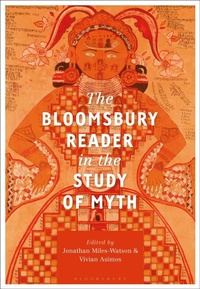
The Bloomsbury Reader in the Study of Myth
Published on 22. August 2019
Book
Hardback
320 pages
978-1-350-08224-3 (ISBN)
Description
What is myth? Why do myths exist? What do myths do? Where are myths going?
This reader is organized into four parts which explore these questions. Drawing on over 10 years of experience teaching myth in religious studies and anthropology departments in the UK, USA and Continental Europe, the editors have brought together seminal works in the theory of myth. Key features include:
- a general introduction to the reader that outlines a comparative and interpretative framework
- an introduction contextualizing each part and sub-section
- an introduction to each reading by the editors
- supporting online resources that provide discussion questions and further reading suggestions, including primary sources.
From functionalism to feminism, nationalism to globalization, and psychoanalysis to spatial analysis, this reader covers the classic and contemporary theories and approaches needed to understand what myth is, why myths exist, what they do, and what the future holds for them.
This reader is organized into four parts which explore these questions. Drawing on over 10 years of experience teaching myth in religious studies and anthropology departments in the UK, USA and Continental Europe, the editors have brought together seminal works in the theory of myth. Key features include:
- a general introduction to the reader that outlines a comparative and interpretative framework
- an introduction contextualizing each part and sub-section
- an introduction to each reading by the editors
- supporting online resources that provide discussion questions and further reading suggestions, including primary sources.
From functionalism to feminism, nationalism to globalization, and psychoanalysis to spatial analysis, this reader covers the classic and contemporary theories and approaches needed to understand what myth is, why myths exist, what they do, and what the future holds for them.
Reviews / Votes
Miles-Watson and Asimos (both, Durham Univ., UK) offer a rich collection of readings to aid in the study of "the origin, form, function, and future of mythology" (p. 3) ... Appropriate for those new to mythology and for those teaching it, this reader will be an invaluable tool for study of mythology.Summing Up: Essential. Lower- and upper-division undergraduates; faculty. * CHOICE * This is a judicious, thoughtful and well-balanced selection of scholarly studies on mythology. The editors include classic essays by famous thinkers, as well as synopses and critiques from a contemporary standpoint. They also helpfully organize the volume into clusters that provide robust intellectual and pedagogical guidelines for teachers and students. * Andrew Strathern, Andrew W. Mellon Professor of Anthropology, University of Pittsburgh, USA and Pamela J. Stewart, Senior Research Associate and Co-Director Cromie Burn Research Unit, University of Pittsburgh, USA * This is an eminent collection on myth and the study of it - with breadth and variety. The contributions range from the indispensable classic must-reads to new, creative and constructive submissions to the ongoing discussions in a notoriously complicated field in the humanities. * Jeppe Sinding Jensen, Emeritus Senior Lecturer, Aarhus University, Denmark and author of What is Religion? (2014) *
More details
Language
English
Place of publication
London
United Kingdom
Publishing group
Bloomsbury Publishing PLC
Target group
College/higher education
Dimensions
Height: 250 mm
Width: 175 mm
Thickness: 22 mm
Weight
727 gr
ISBN-13
978-1-350-08224-3 (9781350082243)
Copyright in bibliographic data and cover images is held by Nielsen Book Services Limited or by the publishers or by their respective licensors: all rights reserved.
Schweitzer Classification
Other editions
Additional editions
Jonathan Miles-Watson | Vivian Asimos
The Bloomsbury Reader in the Study of Myth
E-Book
08/2019
1st Edition
Bloomsbury Academic
€39.99
Available for download
Persons
Jonathan Miles-Watson is Associate Professor of the Anthropology of Religion at Durham University, UK. He is the author of Welsh Mythology: A Neo-structuralist Analysis (2009) and co-editor of both Ruptured Landscapes: Landscape and Identity in Times of Social Change (2015) and Theories of Religion: A Reader (2006).
Vivian Asimos is a Research Assistant and Teaching Assistant in the Department of Religion and Theology at Durham University, UK.
Vivian Asimos is a Research Assistant and Teaching Assistant in the Department of Religion and Theology at Durham University, UK.
Content
Copyright Acknowledgements
Acknowledgements
In Search of Mythology: Introduction, Jonathan Miles-Watson and Vivian Asimos
Part One: What is Myth ?
Locating the Field, Jonathan Miles-Watson and
Vivian Asimos
1. A Two-Dimensional Scheme for the Classification of Narratives, C. Scott Littleton
2. The Idea of Folklore: An Essay, Dan Ben Amos
3. Myth in Primitive Society, Bronislaw Malinowski
Part Two: Why do Myths Exist?
Section A: Global Theories of Myth
Are All Myths the Same? Jonathan Miles-Watson and Vivian Asimos
1. Balder and the Mistletoe, James Frazer
2. The Myth of the Birth of the Hero, Otto Rank
3. The Historical Development of Mythology, Joseph Campbell
Section B: Myth and Dreams
(Dis)Embodied Mythology, Jonathan Miles-Watson and Vivian Asimos
1. Flying Saucers: a modern myth, Carl Gustav Jung
2. The Vampire as a Blood Thirsty Revenant: A Psychoanalytic Post Mortem, Alan Dundes
3. More than Stories, More than Myths: Animal/Human/Nature(s) in Traditional Ecological Worldviews, Amba Sepie
Section C: Myth and History
The Search for Truth, Jonathan Miles-Watson and Vivian Asimos
1. Myth and Reality, Mercia Eliade
2. The Original Elements of Mythology, Max Muller
3. Cu Chulainn's Women and some Indo-European Comparisons, Nicholas Allen
Part Three: What do Myths Do?
Section A: Structuralist Approaches
Myth and Meaning, Jonathan Miles-Watson and Vivian Asimos
1. Jewels and Wounds, Claude Levi-Strauss
2. Pulleyar and the Lord Buddha, Edmund Leach
3. An Outline of Propp's Model for the Study of Wondertales, Manuel Aguirre
Section B: Neostructuralist Approaches
Beyond Binaries, Jonathan Miles-Watson and Vivian Asimos
1. We Think What We Eat, Seth Kunin
2. The Gun and the Bow, Stephen Hugh-Jones
3. The Meaning of Myth, Mary Douglas
Section C: Spatial Theories
From Page to Place, Jonathan Miles-Watson and Vivian Asimos
1. Myth, Memory and the Oral Tradition: Cicero in the Trobriands, Frances Harwood
2. Implicit Mythology in the Shimla Hills, Jonathan Miles-Watson
3. Stone-Faced Ancestors: The Spatial Anchoring of Myth in Wamira, Papua New Guinea Miriam Khan
Part Four: Where are Myths Going
Section A: Myths and Popular Culture
What Good Are Old Stories? Jonathan Miles-Watson and Vivian Asimos
1. Amateur Mythographies: Fan Fiction and the Myth of Myth, Ika Willis
2. Storm Power, an Icy Tower and Elsa's Bower: The Winds of Change in Disney's Frozen, Lauren Dundes, Madeline Streiff and Zachary Streiff
3. Science Fiction as Mythology, Marilyn Sutton and Thomas Sutton
Section B: The Future of Mythology
Mythological Terminalia, Jonathan Miles-Watson and Vivian Asimos
1. Does Myth have a Future? Robert Segal
Index
Acknowledgements
In Search of Mythology: Introduction, Jonathan Miles-Watson and Vivian Asimos
Part One: What is Myth ?
Locating the Field, Jonathan Miles-Watson and
Vivian Asimos
1. A Two-Dimensional Scheme for the Classification of Narratives, C. Scott Littleton
2. The Idea of Folklore: An Essay, Dan Ben Amos
3. Myth in Primitive Society, Bronislaw Malinowski
Part Two: Why do Myths Exist?
Section A: Global Theories of Myth
Are All Myths the Same? Jonathan Miles-Watson and Vivian Asimos
1. Balder and the Mistletoe, James Frazer
2. The Myth of the Birth of the Hero, Otto Rank
3. The Historical Development of Mythology, Joseph Campbell
Section B: Myth and Dreams
(Dis)Embodied Mythology, Jonathan Miles-Watson and Vivian Asimos
1. Flying Saucers: a modern myth, Carl Gustav Jung
2. The Vampire as a Blood Thirsty Revenant: A Psychoanalytic Post Mortem, Alan Dundes
3. More than Stories, More than Myths: Animal/Human/Nature(s) in Traditional Ecological Worldviews, Amba Sepie
Section C: Myth and History
The Search for Truth, Jonathan Miles-Watson and Vivian Asimos
1. Myth and Reality, Mercia Eliade
2. The Original Elements of Mythology, Max Muller
3. Cu Chulainn's Women and some Indo-European Comparisons, Nicholas Allen
Part Three: What do Myths Do?
Section A: Structuralist Approaches
Myth and Meaning, Jonathan Miles-Watson and Vivian Asimos
1. Jewels and Wounds, Claude Levi-Strauss
2. Pulleyar and the Lord Buddha, Edmund Leach
3. An Outline of Propp's Model for the Study of Wondertales, Manuel Aguirre
Section B: Neostructuralist Approaches
Beyond Binaries, Jonathan Miles-Watson and Vivian Asimos
1. We Think What We Eat, Seth Kunin
2. The Gun and the Bow, Stephen Hugh-Jones
3. The Meaning of Myth, Mary Douglas
Section C: Spatial Theories
From Page to Place, Jonathan Miles-Watson and Vivian Asimos
1. Myth, Memory and the Oral Tradition: Cicero in the Trobriands, Frances Harwood
2. Implicit Mythology in the Shimla Hills, Jonathan Miles-Watson
3. Stone-Faced Ancestors: The Spatial Anchoring of Myth in Wamira, Papua New Guinea Miriam Khan
Part Four: Where are Myths Going
Section A: Myths and Popular Culture
What Good Are Old Stories? Jonathan Miles-Watson and Vivian Asimos
1. Amateur Mythographies: Fan Fiction and the Myth of Myth, Ika Willis
2. Storm Power, an Icy Tower and Elsa's Bower: The Winds of Change in Disney's Frozen, Lauren Dundes, Madeline Streiff and Zachary Streiff
3. Science Fiction as Mythology, Marilyn Sutton and Thomas Sutton
Section B: The Future of Mythology
Mythological Terminalia, Jonathan Miles-Watson and Vivian Asimos
1. Does Myth have a Future? Robert Segal
Index