

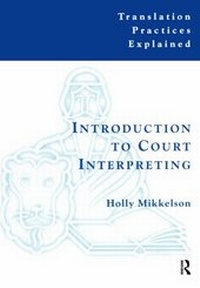
Introduction to Court Interpreting
1st Edition
Published on 1. September 2000
Book
Paperback/Softback
105 pages
978-1-900650-30-4 (ISBN)
Description
Court interpreting is becoming increasingly professionalized as the number of practitioners grows and judicial systems and legislatures throughout the world focus more on language rights as an element of due process. Introduction to Court Interpreting is the first course book for court interpreter training that is not oriented toward the judicial system of a particular country, but can be used in any country for training interpreters in any language combination. It covers the history of the profession, the legal basis for the interpreter's presence in the courtroom, criminal and civil procedure, comparative law, the role of the interpreter in the judiciary setting, ethical principles, techniques of interpreting, and resources for continuing education and research. Designed to be accessible to both teachers and students, it contains numerous practical exercises and suggestions for further reading, as well as a comprehensive bibliography.
Many changes have taken place in the court interpreting profession and in the judicial systems of many countries in recent years. Introduction to Court Interpreting reflects these developments and addresses the need for an up-to-date, globalized approach to preparing an increasingly diverse student population to enter this challenging profession.
Many changes have taken place in the court interpreting profession and in the judicial systems of many countries in recent years. Introduction to Court Interpreting reflects these developments and addresses the need for an up-to-date, globalized approach to preparing an increasingly diverse student population to enter this challenging profession.
More details
Series
Language
English
Place of publication
Manchester
United Kingdom
Target group
College/higher education
Professional and scholarly
Dimensions
Height: 246 mm
Width: 171 mm
Weight
204 gr
ISBN-13
978-1-900650-30-4 (9781900650304)
Copyright in bibliographic data and cover images is held by Nielsen Book Services Limited or by the publishers or by their respective licensors: all rights reserved.
Schweitzer Classification
Other editions
New editions
Holly Mikkelson
Introduction to Court Interpreting
Book
12/2016
2nd Edition
Routledge
€66.80
Shipment within 10-20 days
Additional editions
Holly Mikkelson
Introduction to Court Interpreting
Book
11/2015
1st Edition
Routledge
€141.36
Article exhausted; check for reprint
Person
Holly Mikkelson is an associate professor in the Graduate School of Translation and Interpretation at the Monterey Institute of International Studies, where she has taught court interpreting for many years. A certified Spanish court interpreter who has worked in state and federal courts in the United States, she co-authored Fundamentals of Court Interpretation, widely recognized as a seminal work in the field. Her training manuals, the Interpreter's Edge series, are used in court interpreting programmes throughout the world.
Content
Chapter 1: Introduction
Scope and Objective
Role of the Court Interpreter
History of Court Interpreting
Suggestions for Further Reading
Chapter 2: The Law
2.1. The Right to an Interpreter
2.1.1. Europe
2.1.2. The Americas
2.1.3. Asia
2.1.4. Australia
2.1.5. Africa
2.1.6. Defining Competency
2.1.7. U.S. Federal Court Interpreters Exam
2.1.8. Other Exams
2.2. The Role of the Professional Association
2.3. Suggestions for Further Study
Chapter 3: Legal Traditions of the World
3.1. Attitudes towards the Law and Lawyers
3.2. Civil Law
3.3. Common Law
3.4. Other Legal Traditions
3.4.1. Africa
3.4.2. Hinduism
3.4.3. Islam
3.4.4. Judaism
3.4.5. Socialist Law
3.4.6. Confucianism
3.4.7. International Law and Supranational Courts
3.5. Conclusion
3.6. Suggestions for Further Reading
3.7. Suggestions for Further Study
Chapter 4: Criminal and Civil Procedure
4.1. Criminal Procedure
4.1.1. Investigative Phase
4.1.2. Pre-Trial Phase
4.1.3. The Trial
4.1.4. Under Civil Law
4.1.5. Under Common Law
4.1.6. The Sentence
4.1.7. Appeals
4.1.8. Alternative Programmes
4.2. Civil Procedure
4.3. The Interpreter's Role
4.4. Suggestions for Further Reading
4.5. Suggestions for Further Study
Chapter 5: The Code of Ethics
5.1. Canons of the Code of Ethics
5.1.1. Fidelity
5.1.2. Confidentiality
5.1.3. Impartiality
5.1.4. Professional Conduct
5.2. Practical Guidelines
5.3. Conclusion
5.4. Role-Playing Scenarios
5.5. Suggestions for Further Reading
5.6. Suggestions for Further Study
Chapter 6: Interpreting Techniques
6.1. Definition of Interpreting
6.2. Consecutive Interpreting
6.3. Simultaneous Interpreting
6.4. Sight Translation
6.5. Ancillary Tasks
6.6. Remote Interpreting
6.7. Practical Exercises
6.7.1. Active Listening and Retention
6.7.2. Communication Skills
6.7.3. Split Attention
6.7.4. Restructuring
6.7.5. Anticipation
6.7.6. Interpreting
6.8. Suggestions for Further Reading
6.9. Suggested Class Activities
Chapter 7: Specialized Topics, Resources and References
7.1. Criminal Cases
7.2. Civil Cases
7.3. Resources for Research and Preparation
7.3.1. The Interpreter's Basic Library
7.3.2. Human Resources
7.3.3. Electronic Resources
7.4. Continuing Education
7.5. Suggested Activities
Appendix A: Instructions to Parties in Interpreted Proceedings
Appendix B: Best Practice in Court Interpreting and Code of Conduct for Court Interpreters
Bibliography
Index
Scope and Objective
Role of the Court Interpreter
History of Court Interpreting
Suggestions for Further Reading
Chapter 2: The Law
2.1. The Right to an Interpreter
2.1.1. Europe
2.1.2. The Americas
2.1.3. Asia
2.1.4. Australia
2.1.5. Africa
2.1.6. Defining Competency
2.1.7. U.S. Federal Court Interpreters Exam
2.1.8. Other Exams
2.2. The Role of the Professional Association
2.3. Suggestions for Further Study
Chapter 3: Legal Traditions of the World
3.1. Attitudes towards the Law and Lawyers
3.2. Civil Law
3.3. Common Law
3.4. Other Legal Traditions
3.4.1. Africa
3.4.2. Hinduism
3.4.3. Islam
3.4.4. Judaism
3.4.5. Socialist Law
3.4.6. Confucianism
3.4.7. International Law and Supranational Courts
3.5. Conclusion
3.6. Suggestions for Further Reading
3.7. Suggestions for Further Study
Chapter 4: Criminal and Civil Procedure
4.1. Criminal Procedure
4.1.1. Investigative Phase
4.1.2. Pre-Trial Phase
4.1.3. The Trial
4.1.4. Under Civil Law
4.1.5. Under Common Law
4.1.6. The Sentence
4.1.7. Appeals
4.1.8. Alternative Programmes
4.2. Civil Procedure
4.3. The Interpreter's Role
4.4. Suggestions for Further Reading
4.5. Suggestions for Further Study
Chapter 5: The Code of Ethics
5.1. Canons of the Code of Ethics
5.1.1. Fidelity
5.1.2. Confidentiality
5.1.3. Impartiality
5.1.4. Professional Conduct
5.2. Practical Guidelines
5.3. Conclusion
5.4. Role-Playing Scenarios
5.5. Suggestions for Further Reading
5.6. Suggestions for Further Study
Chapter 6: Interpreting Techniques
6.1. Definition of Interpreting
6.2. Consecutive Interpreting
6.3. Simultaneous Interpreting
6.4. Sight Translation
6.5. Ancillary Tasks
6.6. Remote Interpreting
6.7. Practical Exercises
6.7.1. Active Listening and Retention
6.7.2. Communication Skills
6.7.3. Split Attention
6.7.4. Restructuring
6.7.5. Anticipation
6.7.6. Interpreting
6.8. Suggestions for Further Reading
6.9. Suggested Class Activities
Chapter 7: Specialized Topics, Resources and References
7.1. Criminal Cases
7.2. Civil Cases
7.3. Resources for Research and Preparation
7.3.1. The Interpreter's Basic Library
7.3.2. Human Resources
7.3.3. Electronic Resources
7.4. Continuing Education
7.5. Suggested Activities
Appendix A: Instructions to Parties in Interpreted Proceedings
Appendix B: Best Practice in Court Interpreting and Code of Conduct for Court Interpreters
Bibliography
Index