

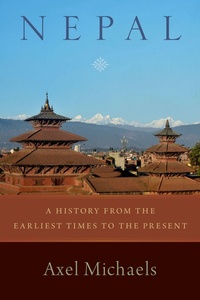
Nepal
A History from the Earliest Times to the Present
Published on 19. June 2024
Book
Hardback
432 pages
978-0-19-765093-6 (ISBN)
Description
Until 1951 Nepal was closed to the world, landlocked between the strongest Asian powers, India and China. With its exceptional landscape, it touts the highest mountains and the greatest biodiversity on earth. It is best known as the home of Mt. Everest and holds particular fascination for those interested in climbing the Himalayas. Having long maintained its self-imposed isolation, the nation is one of the least developed in the world. Yet it is inhabited by a remarkably diverse population of 125 ethnic groups, 123 languages, and numerous religions, most notably Hinduism and Buddhism.
In this book, South Asia expert Axel Michaels covers the history of Nepal from prehistoric times and the period of the Licchavi dynasty through more recent developments, such as the rise of the republic, the first elections challenged by the Maoist insurgency (1996-2006), and the royal massacre in 2001. Chapters discuss the different principalities on the territory, among them the mysterious and legendary Mustang and Sherpa realms. Since the eighteenth century, these domains have been bundled into a contentious national history. Thus, going well beyond the center of power in the Kathmandu Valley, the book examines Nepal's relations with neighboring cultures in India, Tibet, and China, as well as the influence of British colonial power. It particularly focuses on its rich history of arts, architecture, and handicrafts. Although the Buddha was born in Nepal, the country is the world's last Hindu kingdom and is also a stronghold of Tantric traditions, shamanism, and many folk religions whose festivals and rituals mark daily life.
Based on a wealth of primary sources in Nepali, Sanskrit, and other indigeneous languages, Nepal offers a comprehensive and updated history of this unique culture and history.
In this book, South Asia expert Axel Michaels covers the history of Nepal from prehistoric times and the period of the Licchavi dynasty through more recent developments, such as the rise of the republic, the first elections challenged by the Maoist insurgency (1996-2006), and the royal massacre in 2001. Chapters discuss the different principalities on the territory, among them the mysterious and legendary Mustang and Sherpa realms. Since the eighteenth century, these domains have been bundled into a contentious national history. Thus, going well beyond the center of power in the Kathmandu Valley, the book examines Nepal's relations with neighboring cultures in India, Tibet, and China, as well as the influence of British colonial power. It particularly focuses on its rich history of arts, architecture, and handicrafts. Although the Buddha was born in Nepal, the country is the world's last Hindu kingdom and is also a stronghold of Tantric traditions, shamanism, and many folk religions whose festivals and rituals mark daily life.
Based on a wealth of primary sources in Nepali, Sanskrit, and other indigeneous languages, Nepal offers a comprehensive and updated history of this unique culture and history.
Reviews / Votes
Few of those who have tried to write the history of Nepal are equally competent in handling ancient Sanskrit inscriptions, medieval chronicles, priestly handbooks, and contemporary politics. Axel Michaels - polymath, founder of Ethno-Indologie, and long at the heart of the German scholarly community working on Nepal - has all these competencies and more, so a new history of Nepal from his hand is both highly welcome and likely to stand for a long time as an essential guide to the country. * David N. Gellner, University of Oxford * Kaleidoscopic and comprehensive, this cultural history of Nepal is a triumph. From prehistory to the current political moment, this extraordinary and multidisciplinary monograph engages with primary and secondary sources in a great number of languages to tell the story of Nepal in a way that invites deeper understanding and prompts critical reflection. Readers are indeed fortunate to have Axel Michaels as their expert guide, as he navigates complex terrain with agility and insight. In no short time, Nepal: A History from the Earliest Times to the Present will be a core text for all scholars in the humanities and social sciences interested in South Asia. * Mark Turin, University of British Columbia * This book presents a refreshing new look at Nepal's development from heterogeneous ethnicities and traditions into an emerging nation state, situated both inside and outside the Indian 'Great Tradition.' Axel Michaels excels in deliberating alternative views of many contested points, frequently adding his own decades-long personal experiences. * Michael Witzel, Harvard University * Drawing on the author's own extensive Indological and ethnographic research, this book provides an excellent survey of Nepal's culture and history and is particularly valuable for its treatment of religion and art. * John Whelpton, Author of A History of Nepal * Nepal: A History from the Earliest Times to the Present is a remarkable and enriching work that offers a thorough and thoughtful examination of Nepal's historical journey. Axel Michaels has crafted a book that not only educates but also captivates, making it a significant contribution to the study of South Asian history. * Ankit Sharma, Goodreads * Recognizing Nepal's multifaceted consciousness, the book ponders how the country handles its exceptional diversity. An excellent and very comprehensive history. * P. Passariello, Choice *More details
Language
English
Place of publication
New York
United States
Illustrations
24 black and white halftones
Dimensions
Height: 237 mm
Width: 161 mm
Thickness: 33 mm
Weight
764 gr
ISBN-13
978-0-19-765093-6 (9780197650936)
Copyright in bibliographic data and cover images is held by Nielsen Book Services Limited or by the publishers or by their respective licensors: all rights reserved.
Schweitzer Classification
Other editions
Person
Axel Michaels is Senior Professor of Classical Indology and Religious Studies at the South Asia Institute, University of Heidelberg. A specialist in the legal and cultural history of South Asia, he is the author of Hinduism: Past and Present and Homo rituali: Hindu Rituals and its Significance for Ritual Theory (OUP, 2015), among other books.
Content
Preface
Acknowledgments
Glossary
On the Spelling and Pronunciation of Indian and Nepalese Words
Chronology
Introduction
Chapter 1: The Country
Infrastructure
Mountains
Earthquakes
Water Resources
Forests and Holy Trees
Chapter 2: The Population
Migration
Social Structures and Hierarchies
The Position of Women
Nepal as a Multi-ethnic State
Chapter 3: The Religions
Buddhism
Hinduism
Religious Syncretism and Tolerance
Chapter 4: Scattered Power and Petty Kingdoms: The Country before the Fourteenth Century
Prehistory
The Kirata
The Licchavi and Abhira-Gupta Period
The Early Medieval Period
The Khasa-Malla in West Nepal
Petty Kingdoms
Chapter 5: Divided Rule: The Malla Kingdoms, Thirteenth to Eighteenth Century
The Malla Rulers
The Urban Culture of the Newars
The Three Royal Cities of the Kathmandu Valley
Chapter 6: From Gorkha to Nepal: The Imperial Saha Monarchy, 1768/69-1846
Prthvinarayana and His Followers
The Consolidation of Gorkhali Power
Anglo-British Encounters
Sino-Tibetan Encounters
Chapter 7: Patrimonial Rule: The Rana Period, 1846-1951
The Kivara Rana, 1846-1885
The Samsera Rana, 1885-1951
Landholding and Agriculture
Labor and Slavery
Economy and Trade
The Legal and Administrative System
Education and the Media
Healing Systems and Shamanism
Hunting and Elephants
Rana Architecture
The Legacy of the Saha and Rana Periods
Chapter 8: From Monarchy to Republic, 1951-2022
The Restoration of the Sahas
The Maoist Insurgency
The Decline of the Monarchy and the Emergence of Democracy
Power and Authority: King, Prime Minister, and Maoist Leader
Administration and Law
The Urbanization of the Kathmandu Valley
Literature, Art, and Music
Chapter 9: Alliances and Resistance: Ethnic Groups and Their Histories
The Tarai: From Mithila to the Madhesi Uprising
The Sherpa
Mustang
The Kiranti (Rai-Limbu) in Eastern Nepal
From Empire to Nation State
Conclusion
Appendices
The Sources
Lists of Rulers, Prime Ministers, and British Envoys
Notes
Bibliography
Index
Acknowledgments
Glossary
On the Spelling and Pronunciation of Indian and Nepalese Words
Chronology
Introduction
Chapter 1: The Country
Infrastructure
Mountains
Earthquakes
Water Resources
Forests and Holy Trees
Chapter 2: The Population
Migration
Social Structures and Hierarchies
The Position of Women
Nepal as a Multi-ethnic State
Chapter 3: The Religions
Buddhism
Hinduism
Religious Syncretism and Tolerance
Chapter 4: Scattered Power and Petty Kingdoms: The Country before the Fourteenth Century
Prehistory
The Kirata
The Licchavi and Abhira-Gupta Period
The Early Medieval Period
The Khasa-Malla in West Nepal
Petty Kingdoms
Chapter 5: Divided Rule: The Malla Kingdoms, Thirteenth to Eighteenth Century
The Malla Rulers
The Urban Culture of the Newars
The Three Royal Cities of the Kathmandu Valley
Chapter 6: From Gorkha to Nepal: The Imperial Saha Monarchy, 1768/69-1846
Prthvinarayana and His Followers
The Consolidation of Gorkhali Power
Anglo-British Encounters
Sino-Tibetan Encounters
Chapter 7: Patrimonial Rule: The Rana Period, 1846-1951
The Kivara Rana, 1846-1885
The Samsera Rana, 1885-1951
Landholding and Agriculture
Labor and Slavery
Economy and Trade
The Legal and Administrative System
Education and the Media
Healing Systems and Shamanism
Hunting and Elephants
Rana Architecture
The Legacy of the Saha and Rana Periods
Chapter 8: From Monarchy to Republic, 1951-2022
The Restoration of the Sahas
The Maoist Insurgency
The Decline of the Monarchy and the Emergence of Democracy
Power and Authority: King, Prime Minister, and Maoist Leader
Administration and Law
The Urbanization of the Kathmandu Valley
Literature, Art, and Music
Chapter 9: Alliances and Resistance: Ethnic Groups and Their Histories
The Tarai: From Mithila to the Madhesi Uprising
The Sherpa
Mustang
The Kiranti (Rai-Limbu) in Eastern Nepal
From Empire to Nation State
Conclusion
Appendices
The Sources
Lists of Rulers, Prime Ministers, and British Envoys
Notes
Bibliography
Index