

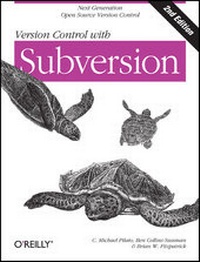
Version Control with Subversion
Next Generation Open Source Version Control
2nd Edition
Published on 28. October 2008
Book
430 pages
978-0-596-51033-6 (ISBN)
Description
Written by members of the development team that maintains Subversion, this is the official guide and reference manual for the popular open source revision control technology. The new edition covers Subversion 1.5 with a complete introduction and guided tour of its capabilities, along with best practice recommendations.
Version Control with Subversion is useful for people from a wide variety of backgrounds, from those with no previous version control experience to experienced system administrators.
Subversion is the perfect tool to track individual changes when several people collaborate on documentation or, particularly, software development projects. As a more powerful and flexible successor to the CVS revision control system, Subversion makes life so much simpler, allowing each team member to work separately and then merge source code changes into a single repository that keeps a record of each separate version.
Inside the updated edition Version Control with Subversion, you'll find:
* An introduction to Subversion and basic concepts behind version control
* A guided tour of the capabilities and structure of Subversion 1.5Guidelines for installing and configuring Subversion to manage programming, documentation, or any other team-based project* Detailed coverage of complex topics such as branching and repository administration
* Advanced features such as properties, externals, and access control
* A guide to best practices
* Complete Subversion reference and troubleshooting guide
If you've never used version control, you'll find everything you need to get started. And if you're a seasoned CVS pro, this book will help you make a painless leap into Subversion.
More details
Other editions
Additional editions
E-Book
09/2008
1st Edition
O'Reilly
€33.99
Available for download
E-Book
09/2008
1st Edition
O'Reilly
€26.49
Available for download
Previous edition
Ben Collins-Sussman | Brian W. Fitzpatrick | C. Michael Pilato
Version Control with Subversion
Book
07/2004
1st Edition
O'Reilly
€29.00
Article exhausted; check for reprint
Persons
C. Michael Pilato (Mike) is a core Subversion developer, and a leader in the Subversion community. He is currently employed by CollabNet, where he spends his days (and many nights) improving Subversion and other tools with which it integrates. A husband and father, this North Carolina native also enjoys composing and performing music, freelance graphic design work, hiking, and spending quality time with his family. Mike has a degree in computer science and mathematics from the University of North Carolina at Charlotte.Ben Collins-Sussman has been a sysadmin and programmer for ten years, and is one of the original designers and authors of Subversion. He currently works for CollabNet as a Subversion developer and community leader. When away from his computer, he moonlights as a musical theater composer at theaters around the city of Chicago. He lives with his lovely wife, three cats, and a house full of computer and music gizmos.Brian W. Fitzpatrick is a member of the Apache Software Foundation and currently works for Google. He has been involved with Subversion in one way or another since its inception in early 2000. He is also the author of Version Control with Subversion. Originally from New Orleans, Brian moved to Chicago to attend Loyola University where he received a degree in Latin and Greek.
Content
Foreword;
Preface;
What Is Subversion?;
Audience;
How to Read This Book;
Conventions Used in This Book;
Organization of This Book;
This Book Is Free;
Using Code Examples;
Safari® Books Online;
How to Contact Us;
Acknowledgments;
Chapter 1: Fundamental Concepts;
1.1 The Repository;
1.2 Versioning Models;
1.3 Subversion in Action;
1.4 Summary;
Chapter 2: Basic Usage;
2.1 Help!;
2.2 Getting Data into Your Repository;
2.3 Initial Checkout;
2.4 Basic Work Cycle;
2.5 Examining History;
2.6 Sometimes You Just Need to Clean Up;
2.7 Summary;
Chapter 3: Advanced Topics;
3.1 Revision Specifiers;
3.2 Properties;
3.3 File Portability;
3.4 Ignoring Unversioned Items;
3.5 Keyword Substitution;
3.6 Sparse Directories;
3.7 Locking;
3.8 Externals Definitions;
3.9 Peg and Operative Revisions;
3.10 Changelists;
3.11 Network Model;
3.12 Summary;
Chapter 4: Branching and Merging;
4.1 What's a Branch?;
4.2 Using Branches;
4.3 Basic Merging;
4.4 Advanced Merging;
4.5 Traversing Branches;
4.6 Tags;
4.7 Branch Maintenance;
4.8 Common Branching Patterns;
4.9 Vendor Branches;
4.10 Summary;
Chapter 5: Repository Administration;
5.1 The Subversion Repository, Defined;
5.2 Strategies for Repository Deployment;
5.3 Creating and Configuring Your Repository;
5.4 Repository Maintenance;
5.5 Moving and Removing Repositories;
5.6 Summary;
Chapter 6: Server Configuration;
6.1 Overview;
6.2 Choosing a Server Configuration;
6.3 svnserve, a Custom Server;
6.4 httpd, the Apache HTTP Server;
6.5 Path-Based Authorization;
6.6 Supporting Multiple Repository Access Methods;
Chapter 7: Customizing Your Subversion Experience;
7.1 Runtime Configuration Area;
7.2 Localization;
7.3 Using External Editors;
7.4 Using External Differencing and Merge Tools;
7.5 Summary;
Chapter 8: Embedding Subversion;
8.1 Layered Library Design;
8.2 Inside the Working Copy Administration Area;
8.3 Using the APIs;
8.4 Summary;
Chapter 9: Subversion Complete Reference;
9.1 The Subversion Command-Line Client: svn;
9.2 svnadmin;
9.3 svnlook;
9.4 svnsync;
9.5 svnserve;
9.6 svndumpfilter;
9.7 svnversion;
9.8 mod_dav_svn Configuration Directives;
9.9 mod_authz_svn;
9.10 Subversion Properties;
9.11 Repository Hooks;
Subversion Quick-Start Guide;
Installing Subversion;
High-Speed Tutorial;
Subversion for CVS Users;
Revision Numbers Are Different Now;
Directory Versions;
More Disconnected Operations;
Distinction Between Status and Update;
Branches and Tags;
Metadata Properties;
Conflict Resolution;
Binary Files and Translation;
Versioned Modules;
Authentication;
Converting a Repository from CVS to Subversion;
WebDAV and Autoversioning;
What Is WebDAV?;
Autoversioning;
Client Interoperability;
Copyright;
Creative Commons Legal Code;
Colophon;
Preface;
What Is Subversion?;
Audience;
How to Read This Book;
Conventions Used in This Book;
Organization of This Book;
This Book Is Free;
Using Code Examples;
Safari® Books Online;
How to Contact Us;
Acknowledgments;
Chapter 1: Fundamental Concepts;
1.1 The Repository;
1.2 Versioning Models;
1.3 Subversion in Action;
1.4 Summary;
Chapter 2: Basic Usage;
2.1 Help!;
2.2 Getting Data into Your Repository;
2.3 Initial Checkout;
2.4 Basic Work Cycle;
2.5 Examining History;
2.6 Sometimes You Just Need to Clean Up;
2.7 Summary;
Chapter 3: Advanced Topics;
3.1 Revision Specifiers;
3.2 Properties;
3.3 File Portability;
3.4 Ignoring Unversioned Items;
3.5 Keyword Substitution;
3.6 Sparse Directories;
3.7 Locking;
3.8 Externals Definitions;
3.9 Peg and Operative Revisions;
3.10 Changelists;
3.11 Network Model;
3.12 Summary;
Chapter 4: Branching and Merging;
4.1 What's a Branch?;
4.2 Using Branches;
4.3 Basic Merging;
4.4 Advanced Merging;
4.5 Traversing Branches;
4.6 Tags;
4.7 Branch Maintenance;
4.8 Common Branching Patterns;
4.9 Vendor Branches;
4.10 Summary;
Chapter 5: Repository Administration;
5.1 The Subversion Repository, Defined;
5.2 Strategies for Repository Deployment;
5.3 Creating and Configuring Your Repository;
5.4 Repository Maintenance;
5.5 Moving and Removing Repositories;
5.6 Summary;
Chapter 6: Server Configuration;
6.1 Overview;
6.2 Choosing a Server Configuration;
6.3 svnserve, a Custom Server;
6.4 httpd, the Apache HTTP Server;
6.5 Path-Based Authorization;
6.6 Supporting Multiple Repository Access Methods;
Chapter 7: Customizing Your Subversion Experience;
7.1 Runtime Configuration Area;
7.2 Localization;
7.3 Using External Editors;
7.4 Using External Differencing and Merge Tools;
7.5 Summary;
Chapter 8: Embedding Subversion;
8.1 Layered Library Design;
8.2 Inside the Working Copy Administration Area;
8.3 Using the APIs;
8.4 Summary;
Chapter 9: Subversion Complete Reference;
9.1 The Subversion Command-Line Client: svn;
9.2 svnadmin;
9.3 svnlook;
9.4 svnsync;
9.5 svnserve;
9.6 svndumpfilter;
9.7 svnversion;
9.8 mod_dav_svn Configuration Directives;
9.9 mod_authz_svn;
9.10 Subversion Properties;
9.11 Repository Hooks;
Subversion Quick-Start Guide;
Installing Subversion;
High-Speed Tutorial;
Subversion for CVS Users;
Revision Numbers Are Different Now;
Directory Versions;
More Disconnected Operations;
Distinction Between Status and Update;
Branches and Tags;
Metadata Properties;
Conflict Resolution;
Binary Files and Translation;
Versioned Modules;
Authentication;
Converting a Repository from CVS to Subversion;
WebDAV and Autoversioning;
What Is WebDAV?;
Autoversioning;
Client Interoperability;
Copyright;
Creative Commons Legal Code;
Colophon;