

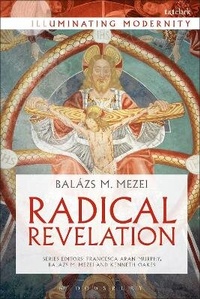
Radical Revelation
Published on 30. May 2019
Book
Paperback/Softback
384 pages
978-0-567-68878-1 (ISBN)
Description
This volume offers a practical and innovative interpretation of divine revelation, from a philosophical-theological perspective. Balazs M. Mezei outlines the most important presuppositions of our notion of divine revelation in a historic and semantic setting, as well as elaborating upon the methodology of model analysis. He then introduces and analyses the notion of self-revelation as the most important modern understanding of divine revelation; and presents the notion of "apocalyptic personhood" as a corollary of radical personhood, which is further developed into apocalyptic phenomenology.
Mezei further examines the remarkable development of some of the most important notions in the history of Christianity, along with the homogenous infrastructure of these notions in the very essence of the religion: the doctrine of Trinity. Covering aspects of revelation from semantics to historical and cognitive origins, and engaging with a wide variety of texts - including Augustine, Thomas Aquinas and Joseph Ratzinger - Mezei makes a strong and clear statement when explaining what the radical revelation is, how it can be understood and its overall importance.
Mezei further examines the remarkable development of some of the most important notions in the history of Christianity, along with the homogenous infrastructure of these notions in the very essence of the religion: the doctrine of Trinity. Covering aspects of revelation from semantics to historical and cognitive origins, and engaging with a wide variety of texts - including Augustine, Thomas Aquinas and Joseph Ratzinger - Mezei makes a strong and clear statement when explaining what the radical revelation is, how it can be understood and its overall importance.
Reviews / Votes
The great strength of Radical Revelation is its breadth of enquiry ... [Mezei] deftly bridges arbitrary academic divides, such as those between analytical and continental forms of philosophy, while consistently making use of a wide range of artistic, musical, architectural and literary works as sources with which to illustrate his account of revelation. * Theology * The work represents a great achievement in the systematic philosophical articulation of revelation. * Scottish Journal of Theology * This is an excellent philosophical exploration of revelation, in dialogue with traditional theological sources as well as continuing perplexities that have been posed in recent centuries. It ranges widely in a manner that is philosophically and theologically engaging. It is very helpful is articulating the question(s) of revelation in their modern and contemporary forms. In a constructive spirit it offers a non-standard radical philosophical theology which approaches revelation as a rich or paradigmatic fact, one which has been and continues to be a living source of reflection. The writing is lucid in its offering of well-considered arguments that draw the reader into continuing engagement with the theme. While neither in the phenomenological nor the analytical traditions, it is significantly conversant with both, yet it develops its own distinctive philosophical account of revelation. An admirable work whose impressive scholarship and thoughtfulness is warmly recommended. * William Desmond, Villanova University, USA * This book utilizes what is best in phenomenology, hermeneutics and cultural-political modes of philosophy, while showing familiarity with analytic philosophy. Undoubtedly erudite, unquestionably methodologically sophisticated to the nth degree, in the end the book is entirely original and offers a breath taking synthetic performance, opening up an extraordinarily hospitable relation between philosophy and theology. * Cyril O'Regan, University of Notre Dame, USA * While philosophical theology may be indifferent to personal belief, radical philosophical theology explicates such belief and personal reception of revelation as a fact. Balazs Mezei analyzes philosophically revelation, which theology as a discipline presupposes. If it is at all meaningful to speak of revelation, then revelation must be real, unavoidable, inimitable, and inevitably self-referential. In employing a variety of philosophical methods, this book opens the eyes to what Christian practice is doing: analytical method clarifies the usage and intentions of standard terms; historical method brings century old debates to life, such as Platonism and German Idealism; phenomenology conveys the reality of concepts like 'radical' or 'kenosis' (self-emptying of the divine). It was Enlightenment with its dismissal of the sources and modes of divine revelation, i.e., the basics of Christian religion, which yielded a philosophy of the concept of revelation as such. Mezei's study unveils the irony that the demise of revelation in Enlightenment critique was itself a kenosis. * Paul Richard Blum, Loyola University Maryland, USA *More details
Series
Language
English
Place of publication
Edinburgh
United Kingdom
Publishing group
Bloomsbury Publishing PLC
Target group
College/higher education
Dimensions
Height: 234 mm
Width: 156 mm
Weight
549 gr
ISBN-13
978-0-567-68878-1 (9780567688781)
Copyright in bibliographic data and cover images is held by Nielsen Book Services Limited or by the publishers or by their respective licensors: all rights reserved.
Schweitzer Classification
Other editions
Additional editions
Balazs M. Mezei
Radical Revelation
E-Book
11/2017
1st Edition
T.& T.Clark Ltd
€38.49
Available for download
Balazs M. Mezei
Radical Revelation
E-Book
11/2017
1st Edition
T.& T.Clark Ltd
€38.49
Available for download
Person
Balazs M. Mezei is Professor of Philosophy at Peter Pazmany Catholic University, Hungary. He has widely published on the philosophy of religion, phenomenology, and literary criticism.
Content
Acknowledgments
Foreword
1. General Introduction
2. Structure and Content
Chapter One: What is Revelation?
1. Preliminaries
2. The Presuppositions of Revelation
3. The Semantics of Revelation
4. The Historical Origins of Revelation
5. The Cognitive Origins of Revelation
6. The Fact of Revelation
7. Theories of Revelation
8. A Radical Philosophical Theology
9. Sources of Revelation
Chapter Two: Models of Revelation
1. Preliminaries
2. Kinds, Types, and Models
3. Forms of Revelation
4. From Forms to Models
5. Systems of Models
6. An Example: The Liturgy
7. A Concluding Remark
Chapter Three: Self-Revelation
1. Preliminaries
2. The Grammar of Self-Revelation
3. The History of Self-Revelation
4. The Model of Self-Revelation
5. Self and Unity
6. Self and Persons
7. Radical Personhood
8. Radical Personhood as kenosis
9. Self-Revelation as Radical Personhood
Chapter Four: Radical Revelation
1. Preliminaries
2. Self-revelation and Radical Revelation
3. Radical Revelation as the Fact of Freedom
4. The Eight Gestures of Freedom
a) Birth
b) Growth
c) Entry
d) Healing
e) Radiance
f) Transfiguration
g) Kenosis
h) Overcoming
5. Radical Re-velation
6. Radical Revelation as apokalypsis
Chapter Five: The Revelation of Apocalyptic Personhood
1. Preliminaries
2. The Last Judgment of Michelangelo
3. Aspects of Apocalyptic Personhood
a) The Kingdom of God
b) The Son of Man
c) Resurrection
d) Pentecost
e) Conversion
f) Stoning
g) The Lamb of God
4. Trinitarian Relations
Chapter Six: Apocalyptic Phenomenology
1. Preliminaries
2. From Openness to Newness
3. Newness as Personhood
4. A Phenomenology of Disclosure
5. The Principle of Refusivum Sui
6. Models of Disclosure
a) Augustine's Confessional Apocalypse
b) An Apocalypse of Contrasts
c) A Faustian Apocalypse
d) The Visage as Apocalypse
7. The Musical Genius
Chapter Seven: The Catholicity of Revelation
1. On Overtures
2. Architectonics
3. Catholicity
4. Faith
5. Hope
6. Love
7. Prospects
Conclusion
Appendix I: The Concentric Model of Revelation
Appendix II: The Ramifications of Revelation
Appendix III: Aspects of Catholicity
Appendix IV: An Outline of the Study of Apocalyptics
Bibliography
Index of Names
Index of Biblical Passages
Index of Art Works
Foreword
1. General Introduction
2. Structure and Content
Chapter One: What is Revelation?
1. Preliminaries
2. The Presuppositions of Revelation
3. The Semantics of Revelation
4. The Historical Origins of Revelation
5. The Cognitive Origins of Revelation
6. The Fact of Revelation
7. Theories of Revelation
8. A Radical Philosophical Theology
9. Sources of Revelation
Chapter Two: Models of Revelation
1. Preliminaries
2. Kinds, Types, and Models
3. Forms of Revelation
4. From Forms to Models
5. Systems of Models
6. An Example: The Liturgy
7. A Concluding Remark
Chapter Three: Self-Revelation
1. Preliminaries
2. The Grammar of Self-Revelation
3. The History of Self-Revelation
4. The Model of Self-Revelation
5. Self and Unity
6. Self and Persons
7. Radical Personhood
8. Radical Personhood as kenosis
9. Self-Revelation as Radical Personhood
Chapter Four: Radical Revelation
1. Preliminaries
2. Self-revelation and Radical Revelation
3. Radical Revelation as the Fact of Freedom
4. The Eight Gestures of Freedom
a) Birth
b) Growth
c) Entry
d) Healing
e) Radiance
f) Transfiguration
g) Kenosis
h) Overcoming
5. Radical Re-velation
6. Radical Revelation as apokalypsis
Chapter Five: The Revelation of Apocalyptic Personhood
1. Preliminaries
2. The Last Judgment of Michelangelo
3. Aspects of Apocalyptic Personhood
a) The Kingdom of God
b) The Son of Man
c) Resurrection
d) Pentecost
e) Conversion
f) Stoning
g) The Lamb of God
4. Trinitarian Relations
Chapter Six: Apocalyptic Phenomenology
1. Preliminaries
2. From Openness to Newness
3. Newness as Personhood
4. A Phenomenology of Disclosure
5. The Principle of Refusivum Sui
6. Models of Disclosure
a) Augustine's Confessional Apocalypse
b) An Apocalypse of Contrasts
c) A Faustian Apocalypse
d) The Visage as Apocalypse
7. The Musical Genius
Chapter Seven: The Catholicity of Revelation
1. On Overtures
2. Architectonics
3. Catholicity
4. Faith
5. Hope
6. Love
7. Prospects
Conclusion
Appendix I: The Concentric Model of Revelation
Appendix II: The Ramifications of Revelation
Appendix III: Aspects of Catholicity
Appendix IV: An Outline of the Study of Apocalyptics
Bibliography
Index of Names
Index of Biblical Passages
Index of Art Works