

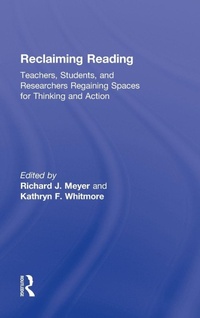
Reclaiming Reading
Teachers, Students, and Researchers Regaining Spaces for Thinking and Action
1st Edition
Published on 2. June 2011
Book
Hardback
320 pages
978-0-415-88809-7 (ISBN)
Description
Inviting teachers back to the role of reflective advocates for thoughtful reading instruction, this book presents theory and pedagogical possibilities to reclaim and build upon the knowledge base that was growing when government mandates, scripted commercial programs, and high stakes tests took over as the dominant agenda for reading instruction in U.S. public schools. Focusing on literacy learners' and their teachers' lives as literate souls, it examines how the teaching of reading can be reclaimed via an intensive reconsideration of five pillars as central to the teaching and learning of reading: learning, teaching, curriculum, language, and sociocultural contexts.
Reclaiming Reading articulates the knowledge base that was marginalized or disrupted by legislated and policy intrusions into classrooms and provides practical examples for taking good reading instruction out of the cracks and moving it back to the center of the classroom. Explaining what happens in readers' minds as they read and how teachers can design practices to support that process, this book encourages teachers to initiate pedagogy that will help them begin or return to the stance of reflective, knowledgeable, professional decision-makers.
Reclaiming Reading articulates the knowledge base that was marginalized or disrupted by legislated and policy intrusions into classrooms and provides practical examples for taking good reading instruction out of the cracks and moving it back to the center of the classroom. Explaining what happens in readers' minds as they read and how teachers can design practices to support that process, this book encourages teachers to initiate pedagogy that will help them begin or return to the stance of reflective, knowledgeable, professional decision-makers.
More details
Language
English
Place of publication
London
United Kingdom
Publishing group
Taylor & Francis Ltd
Target group
College/higher education
Illustrations
2 s/w Tabellen, 16 s/w Photographien bzw. Rasterbilder, 6 s/w Zeichnungen
2 Tables, black and white; 6 Line drawings, black and white; 16 Halftones, black and white
Dimensions
Height: 235 mm
Width: 157 mm
Thickness: 22 mm
Weight
619 gr
ISBN-13
978-0-415-88809-7 (9780415888097)
Copyright in bibliographic data and cover images is held by Nielsen Book Services Limited or by the publishers or by their respective licensors: all rights reserved.
Schweitzer Classification
Other editions
Additional editions
Richard J. Meyer | Kathryn F. Whitmore
Reclaiming Reading
Teachers, Students, and Researchers Regaining Spaces for Thinking and Action
E-Book
03/2012
1st Edition
Routledge
€76.49
Available for download
Richard J. Meyer | Kathryn F. Whitmore
Reclaiming Reading
Teachers, Students, and Researchers Regaining Spaces for Thinking and Action
E-Book
03/2012
1st Edition
Routledge
€76.49
Available for download
Richard J. Meyer | Kathryn F. Whitmore
Reclaiming Reading
Teachers, Students, and Researchers Regaining Spaces for Thinking and Action
Book
06/2011
1st Edition
Routledge
€83.10
Shipment within 15-20 days
Persons
Richard J. Meyer is Professor, University of New Mexico, College of Education, Department of Language, Literacy, and Sociocultural Studies.
Kathryn F. Whitmore is Professor, The University of Iowa, College of Education Language, Literacy, and Culture Program.
Kathryn F. Whitmore is Professor, The University of Iowa, College of Education Language, Literacy, and Culture Program.
Content
Preface
Chapter 1. Reclaiming Reading is a Political Act
Richard J. Meyer and Kathryn F. Whitmore
Pillar I: Reclaiming Learning
Chapter 2. Learning to Read: A Comprehensive Model
Kenneth S. Goodman and Yetta M. Goodman
Chapter 2 Extension. Goodman 2.0
Richard J. Meyer and Bess Altwerger
Chapter 3. Revaluing Readers and Reading: Learning from the "Mighty Readers"
Prisca Martens and Michelle Doyle
Chapter 3 Extension. Extending and Expanding Retrospective Miscue Analysis
Carol Gilles and Debra Peters
Pillar II: Reclaiming Teaching
Chapter 4. Where Do We Go From Here?: From Miscues to Strategies
Dorothy Watson
Chapter 4 Extension. Conversations: From Miscues to Strategies
M. Ruth Davenport
Chapter 5. Deciding to Use Real Books: The Higher Power of Lucky
Renita Schmidt
Chapter 5 Extension. Real Books: Including LGBTQ Literature
Rose Casement
Chapter 6. Teaching Strategies that Revalue ELL Readers: Retrospective Miscue Analysis
Koomi Kim and Yetta M. Goodman
Chapter 6 Extension. Scaffolding Young Children to Value Themselves as Readers
Carol Lauritzen
Chapter 7. The Realities of Conferring with Young Adolescent Readers
Jennifer Wilson and Kristen Gillaspy
Chapter 7 Extension. Conferring with Elementary Readers
Allen Koshewa
Pillar III: Reclaiming Curriculum
Chapter 8. When an Old Technology (Storytelling) Meets a New One (Digital Photography): Changing the Face of Local Literacy Practices
Jane Baskwill
Chapter 8 Extension. Redefining What Counts as Literacy to Include Family and Community Resources
Corey Drake and Lori Norton-Meier
Chapter 9. Developing Intercultural Understandings through Global Children's Literature
Kathy G. Short and Lisa Thomas
Chapter 9 Extension. Rethinking Cultural Authenticity in Global Literature: A Korean Example
Yoo Kyung Sung with Richard J. Meyer
Chapter 10. Invitations: Tools for Thought and Action
Katie Van Sluys and Tasha Tropp Laman
Chapter 10 Extension. Reading the World through Moodles and Wordles and Digital Texts
Kathryn Mitchell Pierce and Edward Kastner
Pillar IV: Reclaiming Language
Chapter 11. Visual Discourse Analysis: What's Critical about Pictures, Anyway?
Peggy Albers
Chapter 11 Extension. Seamlessly Art
Jerome C. Harste
Chapter 12. Valuing Home Language to Support Young Bilingual Children's Talk about Books
Jeanne Gilliam Fain and Robin Horn
Chapter 12 Extension. Reclaiming Language as a Community Text
Andrea Garcia and Kathryn F. Whitmore
Chapter 13. Bilingual Books: Bridges to Literacy for Emergent Bilinguals
Yvonne Freeman, David Freeman, and Ann Ebe
Chapter 13 Extension. Emergent Bilingual Learners Engaging in Critical Discussions
Carmen Martinez-Roldan
Pillar V: Reclaiming Sociocultural Contexts
Chapter 14. Reclaiming Play: Reading Toys as Popular Media Texts
Karen Wohlwend and Pam Hubbard
Chapter 14 Extension. Reading Tags as Texts
Debbie Smith
Chapter 15. Critical Literacy Goes Digital: Exploring Intersections between Critical Literacies and New Technologies with Young Children
Vivian Vasquez and Carol Felderman
Chapter 15 Extension. The Reading-Writing Connection in Video Production
Chuck Jurich and Richard J. Meyer
In Closing
Chapter 16. Reclaiming Joy: Spaces for Thinking and Action
Richard J. Meyer and Kathryn F. Whitmore
List of Contributors
Index
Chapter 1. Reclaiming Reading is a Political Act
Richard J. Meyer and Kathryn F. Whitmore
Pillar I: Reclaiming Learning
Chapter 2. Learning to Read: A Comprehensive Model
Kenneth S. Goodman and Yetta M. Goodman
Chapter 2 Extension. Goodman 2.0
Richard J. Meyer and Bess Altwerger
Chapter 3. Revaluing Readers and Reading: Learning from the "Mighty Readers"
Prisca Martens and Michelle Doyle
Chapter 3 Extension. Extending and Expanding Retrospective Miscue Analysis
Carol Gilles and Debra Peters
Pillar II: Reclaiming Teaching
Chapter 4. Where Do We Go From Here?: From Miscues to Strategies
Dorothy Watson
Chapter 4 Extension. Conversations: From Miscues to Strategies
M. Ruth Davenport
Chapter 5. Deciding to Use Real Books: The Higher Power of Lucky
Renita Schmidt
Chapter 5 Extension. Real Books: Including LGBTQ Literature
Rose Casement
Chapter 6. Teaching Strategies that Revalue ELL Readers: Retrospective Miscue Analysis
Koomi Kim and Yetta M. Goodman
Chapter 6 Extension. Scaffolding Young Children to Value Themselves as Readers
Carol Lauritzen
Chapter 7. The Realities of Conferring with Young Adolescent Readers
Jennifer Wilson and Kristen Gillaspy
Chapter 7 Extension. Conferring with Elementary Readers
Allen Koshewa
Pillar III: Reclaiming Curriculum
Chapter 8. When an Old Technology (Storytelling) Meets a New One (Digital Photography): Changing the Face of Local Literacy Practices
Jane Baskwill
Chapter 8 Extension. Redefining What Counts as Literacy to Include Family and Community Resources
Corey Drake and Lori Norton-Meier
Chapter 9. Developing Intercultural Understandings through Global Children's Literature
Kathy G. Short and Lisa Thomas
Chapter 9 Extension. Rethinking Cultural Authenticity in Global Literature: A Korean Example
Yoo Kyung Sung with Richard J. Meyer
Chapter 10. Invitations: Tools for Thought and Action
Katie Van Sluys and Tasha Tropp Laman
Chapter 10 Extension. Reading the World through Moodles and Wordles and Digital Texts
Kathryn Mitchell Pierce and Edward Kastner
Pillar IV: Reclaiming Language
Chapter 11. Visual Discourse Analysis: What's Critical about Pictures, Anyway?
Peggy Albers
Chapter 11 Extension. Seamlessly Art
Jerome C. Harste
Chapter 12. Valuing Home Language to Support Young Bilingual Children's Talk about Books
Jeanne Gilliam Fain and Robin Horn
Chapter 12 Extension. Reclaiming Language as a Community Text
Andrea Garcia and Kathryn F. Whitmore
Chapter 13. Bilingual Books: Bridges to Literacy for Emergent Bilinguals
Yvonne Freeman, David Freeman, and Ann Ebe
Chapter 13 Extension. Emergent Bilingual Learners Engaging in Critical Discussions
Carmen Martinez-Roldan
Pillar V: Reclaiming Sociocultural Contexts
Chapter 14. Reclaiming Play: Reading Toys as Popular Media Texts
Karen Wohlwend and Pam Hubbard
Chapter 14 Extension. Reading Tags as Texts
Debbie Smith
Chapter 15. Critical Literacy Goes Digital: Exploring Intersections between Critical Literacies and New Technologies with Young Children
Vivian Vasquez and Carol Felderman
Chapter 15 Extension. The Reading-Writing Connection in Video Production
Chuck Jurich and Richard J. Meyer
In Closing
Chapter 16. Reclaiming Joy: Spaces for Thinking and Action
Richard J. Meyer and Kathryn F. Whitmore
List of Contributors
Index