

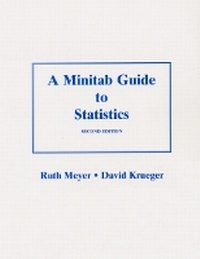
A MINITAB Guide to Statistics
2nd Edition
Published on 9. August 2001
Book
Paperback/Softback
432 pages
978-0-13-014156-9 (ISBN)
Description
For a one or two term course in introductory or business statistics using the Minitab statistical software package.
This well known, Minitab author team has written a Minitab manual that can be used with any introductory or business statistics text. The manual provides statistics students with a complete introduction to Minitab and the tools they need to run statistical procedures, from descriptive statistics to time series analysis, using Minitab. Interpretation of numerical and graphical output is included. The order of topics is quite similar to that of a traditional introductory statistics text. Minitab Release 13.0 for Windows is used for examples and exercises, but commands and output are very similar to previous releases. The manual is also adapted for the Student Release 12.0 Minitab.
This well known, Minitab author team has written a Minitab manual that can be used with any introductory or business statistics text. The manual provides statistics students with a complete introduction to Minitab and the tools they need to run statistical procedures, from descriptive statistics to time series analysis, using Minitab. Interpretation of numerical and graphical output is included. The order of topics is quite similar to that of a traditional introductory statistics text. Minitab Release 13.0 for Windows is used for examples and exercises, but commands and output are very similar to previous releases. The manual is also adapted for the Student Release 12.0 Minitab.
More details
Edition
2nd edition
Language
English
Place of publication
United States
Publishing group
Pearson Education (US)
Target group
Professional and scholarly
Dimensions
Height: 250 mm
Width: 150 mm
Thickness: 15 mm
Weight
250 gr
ISBN-13
978-0-13-014156-9 (9780130141569)
Copyright in bibliographic data and cover images is held by Nielsen Book Services Limited or by the publishers or by their respective licensors: all rights reserved.
Schweitzer Classification
Other editions
New editions
Ruth Meyer | David Krueger
Minitab Guide to Statistics
Book
10/2004
3rd Edition
Pearson
€33.47
Shipment within 15-20 days
Previous edition

Ruth K. Meyer | David Krueger
A Minitab Guide to Statistics
Book
11/1997
Pearson
€33.47
Article exhausted; check for reprint
Content
1. Introduction to Minitab.
Accessing Minitab. Minitab Worksheet. Menu and Session Commands. Entering Data from the Keyboard. Printing Your Work.
2. Managing Files and Data.
Importing Data from Other Applications. Manipulating Data. Minitab Graphs. Doing Arithmetic. Miscellaneous Topics. Appendix: Other Minitab Files.
3. Describing Qualitative Data.
Graphs for Qualitative Data. Classifying Qualitative Data.
4. Describing Quantitative Data.
Graphs for Quantitative Data. Numerical Descriptive Measures. Interpreting the Standard Deviation. Measures of Relative Standing.
5. Probability Distributions.
Discrete Random Variables. Special Discrete Random Variables. Continuos Random Variables. Other Probability Distributions.
6. Sampling and Sampling Distributions.
Statistical Sampling Techniques. The Sampling Distribution of the Sample Mean. The Central Limit Theorem.
7. Inferences Based on a Single Sample.
Estimating a Population Mean. Testing a Hypothesis about a Population Mean. Inferences about a Population Proportion. Estimating a Population Variance. Test for Normality. Sign Test for Location of a Single Population.
8. Inferences Based on Two Samples.
Making Inferences about Independent Sampling. Making Inferences about Matched Pairs. Making Inferences about pi. Comparing Two Population Variances. Comparing Two Population Medians.
9. Simple Linear Regression.
Introduction to Regression Analysis. Interval Estimation and Predication.
10. Multiple Regression.
The General Linear Model. Models with Qualitative Independent Variables. Testing Portions of a Model. Residual Analysis. Stepwise Regression.
11. Analysis of Variance.
The Completely Randomized Design. Randomized Block Designs. Factorial Designs. Multiple Comparisons of Means. Checking Model Assumptions. Nonparametric Test for a Completely Randomized Design.
12. Introduction to Process and Quality Control.
General Characteristics of Control Charts. Chart for Individual Observations: I Chart. Control Chart for Means. Control Charts for Process Variation. Control Chart for a Process Proportion: P-Chart. Control Chart for a Number of Defects: C-Chart.
13. Time Series and Index Numbers.
Graphical Description of Time Series. Index Numbers. Smoothing Methods.
14. Time Series Models and Forecasting.
Forecasting Models and Accuracy Measures. Forecasting Using Smoothing Methods. Forecasting Models with Trend. Forecasting Models with Seasonality and Trend. Autocorrelation.
15. Categorical Data Analysis.
Multinomial Distribution. Contingency Analysis.
16. Survey Analysis.
Appendix.
Index.
Accessing Minitab. Minitab Worksheet. Menu and Session Commands. Entering Data from the Keyboard. Printing Your Work.
2. Managing Files and Data.
Importing Data from Other Applications. Manipulating Data. Minitab Graphs. Doing Arithmetic. Miscellaneous Topics. Appendix: Other Minitab Files.
3. Describing Qualitative Data.
Graphs for Qualitative Data. Classifying Qualitative Data.
4. Describing Quantitative Data.
Graphs for Quantitative Data. Numerical Descriptive Measures. Interpreting the Standard Deviation. Measures of Relative Standing.
5. Probability Distributions.
Discrete Random Variables. Special Discrete Random Variables. Continuos Random Variables. Other Probability Distributions.
6. Sampling and Sampling Distributions.
Statistical Sampling Techniques. The Sampling Distribution of the Sample Mean. The Central Limit Theorem.
7. Inferences Based on a Single Sample.
Estimating a Population Mean. Testing a Hypothesis about a Population Mean. Inferences about a Population Proportion. Estimating a Population Variance. Test for Normality. Sign Test for Location of a Single Population.
8. Inferences Based on Two Samples.
Making Inferences about Independent Sampling. Making Inferences about Matched Pairs. Making Inferences about pi. Comparing Two Population Variances. Comparing Two Population Medians.
9. Simple Linear Regression.
Introduction to Regression Analysis. Interval Estimation and Predication.
10. Multiple Regression.
The General Linear Model. Models with Qualitative Independent Variables. Testing Portions of a Model. Residual Analysis. Stepwise Regression.
11. Analysis of Variance.
The Completely Randomized Design. Randomized Block Designs. Factorial Designs. Multiple Comparisons of Means. Checking Model Assumptions. Nonparametric Test for a Completely Randomized Design.
12. Introduction to Process and Quality Control.
General Characteristics of Control Charts. Chart for Individual Observations: I Chart. Control Chart for Means. Control Charts for Process Variation. Control Chart for a Process Proportion: P-Chart. Control Chart for a Number of Defects: C-Chart.
13. Time Series and Index Numbers.
Graphical Description of Time Series. Index Numbers. Smoothing Methods.
14. Time Series Models and Forecasting.
Forecasting Models and Accuracy Measures. Forecasting Using Smoothing Methods. Forecasting Models with Trend. Forecasting Models with Seasonality and Trend. Autocorrelation.
15. Categorical Data Analysis.
Multinomial Distribution. Contingency Analysis.
16. Survey Analysis.
Appendix.
Index.