

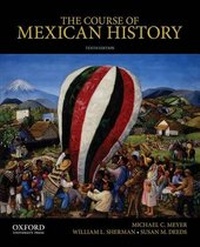
The Course of Mexican History
10th Edition
Published on 13. November 2013
Book
Paperback/Softback
624 pages
978-0-19-991381-7 (ISBN)
Description
Mexico's political, social, and economic landscapes have shifted in very striking ways in recent years and the country now moves cautiously forward in the twenty-first century. Revised to address these remarkable transformations, The Course of Mexican History, now in its tenth edition, offers a completely up-to-date, lively, and engaging survey from the pre-Columbian times to the present. The leading textbook in its field, The
Course of Mexican History, Tenth Edition, is indispensable for students of Mexican history, politics, economics, and culture.
Course of Mexican History, Tenth Edition, is indispensable for students of Mexican history, politics, economics, and culture.
Reviews / Votes
"The current edition is impressive not only for its vast scope and attention to detail but also for its thematic coherence, all the while being a pleasure to read. It succeeds admirably as a comprehensive survey history. That the narrative follows the chronology of Mexico's political history and yet the book also manages to provide decent coverage of socioeconomic, gender, and cultural histories even while keeping up to date with the scholarly literature. Itwould thus work well for introductory and upper-level classes. The organization of the book is excellent, too." --Richard Conway, Montclair State University
"[The Course of Mexican History] is simply fantastic. I have no major criticisms. Strengths: brilliantly written and impeccably edited, with lucid analysis and carefully edited use of supporting factual detail. Meyer's conclusions are judicious and nuanced; never simplistic. The prose is lyrical, crisp and spiced with fascinating anecdotes: this book will keep undergraduates attention, and never bore them!" --Daniel J. Greenberg, Pace University
"I believe that MSD remains the best one-volume survey on Mexico. It's not unduly long, and even more importantly, it's extremely clear and well-written. Furthermore, the book doesn't overwhelm students by throwing out vast amounts of names, dates, events, regions, etc. clear, jargon-free writing is the best feature of the textbook. It allows anyone who puts in an honest effort to capture the richness of Mexico's past." --Pedro Santoni, CSU, San Bernadino
"It is pretty impressive. It covers all the essential material of more than five centuries in less than six hundred pages. It has interesting illustrations throughout and some compelling snippets of Mexican writing. We really do see the "course" of Mexico's remarkable story...The writing is quite good. Students understand and are engaged, which is quite an accomplishment for a textbook on a subject that my students do not know well." --Todd Hartch, Eastern
Kentucky University
"I like that the chapters seem somewhat shorter and more digestible, which translates into more reading actually done by students. The issues of race, gender, ethnicity are woven appropriately throughout the book without seeming forced. This text has always had the best stretch of narrative for the entire Mexico course and that remains a key strength." --Aaron W. Navarro, Trinity University
More details
Edition
10th edition
Language
English
Place of publication
New York
United States
Target group
College/higher education
ISBN-13
978-0-19-991381-7 (9780199913817)
Copyright in bibliographic data and cover images is held by Nielsen Book Services Limited or by the publishers or by their respective licensors: all rights reserved.
Schweitzer Classification
Persons
Michael C. Meyer was Professor of History at the University of Arizona. A former general editor of the Hispanic American Historical Review, he authored or edited ten books on Mexico and Latin American history, including The Oxford History of Mexico (OUP, 2000).
William L. Sherman was Professor of History at the University of Nebraska-Lincoln, and the author of Forced Native Labor in Sixteenth-Century Colonial America (1979).
Susan M. Deeds is Professor Emeritus of History at Northern Arizona University. She is the author of Defiance and Deference in Colonial Mexico: Indians under Spanish Rule in Nueva Vizcaya (2003) and more than thirty articles on northern Mexican colonial ethnohistory.
William L. Sherman was Professor of History at the University of Nebraska-Lincoln, and the author of Forced Native Labor in Sixteenth-Century Colonial America (1979).
Susan M. Deeds is Professor Emeritus of History at Northern Arizona University. She is the author of Defiance and Deference in Colonial Mexico: Indians under Spanish Rule in Nueva Vizcaya (2003) and more than thirty articles on northern Mexican colonial ethnohistory.
Content
Maps and Charts
Preface
I. Pre-Columbian Mexico
1. The First Mexicans
2. Mexico's Golden Age: The Classic Period
3. Times of Trouble: Post-Classic Mexico
4. The Rise of the Aztecs
5. Aztec Society and Culture
II. Colliding Worlds
6. The Spanish Invasion
7. The Settlement of New Spain
III. The Colony of New Spain
8. The Imperial System Entrenched
9. The Colonial Economy
10. The Colonial Church
11. Colonial Society: Race, Class, and Gender
12. Culture and Daily Life in New Spain
IV. Reform and Reaction: The Move to Independence
13. The Bourbons Restructure New Spain
14. Society and Stress in the Late Colonial Period
15. The Wars for Independence
16. The First Mexican Empire
V. The Trials of Nationhood, 1824-55
17. The Early Mexican Republic, 1824-33
18. Santa Anna, the Centralized State, and the War with the United States
19. Society and Culture in the First Half of the Nineteenth Century
VI. Liberals and Conservatives Search for Something Better, 1855-76
20. The Reform and the French Intervention
21. The Restored Republic, 1867-76: Nascent Modernization
22. Society and Culture in the Middle of the Nineteenth Century
VII. The Modernization of Mexico, 1876-1910
23. The Porfiriato: Order and Progress
24. The costs of Modernization
25. Society and Culture during the Porfiriato
VIII. The Revolution: The Military Phase, 1910-20
26. The Liberal Indictment and the Overthrow of Diaz
27. Madero and the Failure of Democracy
28. Huerta and the Failure of Dictatorship
29. The Illusory Quest for a Better Way
30. Society and Culture during the Age of Violence
IX. The Revolution: The Constructive Phase, 1920-40
31. Alvaro Obregon Cautiously Implements the Constitution
32. Mexico Under Plutarco Calles, 1924-34
33. Cardenas Carries the Revolution to the Left
34. Society and Culture from Obregon to Cardenas
X. The Revolution Shifts Gears and Runs Out of Gas: Mexico since 1940
35. From Revolution to Evolution, 1940-58
36. The Lull and the Storm, 1958-76
37. Failures of Development and the Decline of the One-Party State, 1976-88
38. Mexico Since 1988: The Path to Democracy?
39. Society and Culture since World War II
Appendix: Mexican Heads of State
Sources of Illustrations
Index
Preface
I. Pre-Columbian Mexico
1. The First Mexicans
2. Mexico's Golden Age: The Classic Period
3. Times of Trouble: Post-Classic Mexico
4. The Rise of the Aztecs
5. Aztec Society and Culture
II. Colliding Worlds
6. The Spanish Invasion
7. The Settlement of New Spain
III. The Colony of New Spain
8. The Imperial System Entrenched
9. The Colonial Economy
10. The Colonial Church
11. Colonial Society: Race, Class, and Gender
12. Culture and Daily Life in New Spain
IV. Reform and Reaction: The Move to Independence
13. The Bourbons Restructure New Spain
14. Society and Stress in the Late Colonial Period
15. The Wars for Independence
16. The First Mexican Empire
V. The Trials of Nationhood, 1824-55
17. The Early Mexican Republic, 1824-33
18. Santa Anna, the Centralized State, and the War with the United States
19. Society and Culture in the First Half of the Nineteenth Century
VI. Liberals and Conservatives Search for Something Better, 1855-76
20. The Reform and the French Intervention
21. The Restored Republic, 1867-76: Nascent Modernization
22. Society and Culture in the Middle of the Nineteenth Century
VII. The Modernization of Mexico, 1876-1910
23. The Porfiriato: Order and Progress
24. The costs of Modernization
25. Society and Culture during the Porfiriato
VIII. The Revolution: The Military Phase, 1910-20
26. The Liberal Indictment and the Overthrow of Diaz
27. Madero and the Failure of Democracy
28. Huerta and the Failure of Dictatorship
29. The Illusory Quest for a Better Way
30. Society and Culture during the Age of Violence
IX. The Revolution: The Constructive Phase, 1920-40
31. Alvaro Obregon Cautiously Implements the Constitution
32. Mexico Under Plutarco Calles, 1924-34
33. Cardenas Carries the Revolution to the Left
34. Society and Culture from Obregon to Cardenas
X. The Revolution Shifts Gears and Runs Out of Gas: Mexico since 1940
35. From Revolution to Evolution, 1940-58
36. The Lull and the Storm, 1958-76
37. Failures of Development and the Decline of the One-Party State, 1976-88
38. Mexico Since 1988: The Path to Democracy?
39. Society and Culture since World War II
Appendix: Mexican Heads of State
Sources of Illustrations
Index