

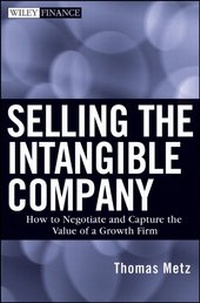
Selling the Intangible Company
How to Negotiate and Capture the Value of a Growth Firm
1st Edition
Published on 5. December 2008
Book
Hardback
326 pages
978-0-470-26137-8 (ISBN)
Description
Praise for Selling The Intangible Company
"Tom Metz brings a world of common sense and practical expertise to an area where it is desperately needed. Untold wealth and value are wasted repeatedly through buyers and sellers misunderstanding the nature of strategic value and how it translates into not only sales price, but company disposition. If you are entering into a transaction of this sort, you must read this book."
--Geoffrey Moore, author, consultant, and venture capitalist
"Tom Metz has captured the essence of deal-making, in what surely is one of the most readable texts written thus far. Every chapter would be useful for our CEOs who are capturing value by partnering or getting ready to embark on the M&A pathway, and it will be 'required reading' for our first-time CEOs. His insights and humor shine through, making this one of the more enjoyable business books available today."
--Mike Powell, General Partner, Sofinnova Ventures
"I plan to provide copies of Tom Metz's book to my CEOs, CFOs, and fellow board members requesting a discussion of it well before serious shareholder liquidity becomes a possibility. In his relatively short book, Tom has provided a very complete discussion of the important aspects of selling any company, but especially one whose value is difficult to determine."
--Jim Towne, first recruited president of Microsoft
"Mr. Metz draws on experience, creativity, process, game theory, and, most of all, empathy in guiding CEOs through the maze of techniques and myriad of paths one can follow during a sell side transaction for small tech companies."
--Anil Hansjee, Head of Corporate Development, EMEA, Google
"Tom Metz has always focused on deals that require creativity to complete successfully. He shows how perception can be more important than analysis and how extrinsic value is in the eye of the beholder. These days, M&A is the path to liquidity in the vast majority of cases and this book helps those concerned to understand the typical factors comprising the deals. Actual 'war stories' illustrate different deal scenarios."
--Peter L. Wolken, General Partner, AVI Management Partners, Los Altos Hills, California, (A Silicon Valley venture capitalist since 1979)
"Tom Metz brings a world of common sense and practical expertise to an area where it is desperately needed. Untold wealth and value are wasted repeatedly through buyers and sellers misunderstanding the nature of strategic value and how it translates into not only sales price, but company disposition. If you are entering into a transaction of this sort, you must read this book."
--Geoffrey Moore, author, consultant, and venture capitalist
"Tom Metz has captured the essence of deal-making, in what surely is one of the most readable texts written thus far. Every chapter would be useful for our CEOs who are capturing value by partnering or getting ready to embark on the M&A pathway, and it will be 'required reading' for our first-time CEOs. His insights and humor shine through, making this one of the more enjoyable business books available today."
--Mike Powell, General Partner, Sofinnova Ventures
"I plan to provide copies of Tom Metz's book to my CEOs, CFOs, and fellow board members requesting a discussion of it well before serious shareholder liquidity becomes a possibility. In his relatively short book, Tom has provided a very complete discussion of the important aspects of selling any company, but especially one whose value is difficult to determine."
--Jim Towne, first recruited president of Microsoft
"Mr. Metz draws on experience, creativity, process, game theory, and, most of all, empathy in guiding CEOs through the maze of techniques and myriad of paths one can follow during a sell side transaction for small tech companies."
--Anil Hansjee, Head of Corporate Development, EMEA, Google
"Tom Metz has always focused on deals that require creativity to complete successfully. He shows how perception can be more important than analysis and how extrinsic value is in the eye of the beholder. These days, M&A is the path to liquidity in the vast majority of cases and this book helps those concerned to understand the typical factors comprising the deals. Actual 'war stories' illustrate different deal scenarios."
--Peter L. Wolken, General Partner, AVI Management Partners, Los Altos Hills, California, (A Silicon Valley venture capitalist since 1979)
More details
Other editions
Additional editions
E-Book
11/2008
Wiley
€57.99
Available for download
E-Book
11/2008
Wiley
€57.99
Available for download
Person
Thomas Metz has been a boutique investment banker for more than twenty-five years. He founded T.V. Metz & Co., LLC, in 1983 and has a diverse corporate finance background. Metz's primary specialization is selling technology, software, and service companies. Previously, he invested venture capital for an investment firm and managed new business projects for Gramark Co., a private holding company. Metz has degrees in mathematics and computer science from the University of Oregon and an MBA from the University of California at Berkeley.
Content
Preface.
Acknowledgments.
CHAPTER 1: Intangible Companies--Who are These Guys?
What is an Intangible Company?
Why are Companies Acquired?
Why are Companies Sold?
When are Companies Sold?
The Nuances of Selling an Intangible Company.
Summary.
CHAPTER 2: Debunking the Myths of Selling the Intangible.
The Myth of Intrinsic Value.
The Myth of a Narrow Value Range.
The Myth of Revenue Multiples.
The Myth of Liquidity.
The Rolodex Myth.
The Myth of Big Buyers.
The Myth that Small M&A is like Big M&A.
The Myth that the CEO Should Sell the Company.
Summary.
CHAPTER 3: The Sale Process.
Make Sure the Seller Understands the Process.
The Negotiated Sale.
The Typical Time Frame for a Deal.
Another Approach: The Two-Step Auction.
The Restart.
How to Handle Confidentiality.
Summary.
CHAPTER 4: Preparing a Company for Sale.
Improve Profitability and Operations.
Get Your House in Order.
Reduce Risks.
Selling Just Technology.
Summary.
CHAPTER 5: Who are the Best Buyers?
Reasons Buyers Buy.
Categories of Buyers.
Identifying the Right Buyers.
Viewing a Market Space.
Contacting Buyers.
Markets are Always Moving.
The Perils of Polarized Markets.
Summary.
CHAPTER 6: Public or Private--Pros and Cons.
What to Consider When Selling to a Public Company.
What to Consider When Selling to a Private Company.
Summary.
CHAPTER 7: The Concept of Value.
Value is Not Necessary.
Reviewing the Myths.
What is a Market?
Types of Value.
The Time Premium.
Traditional Valuation Methods.
Rules of Thumb for Determining Value.
How a Buyer Determines Price.
Optimum Price vs. Market Stage.
Summary.
CHAPTER 8: The Poker Game of Negotiations.
The Negotiating Process.
Good Negotiating Strategies.
Know Your Opponent.
Utilize Game Theory.
The Opening Gambit--Setting a Price.
Communication Dynamics.
Negotiations Do Not Have to Be Logical.
Negotiating Rules and Tactics.
Common Negotiating Mistakes.
Managing and Generating Alternatives.
Summary: Is Negotiating an Art?
CHAPTER 9: The Challenges and Opportunities of Selling.
Roadblocks, Obstacles, and Deal Killers.
Shareholder and Management Issues.
Problems on the Buyer's Side.
Why Companies Do Not Sell.
Responding to an Unsolicited Offer.
Summary.
CHAPTER 10: The Problem with CEOs.
Founder Leaves $50 Million on the Table.
Common Issues.
18 Reasons Why a CEO Should Not Sell His or Her Own Company.
A Tale of Tech Hubris.
Summary.
CHAPTER 11: Structuring the Transaction.
Selling Assets.
Selling Stock.
Forms of Payment.
Creative Structuring.
Consulting Contracts and Noncompete Agreements.
A Few Other Issues.
Buyer Accounting for the Acquisition.
Summary.
CHAPTER 12: Documenting the Deal.
Crafting the Letter of Intent.
Navigating the Due Diligence Process.
The Purchase Agreement.
The Preclosing Period.
Summary.
CHAPTER 13: Earnouts.
When Earnouts are Appropriate.
When Earnouts are Not Appropriate.
Structuring Tips.
Summary.
CHAPTER 14: Using Investment Bankers and Third Parties.
Making the Decision to Work with an Intermediary.
Choosing the Right Size Investment Banker for Your Transaction.
A Word about Fees.
Problem Bankers.
Working Effectively with an Investment Banker.
Critical Deal Skills for Investment Bankers.
Finding the Right Attorney and Accountant.
Summary.
Afterword.
APPENDIX A: The Beauty of Small Acquisitions.
Looking Outside for Growth.
A Window into Niche Markets.
Criteria Can Be Limiting.
The Trouble with Small Acquisitions.
How Small Deals are Different.
APPENDIX B: Notes on International Deals.
Foreign Buyers.
Language.
Culture.
Negotiating Styles.
Time Zones.
Dollar versus Euro.
APPENDIX C: How to Select an Investment Banker.
The Three Cs.
16 Good Questions.
About the Author.
Index.
Acknowledgments.
CHAPTER 1: Intangible Companies--Who are These Guys?
What is an Intangible Company?
Why are Companies Acquired?
Why are Companies Sold?
When are Companies Sold?
The Nuances of Selling an Intangible Company.
Summary.
CHAPTER 2: Debunking the Myths of Selling the Intangible.
The Myth of Intrinsic Value.
The Myth of a Narrow Value Range.
The Myth of Revenue Multiples.
The Myth of Liquidity.
The Rolodex Myth.
The Myth of Big Buyers.
The Myth that Small M&A is like Big M&A.
The Myth that the CEO Should Sell the Company.
Summary.
CHAPTER 3: The Sale Process.
Make Sure the Seller Understands the Process.
The Negotiated Sale.
The Typical Time Frame for a Deal.
Another Approach: The Two-Step Auction.
The Restart.
How to Handle Confidentiality.
Summary.
CHAPTER 4: Preparing a Company for Sale.
Improve Profitability and Operations.
Get Your House in Order.
Reduce Risks.
Selling Just Technology.
Summary.
CHAPTER 5: Who are the Best Buyers?
Reasons Buyers Buy.
Categories of Buyers.
Identifying the Right Buyers.
Viewing a Market Space.
Contacting Buyers.
Markets are Always Moving.
The Perils of Polarized Markets.
Summary.
CHAPTER 6: Public or Private--Pros and Cons.
What to Consider When Selling to a Public Company.
What to Consider When Selling to a Private Company.
Summary.
CHAPTER 7: The Concept of Value.
Value is Not Necessary.
Reviewing the Myths.
What is a Market?
Types of Value.
The Time Premium.
Traditional Valuation Methods.
Rules of Thumb for Determining Value.
How a Buyer Determines Price.
Optimum Price vs. Market Stage.
Summary.
CHAPTER 8: The Poker Game of Negotiations.
The Negotiating Process.
Good Negotiating Strategies.
Know Your Opponent.
Utilize Game Theory.
The Opening Gambit--Setting a Price.
Communication Dynamics.
Negotiations Do Not Have to Be Logical.
Negotiating Rules and Tactics.
Common Negotiating Mistakes.
Managing and Generating Alternatives.
Summary: Is Negotiating an Art?
CHAPTER 9: The Challenges and Opportunities of Selling.
Roadblocks, Obstacles, and Deal Killers.
Shareholder and Management Issues.
Problems on the Buyer's Side.
Why Companies Do Not Sell.
Responding to an Unsolicited Offer.
Summary.
CHAPTER 10: The Problem with CEOs.
Founder Leaves $50 Million on the Table.
Common Issues.
18 Reasons Why a CEO Should Not Sell His or Her Own Company.
A Tale of Tech Hubris.
Summary.
CHAPTER 11: Structuring the Transaction.
Selling Assets.
Selling Stock.
Forms of Payment.
Creative Structuring.
Consulting Contracts and Noncompete Agreements.
A Few Other Issues.
Buyer Accounting for the Acquisition.
Summary.
CHAPTER 12: Documenting the Deal.
Crafting the Letter of Intent.
Navigating the Due Diligence Process.
The Purchase Agreement.
The Preclosing Period.
Summary.
CHAPTER 13: Earnouts.
When Earnouts are Appropriate.
When Earnouts are Not Appropriate.
Structuring Tips.
Summary.
CHAPTER 14: Using Investment Bankers and Third Parties.
Making the Decision to Work with an Intermediary.
Choosing the Right Size Investment Banker for Your Transaction.
A Word about Fees.
Problem Bankers.
Working Effectively with an Investment Banker.
Critical Deal Skills for Investment Bankers.
Finding the Right Attorney and Accountant.
Summary.
Afterword.
APPENDIX A: The Beauty of Small Acquisitions.
Looking Outside for Growth.
A Window into Niche Markets.
Criteria Can Be Limiting.
The Trouble with Small Acquisitions.
How Small Deals are Different.
APPENDIX B: Notes on International Deals.
Foreign Buyers.
Language.
Culture.
Negotiating Styles.
Time Zones.
Dollar versus Euro.
APPENDIX C: How to Select an Investment Banker.
The Three Cs.
16 Good Questions.
About the Author.
Index.