


Global Cooperation and the Human Factor in International Relations
1st Edition
Published on 3. December 2015
Book
Hardback
290 pages
978-1-138-91299-1 (ISBN)
Description
This book aims to pave the way for a new interdisciplinary approach to global cooperation research. It does so by bringing in disciplines whose insights about human behaviour might provide a crucial yet hitherto neglected foundation for understanding how and under which conditions global cooperation can succeed.
As the first profoundly interdisciplinary book dealing with global cooperation, it provides the state of the art on human cooperation in selected disciplines (evolutionary anthropology and biology, decision-sciences, social psychology, complex system sciences), written by leading experts. The book argues that scholars in the field of global governance should know and could learn from what other disciplines tell us about the capabilities and limits of humans to cooperate. This new knowledge will generate food for thought and cause creative disturbances, allowing us a different interpretation of the obstacles to cooperation observed in world politics today. It also offers first accounts of interdisciplinary global cooperation research, for instance by exploring the possibilities and consequences of global we-identities, by describing the basic cooperation mechanism that are valid across disciplines, or by bringing an evolutionary perspective to diplomacy.
This book will be of great interest to scholars and postgraduates in International Relations, Global Governance and International Development.
The Open Access version of this book, available at http://www.taylorfrancis.com, has been made available under a Creative Commons Attribution (CC-BY) 4.0 license.
As the first profoundly interdisciplinary book dealing with global cooperation, it provides the state of the art on human cooperation in selected disciplines (evolutionary anthropology and biology, decision-sciences, social psychology, complex system sciences), written by leading experts. The book argues that scholars in the field of global governance should know and could learn from what other disciplines tell us about the capabilities and limits of humans to cooperate. This new knowledge will generate food for thought and cause creative disturbances, allowing us a different interpretation of the obstacles to cooperation observed in world politics today. It also offers first accounts of interdisciplinary global cooperation research, for instance by exploring the possibilities and consequences of global we-identities, by describing the basic cooperation mechanism that are valid across disciplines, or by bringing an evolutionary perspective to diplomacy.
This book will be of great interest to scholars and postgraduates in International Relations, Global Governance and International Development.
The Open Access version of this book, available at http://www.taylorfrancis.com, has been made available under a Creative Commons Attribution (CC-BY) 4.0 license.
Reviews / Votes
"The new book is inspiring because it casts a new light on global cooperation." - Hans -Dembowski, Development and CooperationMore details
Series
Language
English
Place of publication
London
United Kingdom
Publishing group
Taylor & Francis Ltd
Target group
College/higher education
Illustrations
27 s/w Abbildungen, 3 s/w Photographien bzw. Rasterbilder, 19 s/w Zeichnungen, 6 s/w Tabellen
6 Tables, black and white; 19 Line drawings, black and white; 3 Halftones, black and white; 27 Illustrations, black and white
Dimensions
Height: 240 mm
Width: 161 mm
Thickness: 20 mm
Weight
602 gr
ISBN-13
978-1-138-91299-1 (9781138912991)
Copyright in bibliographic data and cover images is held by Nielsen Book Services Limited or by the publishers or by their respective licensors: all rights reserved.
Schweitzer Classification
Other editions
Additional editions
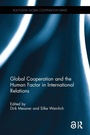
Dirk Messner | Silke Weinlich
Global Cooperation and the Human Factor in International Relations
Book
12/2017
1st Edition
Routledge
€76.80
Shipment within 15-20 days
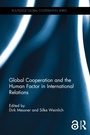
Dirk Messner | Silke Weinlich
Global Cooperation and the Human Factor in International Relations
E-Book
12/2015
Routledge
€0.00
Available for download
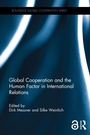
Dirk Messner | Silke Weinlich
Global Cooperation and the Human Factor in International Relations
E-Book
12/2015
Routledge
€0.00
Available for download
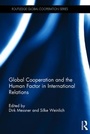
Dirk Messner | Silke Weinlich
Global Cooperation and the Human Factor in International Relations
Book
approx. 07/2015
CRC Press
approx.
€44.80
Not yet published
Persons
Dirk Messner is Co-director of the Centre for Global Cooperation Research, University Duisburg-Essen, Germany, where he is also Professor of Political Science and Director of the German Development Institute / Deutsches Institute fuer Entwicklungspolitik (DIE), Germany
Silke Weinlich is Senior Researcher at the German Development Institute / Deutsches Institute fuer Entwicklungspolitik (DIE) in Bonn, Germany.
Silke Weinlich is Senior Researcher at the German Development Institute / Deutsches Institute fuer Entwicklungspolitik (DIE) in Bonn, Germany.
Content
Part 1 Why Global Cooperation Research 1. The evolution of human cooperation-lessons learned for the future of global governance 2. The behavioral dimension of international cooperation 3. Cooperation in conflict. Ubiquity, limits and potential of working together at the international level Part 2 Human behavior and cooperation across disciplines 4. The cooperative bias in humans' biological history 5. Cooperation among humans 6. Can we think of the future? Cognitive barriers to future-oriented decision making 7. Approaching cooperation via complexity 8. The concrete utopia of the gift. A genuine sociological approach to interdisciplinary cooperation theory Part 3Interdisciplinary approaches to global cooperation 9. The possibilities of global we-identities 10. Diplomatic Cooperation: An evolutionary perspective 11. Cognizing cooperation: clues and cues for institutional design