

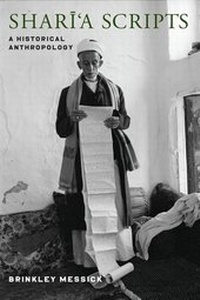
Shari'a Scripts
A Historical Anthropology
Published on 2. January 2018
Book
Hardback
536 pages
978-0-231-17874-7 (ISBN)
Description
A case study in the textual architecture of the venerable legal and ethical tradition at the center of the Islamic experience, Shari'a Scripts is a work of historical anthropology focused on Yemen in the early twentieth century. While colonial regimes, late Ottoman reformers, and early nationalists wrought decisive changes to the legal status of the shari'a, significantly narrowing its sphere of relevance, the Zaydi school of jurisprudence, rooted in highland Yemen for a millennium, still held sway. Brinkley Messick uses the richly varied writings of the Yemeni past to offer a uniquely comprehensive view of the shari'a as a localized and lived phenomenon. Shari'a Scripts reads a wide spectrum of sources in search of a new historical-anthropological perspective on Islamic textual relations. Messick analyzes the shari'a as a local system of texts, distinguishing between theoretical or doctrinal juridical texts (or the "library") and those produced by the shari'a courts and notarial writers (termed the "archive").
Attending to textual form, he closely examines representative books of madrasa instruction; formal opinion-giving by muftis and imams; the structure of court judgments; and the drafting of contracts. Messick's intensive readings of texts are supplemented by retrospective ethnography and oral history based on extensive field research. Shari'a Scripts also ventures a major methodological contribution by confronting anthropology's longstanding reliance upon the observational and the colloquial, seeking to develop tools for the anthropologist as reader.
Attending to textual form, he closely examines representative books of madrasa instruction; formal opinion-giving by muftis and imams; the structure of court judgments; and the drafting of contracts. Messick's intensive readings of texts are supplemented by retrospective ethnography and oral history based on extensive field research. Shari'a Scripts also ventures a major methodological contribution by confronting anthropology's longstanding reliance upon the observational and the colloquial, seeking to develop tools for the anthropologist as reader.
Reviews / Votes
This book explores debates within an Islamic legal tradition about the status of writing and thus of recorded truth. This is an impressive piece of work that draws upon the author's four decades of thought and reading. No one else can move among these Yemeni texts with such assurance, and classic works such as those of Kitab al-Azhar, Sharh al-Azhar and Sayl al-Jarrar are read more closely than any Western academic has attempted previously. ?A formative and distinguished book. -- Paul Dresch, St John's College, OxfordMore details
Language
English
Place of publication
New York
United States
Target group
Professional and scholarly
Product notice
Trade binding
Illustrations
27 b&w photographs
Dimensions
Height: 229 mm
Width: 152 mm
Weight
680 gr
ISBN-13
978-0-231-17874-7 (9780231178747)
Copyright in bibliographic data and cover images is held by Nielsen Book Services Limited or by the publishers or by their respective licensors: all rights reserved.
Schweitzer Classification
Other editions
Additional editions
E-Book
07/2018
1st Edition
Columbia University Press
from
€69.95
Available for download
Person
Brinkley Messick is professor of anthropology and Middle Eastern, South Asian, and African studies as well as the director of the Middle East Institute at Columbia University. He is the author of The Calligraphic State: Textual Domination and History in a Muslim Society (1993) and a coeditor of Islamic Legal Interpretation: Muftis and Their Fatwas (1996).
Content
Map of Western Yemen
Introduction
Part I. Library
1. Books
2. Pre-text: Five Sciences
3. Commentaries: "Write It Down"
4. Opinions
5. "Practice with Writing"
Part II. Archive
6. Intermission
7. Judgments
8. Minutes
9. Moral Stipulations
10. Contracts
Postscript
Notes
Manuscripts and Archival Materials
Bibliography
Index
Introduction
Part I. Library
1. Books
2. Pre-text: Five Sciences
3. Commentaries: "Write It Down"
4. Opinions
5. "Practice with Writing"
Part II. Archive
6. Intermission
7. Judgments
8. Minutes
9. Moral Stipulations
10. Contracts
Postscript
Notes
Manuscripts and Archival Materials
Bibliography
Index