

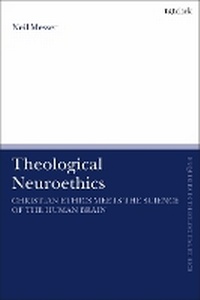
Theological Neuroethics
Christian Ethics Meets the Science of the Human Brain
Published on 18. April 2019
Book
Paperback/Softback
224 pages
978-0-567-68801-9 (ISBN)
Description
Neil Messer brings together a range of theoretical and practical questions raised by current research on the human brain: questions about both the 'ethics of neuroscience' and the 'neuroscience of ethics'. While some of these are familiar to theologians, others have been more or less ignored hitherto, and the field of neuroethics as a whole has received little theological attention.
Drawing on both theological ethics and the science-and-theology field, Messer discusses cognitive-scientific and neuroscientific studies of religion, arguing that they do not give grounds to dismiss theological perspectives on the human self. He examines a representative range of topics across the whole field of neuroethics, including consciousness, the self and the value of human life; the neuroscience of morality; determinism, freewill and moral responsibility; and the ethics of cognitive enhancement.
Drawing on both theological ethics and the science-and-theology field, Messer discusses cognitive-scientific and neuroscientific studies of religion, arguing that they do not give grounds to dismiss theological perspectives on the human self. He examines a representative range of topics across the whole field of neuroethics, including consciousness, the self and the value of human life; the neuroscience of morality; determinism, freewill and moral responsibility; and the ethics of cognitive enhancement.
Reviews / Votes
This volume is a great initial exposure to some of the issues involved in ethics, neuroscience, and what a theological response could be ... recommended for upper-division university students in philosophy or theology and graduate students in those disciplines. * Religious Studies Review * By demonstrating ways that a theologian can bring rigorous, informed scholarship into meaningful discussion with neuroscientific research, Messer has opened the door for other theological perspectives... Messer's in-depth interdisciplinary dialogue is a summons to theologians to engage with neuroethics and to push the dialogue into areas beyond those discussed in his book. * Studies in Christian Ethics * Messer's excellent and approachable text does a comprehensive, thoughtful, and well-informed job of addressing a prominent and problematic gap: the absence of dialogue between theology and neuroethics. It could serve as an effective university text and would be engaging for anyone interested in bioethicists and neuroscience in general. * National Catholic Bioethics Quarterly * This book is a timely and much needed volume in neuroethics, where theological voices are mostly absent. Messer convincingly demonstrates how a theological exploration of neuroethical issues can benefit not only theology in its engagement with neuroscientific knowledge, but also neuroscience in the broadening of its epistemic horizons [...] He provides extensive analysis of current key issues arising in neuroscience and neurology, and offers a theological examination that could surprise many, especially those who might be skeptical about the contribution of theology to neuroethics. Those interested in neuroethics beyond the limited scope of its contemporary version will find this volume eye opening and unique in its merging of theology and brain science. Messer truly creates a path for Christian theology to meet the science of the human brain. * Fabrice Jotterand, Medical College of Wisconsin, USA * Neil Messer demonstrates that the meeting of neuroscience, theology and ethics has potential to be a creative encounter rather than a destructive collision. He engages in a pioneering exploration of territory which few theologians have previously visited, and he invites neuroscientists to visit his own theological territory in return. He shows us that theology has a contribution to make to thinking about neuroethics; for example, drawing on the parable of the Good Samaritan in illuminating our understanding of how to care for people with brain damage, and Augustine in shedding light on the nature of addiction, extending this to a consideration of the "addict in us all". His exploratory forays across disciplinary boundaries, and his offering of hospitality to those from other disciplines, go a long way to deepening mutual understanding between neuroscientists and theologians. * Christopher Cook, University of Durham, United Kingdom *More details
Series
Language
English
Place of publication
Edinburgh
United Kingdom
Publishing group
Bloomsbury Publishing PLC
Target group
College/higher education
Dimensions
Height: 234 mm
Width: 156 mm
Weight
327 gr
ISBN-13
978-0-567-68801-9 (9780567688019)
Copyright in bibliographic data and cover images is held by Nielsen Book Services Limited or by the publishers or by their respective licensors: all rights reserved.
Schweitzer Classification
Other editions
Additional editions
E-Book
10/2017
1st Edition
T.& T.Clark Ltd
€38.49
Available for download
E-Book
10/2017
1st Edition
T.& T.Clark Ltd
€38.49
Available for download
Person
Neil Messer is Professor of Theology at the University of Winchester, UK.
Content
Chapter 1: Introduction: Where Science, Theology and Ethics Collide?
Chapter 2
Pious Primates with Believing Brains: Evolutionary, Cognitive and Neuroscientific Accounts of Religion
Chapter 3
Selves, Souls and Consciousness: Uncle Charlie Revisited
Chapter 3
Neuroscience, Moral Judgement and the Theological Suspicion of Ethics
Chapter 4
'Like God, Knowing Good and Evil' The Neuroscience of Morality and the theological suspicion of ethics
Chapter 5
Freedom, Responsibility, Sin and Grace: 'Mr Puppet' meets St Augustine
Chapter 6
Messing with Our Minds: The Ethics of Technological Interventions in the Brain
Chapter 7
Conclusion: Collision or Creative Meeting?
Bibliography
Index
Chapter 2
Pious Primates with Believing Brains: Evolutionary, Cognitive and Neuroscientific Accounts of Religion
Chapter 3
Selves, Souls and Consciousness: Uncle Charlie Revisited
Chapter 3
Neuroscience, Moral Judgement and the Theological Suspicion of Ethics
Chapter 4
'Like God, Knowing Good and Evil' The Neuroscience of Morality and the theological suspicion of ethics
Chapter 5
Freedom, Responsibility, Sin and Grace: 'Mr Puppet' meets St Augustine
Chapter 6
Messing with Our Minds: The Ethics of Technological Interventions in the Brain
Chapter 7
Conclusion: Collision or Creative Meeting?
Bibliography
Index