

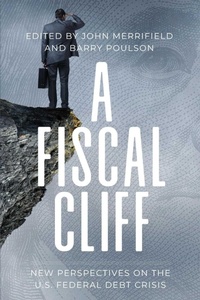
A Fiscal Cliff
New Perspectives on the U.S. Federal Debt Crisis
Published on 9. November 2020
Book
Paperback/Softback
504 pages
978-1-948647-87-8 (ISBN)
Description
The unsustainable, and still rapidly growing, U.S. federal government debt is a classic case of ‘‘in denial.” Despite numerous congressional committees, bipartisan commissions, and votes, we are no closer to a solution to the debt crisis than we were more than a decade ago. In fact, in 2018, a congressional committee was appointed to recommend budget process reforms, but that committee could not agree on any recommendations to submit to Congress.
In this timely volume, scholars and policymakers assess the United States' fiscal constraints and provide new perspectives that are desperately needed in order to solve the nation's debt crisis. Previous recommendations focused on the outcomes of fiscal policy but perhaps we should take a step back and ask whether the fiscal and budget process rules themselves should be reformed. The essays in A Fiscal Cliff suggest that “unless we reform our fiscal rules and institutions, we are not likely to solve the debt crisis and restore sustainable fiscal policies.”
While the dominant sentiment is that maybe if we ignore it, it will just go away, the debt crisis will not just vanish. A Fiscal Cliff is a timely addition to a critical policy discussion.
In this timely volume, scholars and policymakers assess the United States' fiscal constraints and provide new perspectives that are desperately needed in order to solve the nation's debt crisis. Previous recommendations focused on the outcomes of fiscal policy but perhaps we should take a step back and ask whether the fiscal and budget process rules themselves should be reformed. The essays in A Fiscal Cliff suggest that “unless we reform our fiscal rules and institutions, we are not likely to solve the debt crisis and restore sustainable fiscal policies.”
While the dominant sentiment is that maybe if we ignore it, it will just go away, the debt crisis will not just vanish. A Fiscal Cliff is a timely addition to a critical policy discussion.
More details
Language
English
Place of publication
Washington DC
United States
Product notice
Paperback (trade)
Unsewn / adhesive bound
Dimensions
Height: 227 mm
Width: 151 mm
Thickness: 36 mm
Weight
684 gr
ISBN-13
978-1-948647-87-8 (9781948647878)
Copyright in bibliographic data and cover images is held by Nielsen Book Services Limited or by the publishers or by their respective licensors: all rights reserved.
Schweitzer Classification
Persons
JOHN MERRIFIELD is professor emeritus of economics at the University of Texas at San Antonio. He co-edits the Non- Partisan Education Review and is the president of the nascent Institute for Objective Policy Assessment (www.objectivepolicyassessment.org). He earned a PhD in economics from the University of Wyoming in 1984. Professor Merrifield has authored 5 books, co-edited 3 more, and published 56 peer-reviewed journal articles and has written multiple chapters in edited volumes concerning topics as wide-ranging as education economics, urban and regional economics, environmental and natural resource economics, and public finance.
BARRY POULSON is professor emeritus at the University of Colorado Boulder and a visiting professor at several universities, including the University of North Carolina; Cambridge University; and Universidad Carlos Tercera, Madrid, Spain. His main area of expertise is economic development and economic history. His current focus is on fiscal policies and fiscal constitutions. He was the vice chair of the State Treasurer's Advisory Group on Constitutional Amendments in Colorado. Professor Poulson is an adjunct scholar of the Heritage Foundation and senior fellow of the Independence Institute.
BARRY POULSON is professor emeritus at the University of Colorado Boulder and a visiting professor at several universities, including the University of North Carolina; Cambridge University; and Universidad Carlos Tercera, Madrid, Spain. His main area of expertise is economic development and economic history. His current focus is on fiscal policies and fiscal constitutions. He was the vice chair of the State Treasurer's Advisory Group on Constitutional Amendments in Colorado. Professor Poulson is an adjunct scholar of the Heritage Foundation and senior fellow of the Independence Institute.
Content
FOREWORD, by David Walker
PREFACE, by Barry Poulson
INTRODUCTION
CHAPTER ONE: The Federal Fiscal Crisis: An Overview, byJohn Merrifield
CHAPTER TWO: Federal Debt in Historical Perspective, by Chris Edwards
CHAPTER THREE: The Debt Crisis in International Perspective, by Barry Poulson
CHAPTER FOUR: International Experience with Fiscal Rules, by Ryan Bourne
CHAPTER FIVE: The United States vs. Switzerland and Sweden: Three Approaches to Fiscal Restraint , by Romina Boccia
CHAPTER SIX: Under Threat: Rules-Based Fiscal Policy and How to Preserve It, by Xavier Debrun and Lars Jonung
CHAPTER SEVEN: Rules for Sustainable Fiscal Policy: Three Perspectives, by Ed Dolan
CHAPTER EIGHT: Effective Fiscal Rules Build on Consensus, by Kurt Couchman
CHAPTER NINE: Minutes from Midnight: Growing Pressure on the Treasury Market Could Lead to Default, by Baker Spring
CHAPTER TEN: Fiscal Rules, Fiscal Policy, and Debt: A Dynamic Simulation Analysis, by John Merrifield and Barry Poulson
CHAPTER ELEVEN: Debt Reduction without Higher Taxes: Gradual Privatization of Federal Mineral Assets, by Nick Loris
CHAPTER TWELVE: Social Security and Medicare Spending Growth: Is It Just More Seniors or More Per Senior?, by John Garen
CHAPTER THIRTEEN: Curb Rising Disaster and Emergency Spending, by Justin Bogie
CHAPTER FOURTEEN: Improving Transparency and Accountability in Federal Budgeting, by Romina Boccia
CHAPTER FIFTEEN: Federal Budget Process Reform: Adding a Resource Constraint and Improving Cost Measurement, by Marvin Phaup
CHAPTER SIXTEEN: The Golden Rule of Public Finance and Prospects for Its Revival, by Richard M. Salsman
CHAPTER SEVENTEEN: Administration vs. Politics in Theories of Democratic Budgeting, by Richard E. Wagner
CHAPTER EIGHTEEN: Why Deficits?, by David J. Hebert
CHAPTER NINETEEN: Fiscal Federalism and Dynamic Credence Capital in the United States, by John Merrifield and Barry Poulson
CHAPTER TWENTY: Controlling Government Spending: The Difficulty and the Hope, by Dwight Lee
NOTES
INDEX
ABOUT THE EDITORS
ABOUT THE CONTRIBUTORS
PREFACE, by Barry Poulson
INTRODUCTION
CHAPTER ONE: The Federal Fiscal Crisis: An Overview, byJohn Merrifield
CHAPTER TWO: Federal Debt in Historical Perspective, by Chris Edwards
CHAPTER THREE: The Debt Crisis in International Perspective, by Barry Poulson
CHAPTER FOUR: International Experience with Fiscal Rules, by Ryan Bourne
CHAPTER FIVE: The United States vs. Switzerland and Sweden: Three Approaches to Fiscal Restraint , by Romina Boccia
CHAPTER SIX: Under Threat: Rules-Based Fiscal Policy and How to Preserve It, by Xavier Debrun and Lars Jonung
CHAPTER SEVEN: Rules for Sustainable Fiscal Policy: Three Perspectives, by Ed Dolan
CHAPTER EIGHT: Effective Fiscal Rules Build on Consensus, by Kurt Couchman
CHAPTER NINE: Minutes from Midnight: Growing Pressure on the Treasury Market Could Lead to Default, by Baker Spring
CHAPTER TEN: Fiscal Rules, Fiscal Policy, and Debt: A Dynamic Simulation Analysis, by John Merrifield and Barry Poulson
CHAPTER ELEVEN: Debt Reduction without Higher Taxes: Gradual Privatization of Federal Mineral Assets, by Nick Loris
CHAPTER TWELVE: Social Security and Medicare Spending Growth: Is It Just More Seniors or More Per Senior?, by John Garen
CHAPTER THIRTEEN: Curb Rising Disaster and Emergency Spending, by Justin Bogie
CHAPTER FOURTEEN: Improving Transparency and Accountability in Federal Budgeting, by Romina Boccia
CHAPTER FIFTEEN: Federal Budget Process Reform: Adding a Resource Constraint and Improving Cost Measurement, by Marvin Phaup
CHAPTER SIXTEEN: The Golden Rule of Public Finance and Prospects for Its Revival, by Richard M. Salsman
CHAPTER SEVENTEEN: Administration vs. Politics in Theories of Democratic Budgeting, by Richard E. Wagner
CHAPTER EIGHTEEN: Why Deficits?, by David J. Hebert
CHAPTER NINETEEN: Fiscal Federalism and Dynamic Credence Capital in the United States, by John Merrifield and Barry Poulson
CHAPTER TWENTY: Controlling Government Spending: The Difficulty and the Hope, by Dwight Lee
NOTES
INDEX
ABOUT THE EDITORS
ABOUT THE CONTRIBUTORS