

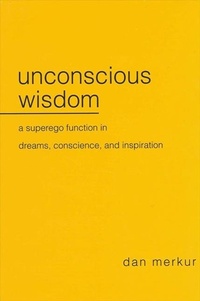
Unconscious Wisdom
A Superego Function in Dreams, Conscience, and Inspiration
Published on 12. April 2001
Book
Paperback/Softback
185 pages
978-0-7914-4948-6 (ISBN)
Description
Contra both Freud and Jung, argues that the unconscious is not exclusively irrational.
In a detailed engagement with the psychoanalytic theories of dreams, conscience, empathy, and creativity, Dan Merkur argues that the superego is an unconscious reasoning process, dedicated to the representation of the loved object. The superego's access to the repressed and devotion of time to single topics make it both more knowledgeable and more intelligent than the conscious ego. This is the final installment in Merkur's three-volume exploration of the psychoanalysis of religious experiences-volumes one and two are The Ecstatic Imagination: Psychedelic Experiences and the Psychoanalysis of Self-Actualization and Mystical Moments and Unitive Thinking, also published by SUNY Press.
In a detailed engagement with the psychoanalytic theories of dreams, conscience, empathy, and creativity, Dan Merkur argues that the superego is an unconscious reasoning process, dedicated to the representation of the loved object. The superego's access to the repressed and devotion of time to single topics make it both more knowledgeable and more intelligent than the conscious ego. This is the final installment in Merkur's three-volume exploration of the psychoanalysis of religious experiences-volumes one and two are The Ecstatic Imagination: Psychedelic Experiences and the Psychoanalysis of Self-Actualization and Mystical Moments and Unitive Thinking, also published by SUNY Press.
Reviews / Votes
"The book reveals evidence of unconscious rational processes. It does so by detailing the role of the superego in the formation of dreams, empathic moral reasoning, and creativity. In buttressing his case, Merkur offers detailed analyses of Freud's metapsychology and case histories as well as scholarly engagement with those in the tradition of ego-psychology and object-relations theory. The author's argument will be contested but will also give rise to new discussions about the role and nature of the superego in psychoanalytic metapsychology. This is a true advance." - William Parsons, author of The Enigma of the Oceanic Feeling: Revisioning the Psychoanalytic Theory of Mysticism"For anyone interested in psychoanalytic theory, ethics, or the dynamics of human conscience, this book is invaluable. It includes a wonderful bibliography, discusses the literature in considerable depth, and offers its own new thesis." - Jeffrey J. Kripal, coeditor of Vishnu on Freud's Desk: A Reader in Psychoanalysis and Hinduism
More details
Language
English
Place of publication
Albany, NY
United States
Target group
College/higher education
Professional and scholarly
US School Grade: College Graduate Student and over
Product notice
Paperback (trade)
Dimensions
Height: 230 mm
Width: 151 mm
Thickness: 11 mm
Weight
259 gr
ISBN-13
978-0-7914-4948-6 (9780791449486)
Copyright in bibliographic data and cover images is held by Nielsen Book Services Limited or by the publishers or by their respective licensors: all rights reserved.
Schweitzer Classification
Other editions
Additional editions
E-Book
04/2001
State University of New York Press
€34.99
Available for download
Person
Dan Merkur , an Associate Member of the Centre for the Study of Religion, University of Toronto, is a psychoanalytic psychotherapist in private practice. He has written several other books, including Gnosis: An Esoteric Tradition of Mystical Visions and Unions, also published by SUNY Press.
Content
Acknowledgments
Preface
Introduction
1. The Coherence of the Dream-Work
2. Conscience, Ego Ideals, and Self-Observation
3. Inspiration
4. Metaphor as a Tertiary Process
Works Cited
Index
Preface
Introduction
1. The Coherence of the Dream-Work
2. Conscience, Ego Ideals, and Self-Observation
3. Inspiration
4. Metaphor as a Tertiary Process
Works Cited
Index